
Have you ever caught yourself saying “Time has flew by” and then paused, wondering if it actually sounds right? You’re not alone. Many English learners—and even native speakers—struggle with irregular verbs, especially when it comes to the tricky difference between “flew” and “flown.”
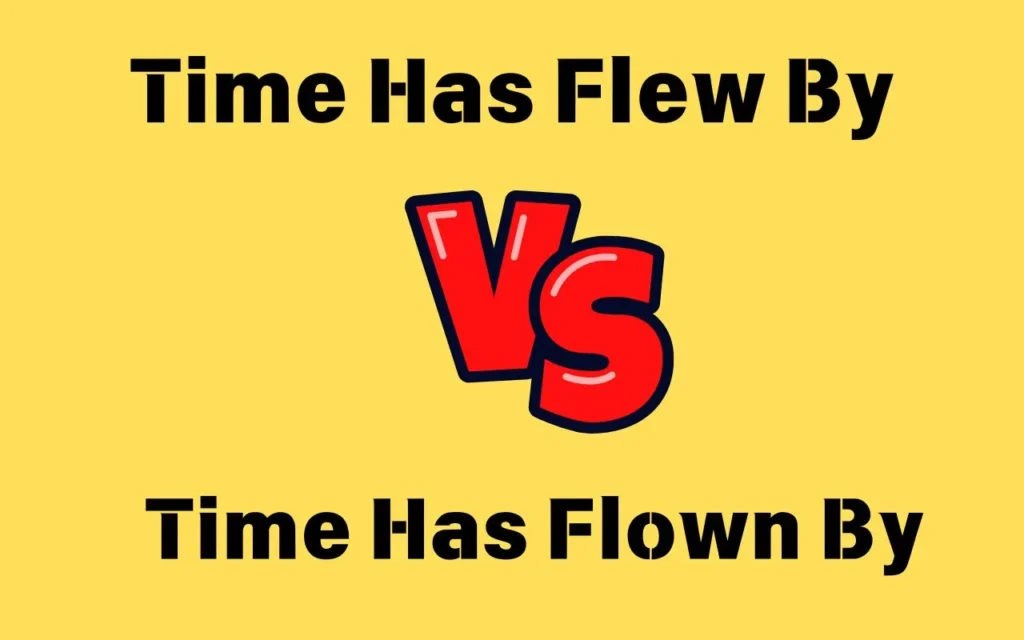
The correct phrase is “Time has flown by.” But why is it correct? And why does “Time has flew by” feel so natural in casual speech, even though it’s grammatically wrong?
This guide will break it all down for you. We’ll explore grammar rules, meanings, synonyms, common mistakes, and even ways to avoid confusion in the future. By the end, you’ll never mix up “flew” and “flown” again.
Breaking Down the Grammar
To understand why one version is correct and the other isn’t, let’s look at the verb to fly.
The Three Main Forms of “Fly”
| Verb Form | Example in a Sentence | Usage |
|---|---|---|
| Fly (base form) | Birds fly across the sky. | Present tense |
| Flew (simple past) | The plane flew over the mountains. | Past tense |
| Flown (past participle) | The birds have flown south for the winter. | Used with has/have/had |
The confusion starts when people forget the rule:
- Simple past (flew) stands alone without helpers.
- Past participle (flown) always works with has, have, or had.
So, in the sentence “Time has … by” you need the past participle because you’re pairing it with has.
👉 Correct: Time has flown by.
👉 Incorrect: Time has flew by.
Think of it this way: whenever you use has, your verb must wear its “past participle outfit.”
What Does “Time Has Flown By” Mean?
The phrase is usually figurative—you’re not talking about time literally flying like a bird or an airplane. Instead, you’re expressing how quickly it seems to have passed.
- When you look back at summer vacation and say, “Wow, time has flown by,” you mean it went by faster than you realized.
- Parents often use it when watching kids grow up: “It feels like just yesterday you were a baby—time has flown by.”
Literal vs. Figurative
- Literal: Birds have flown by the window. (Real physical action)
- Figurative: Time has flown by this year. (Impression of speed or brevity)
The figurative version is far more common and is almost always the one people mean.
Example Sentences
- “The last three years have flown by since I started this job.”
- “Summer always feels like it has flown by too quickly.”
- “The weekend flew by, and now it’s Monday again.”
Notice how the phrase carries a touch of nostalgia or surprise. It highlights how moments slip away before you even notice.
Is “Time Has Flew By” Correct?
In short: No, it’s not correct.
But here’s why so many people say it anyway:
Why People Make This Mistake
- Spoken English feels looser. Many speakers use the past tense in place of the participle without realizing it.
- Irregular verbs are tricky. English has many verbs like go → went → gone and eat → ate → eaten. If you’ve ever heard someone say “I have went” instead of “I have gone,” it’s the same mistake.
- Regional influence. Some dialects are more forgiving about swapping verb forms, especially in casual conversation.
Correct vs. Incorrect in Action
- ❌ Time has flew by since we last met.
- ✅ Time has flown by since we last met.
Grammar rules don’t bend here. If you’re writing, always stick with flown. In casual speech, you might hear “flew,” but that doesn’t make it right.
Common Confusions and Misspellings
This expression brings up a few more mistakes worth clearing up.
Flown Bye vs. Flown By
Some writers mistakenly type “flown bye” instead of “flown by.”
- By means “past” or “near.”
- Bye means “goodbye.”
So, “Time has flown bye” is completely wrong—it sounds like time is waving at you as it leaves!
👉 Correct: Time has flown by.
Similar Mistakes with Irregular Verbs
Here’s a quick table with other verbs that cause the same type of error:
| Verb | Simple Past | Past Participle | Wrong Example | Correct Example |
|---|---|---|---|---|
| Go | Went | Gone | I have went home. | I have gone home. |
| Eat | Ate | Eaten | She has ate dinner. | She has eaten dinner. |
| Write | Wrote | Written | He has wrote a book. | He has written a book. |
| Fly | Flew | Flown | Time has flew by. | Time has flown by. |
The pattern is clear: if you see “has/have/had,” always use the past participle.
Synonyms and Alternatives for “Time Has Flown By”
You don’t always need to use this exact phrase. There are plenty of ways to express the same idea depending on your tone.
Casual Alternatives
- Time has gone by
- Time has slipped away
- The days flew past
- The months raced by
Formal Alternatives
- Time has elapsed
- Time has passed quickly
- A significant period has gone by
Poetic or Figurative Alternatives
- Time has vanished in the blink of an eye
- The years melted away
- Hours dissolved into memories
Example in Context
- Formal: “A decade has elapsed since the company’s founding.”
- Casual: “This summer has slipped away so fast.”
- Poetic: “The years have melted away like snow in spring.”
By using synonyms, you can tailor your writing for different audiences—whether it’s a heartfelt message, a professional report, or a piece of creative writing.
Real-Life Examples of Usage
This phrase isn’t just for grammar textbooks—it shows up everywhere.
In Literature
- “Time has flown by, leaving only the echoes of yesterday.” (Common in reflective writing)
In Speeches
- Graduation speeches often include it: “These four years have flown by, but the memories will last forever.”
In Everyday Conversations
- Friends catching up: “Can you believe it’s been ten years? Time has flown by.”
This variety shows how versatile the phrase is—it works in casual, formal, and emotional contexts.
Quick Recap: Which Should You Use?
Here’s the takeaway:
- Correct: Time has flown by.
- Incorrect: Time has flew by.
- “Has” demands the past participle, not the simple past.
- Remember the rule: “has/have/had” → past participle only.
Think of it like a math formula:
Has + (Past Participle) = Correct Grammar
That simple tip will save you from making the same mistake with dozens of irregular verbs.
❓ FAQs
What is correct: Time has flew by or time has flown by?
The correct form is “Time has flown by.” “Has” requires the past participle “flown,” not the simple past “flew.”
Why do people say Time has flew by?
Many people use it in casual speech, but it’s a grammar mistake caused by mixing up the past tense with the past participle.
What does Time has flown by mean?
It means time passed quickly, often faster than expected, leaving you surprised at how fast events or moments ended.
Is Time has flew by ever acceptable?
No. It may appear in informal speech, but it is never correct in formal writing or standard English grammar.
What are synonyms for Time has flown by?
Common alternatives include “time has passed quickly,” “time has slipped away,” “time has raced by,” and “time has gone by.”
What is the difference between flew and flown?
Flew is the simple past (The bird flew away), while flown is the past participle used with “has/have/had” (The bird has flown away).
Conclusion
Language changes over time, but some grammar rules hold steady. “Time has flown by” is the correct phrase, and it captures a feeling we’ve all experienced—how quickly moments slip away.
Next time you’re tempted to say “time has flew by,” remember the grammar table, think of other irregular verbs, and you’ll land on the right choice.
After all, as the saying goes: Time waits for no one, and it certainly flies.

Leave a Reply