Category: Lifestyle

  • Coconut vs. Almond vs. Sesame Oil For Baby Massage: Which Is Best For Your Baby’s Skin Type?

    Coconut vs. Almond vs. Sesame Oil For Baby Massage: Which Is Best For Your Baby’s Skin Type?

    Decisions, decisions! From the moment you get pregnant till your kid goes off to college, every new day brings a new decision you must take to ensure the overall health and well-being of your little one. However, instead of looking that far into the decisions of the future, let’s focus on decisions of the NOW. Namely, choosing the right baby massage oil between coconut, almond, and sesame for your baby. If you are confused too, keep reading. Your baby’s skin type holds the answer. 

    The Science Behind Selecting a Baby Massage Oil 

    Though picking up a baby massage oil was as easy as visiting your local supermarket? Think again. There’s a method to picking the best oil for your toddler and that involves paying attention to the oil’s oleic acid to linoleic acid ratio:

    • Oleic Acid: Also known as Omega-9, it’s a rather heavy fatty acid type, high concentrations of which can harm your baby’s skin barrier if it’s not balanced with linoleic acid. Oils containing dense concentrations of oleic acid may increase dryness or eczema. 
    • Linoleic Acid: Also known as Omega-6, oils with linoleic acid help in the formation of a stronger skin barrier while preventing moisture loss and soothing any kind of irritation your baby may experience. 

    While it might seem on the surface that oleic acid serves no purpose, it actually does and is a common content of many oils. You will see what we’re talking about very soon. 

    Coconut Oil Vs Almond Oil Vs Sesame Oil for Baby Massage 

    Here is how each of these oils stack up against each other. Read through carefully and you might just find the best among the three oils for your baby: 

    Coconut Oil: The Anti-Bacterial Hydrator 

    Cold-pressed virgin Coconut Oil is actually one of the most well-known and widely used emollients out there! This all-natural oil also offers amazing antifungal and antimicrobial properties, making it the perfect home remedy for minor skin infections, if your doctor gives the say-so, of course! 

    That said, studies have consistently shown that regular use of virgin Coconut Oil can actually improve your baby’s skin barrier and provide them with consistent hydration. Exactly what they need to continue having baby-soft skin! 

    Best For: Babies with normal to dry skin, typically living in hot or humid climates and prone to getting minor skin infections. 

    Sweet Almond Oil: The Ultimate Skin Barrier Repair Specialist

    Sweet Almond Oil is commonly found in most leading oils available in India – from Deyga’s and The Moms Co.’s oils to AreoVeda’s Baby Massage Oil, and there’s a reason for that. This traditionally used massage oil is a rich source of oleic acid, linoleic acid and vitamin E – skin-friendly ingredients that not only moisturise your baby’s skin but also help in its repair and rejuvenation. 

    Highly absorbable, lightweight and non-comedogenic, Sweet Almond Oil strengthens your baby’s skin barrier without jamming their pores. Plus, it is quite effective in reducing issues such as scaling and itching, which can easily annoy your tiny tot. Its vitamin E content is actually responsible for its skin-reparing properties. 

    Best For: Babies with dry or sensitive skin who need lightweight yet deep nourishment in dryer climates. 

    Sesame Oil: Nature’s Best Body Warmer 

    A perfect blend of both oleic and linoleic acids, Sesame Oil is also rich in antioxidants. This Ayurvedic infant care staple is, in fact, widely used to warm your baby’s body in the cold winter months. Capable of penetrating deep into the layers of your baby’s skin, Sesame Oil offers a ton of benefits that extend beyond warming. 

    As per a recent study, regular massages with Sesame Oil helps your baby in developing a healthy body weight while improving their blood circulation. Plus, it can also improve their sleep cycle, promoting deeply relaxed states that lull them into quiet slumber. All in all, it’s a great oil to add to your baby’s daily massage routine. 

    Best For: Perfect for use in cold winter months on babies with normal skin and no irritations. 

    Conclusion 

    Now you can see that each oil actually serves its own purpose and benefits and is suitable for babies with specific skin types and issues. To be honest though, if your doctor allows, you can switch things up and use each of these oils when the need arises. For example, you could use Sweet Almond Oil in summers, Sesame Oil in winters, and Coconut Oil any time your baby develops a minor rash. That way, your baby can enjoy the benefits of all three! 

    Also Read

  • The Small Kitchen Habits That Slowly Change the Way Families Eat

    The Small Kitchen Habits That Slowly Change the Way Families Eat

    Dinner was already running late. Someone had homework spread across half the table. A water bottle had rolled under a chair. One child wanted toast instead of what was on the plate, while another had somehow managed to get sauce on a sleeve that had been clean thirty seconds earlier. Nothing unusual. Just a weekday evening moving exactly the way weekday evenings tend to move.

    Somewhere in the middle of all that, a parent reached for a bottle from the refrigerator without really thinking about it. That moment passed quickly. Most do. Yet those small decisions, repeated across hundreds of meals, are often where family food habits quietly take shape. It is partly why products like healthy tomato sauce have started appearing in more kitchens, not as a grand statement, but as part of a series of ordinary choices that barely announce themselves.

    The End of a Long Day

    It would be around evening time when most families are struggling with the energy left within them. They had gone through school; they had gone through work; they had gone through the journey back home. Dinner becomes less of making a perfect dinner and more of getting everyone together in one place for the next twenty minutes before the next activity starts. The interesting thing is that dinners are usually remembered years after this. It is something a child asks for the first three days and rejects the fourth.

    Small Things Get Repeated

    Food habits rarely arrive all at once. They sneak in quietly. One lunch packed a certain way. One snack that gets requested again. One ingredient that becomes a regular part of meals simply because it works and nobody objects.

    After enough repetition, it starts feeling familiar. That familiarity matters more than most people realize. Children often eat what feels known long before they become interested in what feels new. Parents see it happen constantly, usually without talking about it.

    Looking at Labels Differently

    A grocery cart tells a story if someone pays attention long enough. Years ago, many purchases happened almost automatically. These days, parents often pause for a few extra seconds. A package gets turned around. Ingredients get scanned. Not because anyone is trying to become an expert. Mostly because the products being purchased tend to show up again tomorrow and the day after that.

    The Ingredient List

    Sometimes the back of the package receives more attention than the front. A shorter list feels easier to understand. Familiar words help. Nobody wants grocery shopping to feel like decoding a science textbook after a long workday.

    Sweetness Feels Different Now

    Children still notice flavor first. That part has not changed. Adults, meanwhile, often find themselves looking at where that flavor comes from, which is probably why sweeteners receive more attention than they once did.

    Familiar Foods Stay Around

    Products that fit naturally into existing meals tend to last. They find a place beside sandwiches, snacks, quick dinners, and whatever ends up being served during a busy week.

    Convenience Matters Quietly

    Few people stand in a store thinking about convenience directly. Yet foods that save a few minutes often return home again and again because life has a habit of filling every available hour.

    Mornings Tell Their Own Story

    The kitchen feels different before school. Someone cannot find a shoe. Breakfast is happening unevenly. One child is ready twenty minutes early while another still has not decided whether cereal is acceptable. The entire morning seems balanced on a surprisingly fragile timeline.

    I am sure most people have experienced this kind of feeling. For this reason, foods which can easily be incorporated in everyday activities tend to remain in rotation for a longer period compared to those that require more work.

    Patterns Hidden in Plain Sight

    Family routines reveal themselves slowly. A favorite snack disappears first. A certain ingredient keeps showing up in lunchboxes. Weekend breakfasts develop their own rhythm. Looking back, the pattern becomes obvious. While living through it, though, everything feels slightly random.

    Then something interesting happens. Parents begin noticing which foods continue showing up without much resistance. Those products become part of the household almost by accident. Somewhere within that broader shift, healthy ketchup has found its way into many kitchens because it fits beside foods children already recognize.

    The Foods That Last

    • Foods that work during rushed mornings
    • Ingredients that appear across several meals
    • Products that children recognize without hesitation

    The Foods That Fade

    Some items arrive with excitement, then quietly disappear into the back of a cabinet. Others never make it through a second grocery trip. Family routines decide more than marketing ever could.

    A Different Kind of Grocery Shopping

    The trip itself has changed. Parents often compare fewer products than people assume. Instead, they look for things that fit. Fit the schedule. Fit the meals already being made. Fit the reality of a Tuesday afternoon when nobody has extra time available.

    That is usually enough. A product does not need to transform anything. It simply needs to belong.

    What Children Remember

    Children rarely remember ingredient lists. They remember the feeling of opening a lunchbox and finding something familiar. They remember toast before school. They remember snacks shared after sports practice. Food becomes tied to moments long before it becomes tied to nutrition discussions.

    That observation changes the way many parents think about meals. Not dramatically. Just enough.

    Final Thoughts

    Can the most important decisions concerning food consumption be those that nobody pays attention to initially? The obvious answer seems to emerge from every kitchen every day. The changes made by small steps, during each visit to the grocery store, eventually become a natural process. In the middle of all those changes is Troovy together with the rest of the products which were not selected because of their perfection. Whether it is a familiar condiment on the dinner table or the best chocolate spread waiting for a weekend breakfast, those choices often become part of memories long before anyone realizes they matter.

    Also Read

  • Why Road Trips Are a Great Choice for Adventurous Families

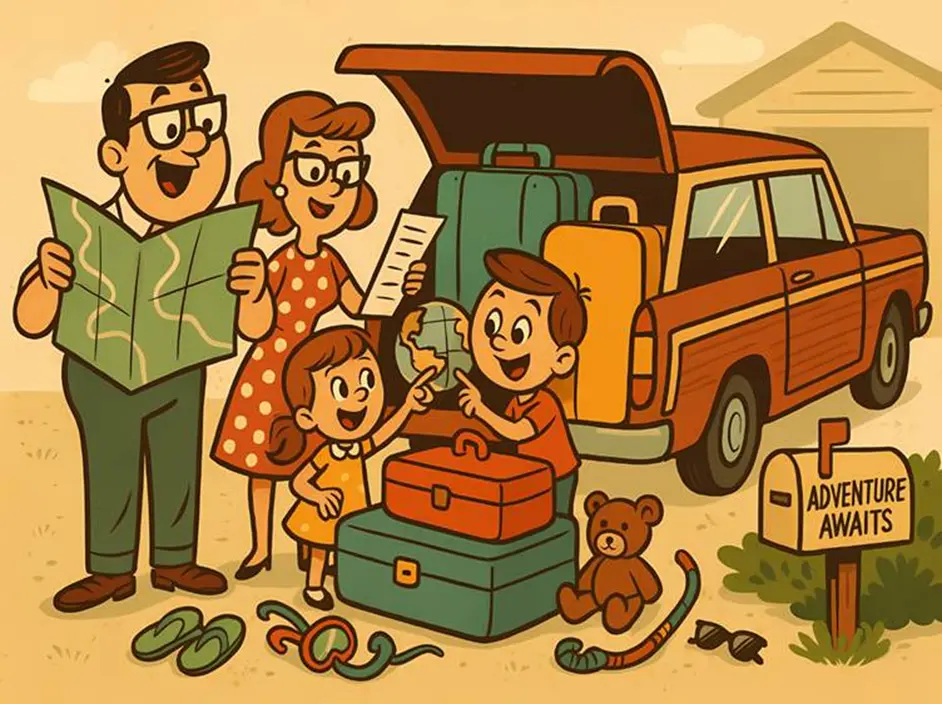
    Why Road Trips Are a Great Choice for Adventurous Families

    As a family, it can be challenging to think of vacation ideas that everyone will love. You need something that will keep both the adults and the kids happy, and striking a balance can be difficult.

    However, one option that could be perfect if you all love adventure is a family road trip. These are not only budget-friendly but also a great way to bond as a family. All you need is some basic equipment, one of the many quality roof racks available for your equipment and luggage, and you are good to go!

    In this article, we will look at why a road trip is a great choice for adventurous families.

    Enjoy the Thrill of a Family Road Trip!

    There are many reasons why a family road trip is a great idea, and it will appeal to all ages. Some of the reasons to consider this for your next vacation are:

    Great Way to Bond

    One of the reasons a road trip is great for adventurous families is that it provides you with a great way to bond. Many families these days get little time to spend together, so this is the ideal way to remedy that. You get to discover new places together, get involved in a range of activities as a family, and spend plenty of time enjoying the thrill of the open road.

    Plenty of Fresh Air

    All too often, a family vacation ends up with the adults lazing around the pool, teens holed up indoors on their smart devices, and younger ones bored senseless! With a family road trip, you get to spend plenty of time out in the fresh air, which is great for your health and wellbeing. You also get to enjoy the wonders of the outdoors as a family.

    World of Adventure

    A road trip provides you with a world of adventure to enjoy as a family. You can enjoy everything from fishing and swimming to cycling, picnics, hiking, and more as part of your road trip. You also get to discover new places and meet other families, which adds to the excitement and thrill of your experience.

    Cost-Effective Option

    Money is often tight for families, so affording a vacation can be a struggle. With a road trip, you don’t have to spend a fortune, which is ideal if you want to have fun with your family without breaking the bank. You can buy your own food, camp out, and avoid the need to pay for costly flights and public transport.

    Perfect for All Ages

    An added bonus that comes with taking a family road trip is that it is perfect for all ages. With so much to discover and enjoy, everyone from senior members of the family to youngsters will enjoy the thrill of the experience.

    Forging Memories with Loved Ones

    A family road trip is a great way to forge treasured memories with your loved ones. It also means you can explore new places and meet new people as part of your family adventure.

    Also READ

  • How Slip and Fall Accidents Can Interrupt Nerve Function Without Warning

    How Slip and Fall Accidents Can Interrupt Nerve Function Without Warning

    A slip on a plain surface can look harmless from the outside, yet the body often records it in ways that are not visible at first glance.

    A person may stand up, brush off the moment, and continue the day without thinking twice. The real change can begin quietly inside the body, where nerves respond in a very different way compared to skin or bone. In many cases, nerve compression from a fall accident starts without clear pain or warning, making it easy to overlook early signals.

    What feels like a simple fall can slowly turn into something that affects movement, strength, and everyday comfort in ways that are not expected at the beginning.

    Why Nerve Injuries Don’t Show Immediate Warning Signs

    Nerves behave differently from muscles or bones, and this difference is what often creates confusion after a fall. While bruises and cuts are easy to see, nerve issues take time to reveal themselves. The body also reacts with shock after an impact, which can temporarily hide discomfort.

    This delay means a person may feel fine in the beginning and assume nothing serious has happened. However, inside the body, signals between the brain and limbs may already be disturbed. This is why nerve-related injuries often become noticeable only after a few hours or even days, once the initial shock has faded and normal movement starts again.

    What Happens to Nerves During a Slip and Fall

    During a fall, the body may twist, stretch, or hit the ground in a sudden way. These movements can affect the delicate network of nerves running through the neck, shoulder, and arms. Nerves are sensitive structures that depend on smooth pathways to send messages.

    When there is sudden pressure or stretching, those pathways can be disrupted. Even a small fall can create enough force to interfere with nerve signals. The injury does not always appear on the surface, which is why it is often missed in the early stage. In many situations, nerve compression from a slip and fall accident begins during this exact moment, even though the person may not feel it right away.

    Early Clue 1: Tingling or Pins and Needles

    One of the earliest signs of nerve disturbance is a tingling sensation. It may feel like tiny pins moving under the skin or a light buzzing feeling in the arm or hand. This sensation often comes and goes, which makes it easy to ignore.

    The reason this happens is that nerve signals are not flowing smoothly. The communication between the brain and the affected area becomes slightly interrupted. While it may not feel serious at first, repeated tingling is a sign that the nerve is under stress and should not be dismissed.

    Early Clue 2: Weakness in the arm or Shoulder

    A noticeable drop in strength can appear after a fall. Simple tasks like lifting a bottle, holding a bag, or stretching the arm may suddenly feel harder than usual. This weakness is not the same as tired muscles. It feels unfamiliar and unexpected.

    When nerves are affected, they struggle to send proper signals to the muscles. As a result, the muscles do not respond with normal strength. This change often becomes clearer over time, especially when the person tries to use the arm in daily activities.

    Early Clue 3: Loss of Coordination or Control

    Another early sign is difficulty in controlling movement. The arm may feel clumsy or slower than usual. Objects may slip from the hand, or simple actions may feel less precise.

    This happens because nerve signals are not reaching the muscles in a steady way. The brain is still sending instructions, but the response is delayed or uneven. This lack of coordination is often subtle at first but becomes more noticeable during regular movement.

    Early Clue 4: Numbness That Does Not Fade

    Numbness after a fall can feel like a temporary effect, but when it continues, it signals a deeper issue. The affected area may lose sensitivity, making it harder to feel touch or temperature.

    This condition develops when nerve pathways are compressed or irritated. Unlike surface injuries, numbness related to nerve issues does not always improve quickly. When it stays or spreads, it shows that the nerve is still under stress and not recovering normally.

    Why These Symptoms Are Often Missed

    Many of these signs do not appear strongly at first. The body’s initial shock response hides discomfort, and people often focus only on visible injuries. There is also a natural tendency to assume that if movement is possible, everything is fine.

    • Early pain can be delayed.
    • Symptoms may appear slowly over time
    • Mild sensations are often ignored
    • Daily movement can mask early weakness

    Because of this, nerve issues are often recognized later than they should be. Early attention to small changes in sensation or strength can make a meaningful difference in understanding what is happening inside the body.

    A Final Reflection on Early Awareness

    A fall may seem like a short moment, but its effects can continue in quiet ways beneath the surface. Nerves respond in subtle patterns that are not always easy to notice at first. Paying attention to changes in sensation, strength, or movement helps bring clarity before the condition progresses further.

    When symptoms begin to suggest nerve compression from a fall accident, early recognition becomes important. The body often signals what it needs through small changes, and noticing those signals early can prevent confusion later on.

    Also Read

  • Coffee Shop Culture in Spain: What Every Visitor Should Know

    Coffee Shop Culture in Spain: What Every Visitor Should Know

    Spain is a country known for its vibrant social life, warm weather, and a deep love for gathering in public spaces. From busy city plazas to quiet neighborhood streets, the culture of meeting friends over a drink or a cup of coffee is deeply rooted in everyday Spanish life. Coffee shops and cafés play a central role in this social fabric, offering a relaxed environment where people can unwind, connect, and enjoy the moment.

    In recent years, many travelers have become curious about coffee shops in Spain and what they actually offer compared to places like Amsterdam. Unlike the Netherlands, Spain does not have a system of public cannabis coffee shops. Instead, Spain has developed its own unique model known as cannabis social clubs, which are private, members-only associations. Understanding the difference between a traditional Spanish café and a cannabis social club is important for anyone planning a visit.

    The Traditional Spanish Café Experience

    Spanish café culture is one of the most enjoyable parts of visiting the country. Whether you are in Madrid, Barcelona, Seville, or a small coastal town, you will find cafés on nearly every corner. These are welcoming, public spaces where anyone can walk in and order a coffee, a pastry, or a light meal.

    What to Expect in a Spanish Café

    • A strong espresso-based coffee culture, with drinks like cortado, café con leche, and café solo being the most popular
    • Affordable prices, often between 1€ and 2€ for a coffee
    • A relaxed pace where sitting for an hour or more is completely normal
    • Light food options such as churros, toast with tomato, and pastries
    • Friendly, informal service with a neighborhood feel

    Spanish cafés are open to everyone and are a core part of daily life. They are not connected to cannabis in any way. They are simply places to enjoy good coffee and good company.

    Cannabis Social Clubs: A Different Kind of Space

    Spain has a legal framework that allows adults to consume cannabis in private settings. This has led to the creation of cannabis social clubs, which are very different from public coffee shops. These clubs are private associations that operate under strict rules and are not open to the general public.

    How Cannabis Social Clubs Work

    Cannabis social clubs in Spain function as closed communities. Here is how they typically operate:

    • Membership is required to enter and use the club
    • You must be invited by an existing member or receive an invitation from the club itself
    • Members receive a card that grants them access to the premises
    • Clubs are non-profit organizations, meaning cannabis is not sold but rather distributed through voluntary donations
    • Annual membership fees usually range from 20€ to 50€
    • Any cannabis obtained inside the club is charged separately from the membership fee

    Who Can Become a Member

    You do not need to be a Spanish resident to join a cannabis social club. Membership is open to adults who meet the club’s requirements. However, there are no day passes or short-term memberships available. Each person must register individually, and groups of friends cannot share a single membership.

    This system is designed to keep cannabis consumption within a regulated, private environment. It is very different from the open-door policy of Amsterdam’s coffee shops, where tourists can walk in freely without any prior membership.

    Key Differences Between Cafés and Cannabis Clubs

    It is easy to confuse the two concepts, especially if you have heard the term “coffee shop” used loosely in travel discussions. Here is a clear breakdown of the differences:

    • Traditional cafés are public, open to everyone, serve coffee and food, and have no connection to cannabis
    • Cannabis social clubs are private, require membership, are non-profit, and operate within a specific legal framework
    • Cafés can be found on any street in any Spanish city
    • Cannabis clubs require an invitation and a formal registration process

    Respecting Local Laws and Culture

    Whether you are visiting Spain for its café culture or exploring its cannabis social club scene, it is important to respect local laws. In Spain, buying, selling, or using cannabis in public is illegal. Consumption is only permitted in private spaces or within the premises of a registered cannabis social club.

    Tourists who are curious about cannabis clubs should always seek a proper invitation and follow the club’s rules carefully. Attempting to access these clubs without proper membership or behaving disrespectfully can lead to serious consequences.

    Conclusion

    Spain offers a rich and welcoming social culture, whether you are enjoying a cortado at a neighborhood café or exploring the unique world of cannabis social clubs. Traditional Spanish cafés are open, affordable, and a joy to experience for any visitor. Cannabis social clubs, on the other hand, are private, regulated spaces that require membership and an invitation. Understanding the difference between these two types of spaces will help you make the most of your time in Spain while staying within the boundaries of the law.

    Also Read

  • Certified Cycling Instructor for Beginners and Advanced Riders

    Certified Cycling Instructor for Beginners and Advanced Riders

    Cycling is a fun and healthy activity. It helps improve fitness, reduces stress, and is a good way to travel. But learning how to ride properly takes time.

    This is where a certified cycling instructor becomes very helpful. They teach people of all skill levels, from beginners to advanced riders, how to ride safely and correctly. Read on.

    What Is a Certified Cycling Instructor?

    A certified cycling instructor is a trained teacher for cycling. They have special training in how to teach riding skills, safety rules, and basic bike care.

    They know how to work with different types of riders. Some students are complete beginners.

    Others already know how to ride but want to improve. The instructor adjusts lessons based on the rider’s level.

    Their main goal is to help people become safe, confident, and skilled cyclists. Check out the ASFA programs to learn more.

    Helping Beginners Learn to Ride

    For beginners, cycling can feel scary at first. Many people worry about falling or losing balance. A certified cycling instructor helps make learning easier and safer.

    They start with simple steps like:

    • Learning how to balance
    • Practicing pedaling slowly
    • Learning how to stop safely

    Instructors also teach safety gear. Wearing a helmet is very important. They may also suggest bright or reflective clothing so riders can be seen easily.

    Another key lesson is road safety. Beginners learn how to:

    • Look for cars and obstacles
    • Use hand signals when turning
    • Ride in the correct lane
    • Stay alert at all times

    With practice and guidance, beginners gain confidence step by step.

    Training for Advanced Riders

    Advanced cyclists already know the basics. But they still need training to improve their performance. A certified cycling instructor helps them ride better by checking:

    • Riding posture
    • Pedaling style
    • Bike setup and comfort

    Small changes can make a big difference. Riders can go faster and feel less tired when they use better techniques.

    Advanced training may also include riding in groups safely and climbing hills more efficiently, interval training for speed and strength. Preparing for long-distance rides or races. Instructors may also create training plans to help riders reach their goals.

    Teaching Safety and Healthy Habits

    Cycling instructors do more than teach riding skills. They also teach safety and healthy habits. They remind riders to:

    • Warm up before riding
    • Drink enough water
    • Rest when tired
    • Avoid injuries by riding correctly

    They may also teach basic bike care, like:

    Checking tire pressure. Making sure the brakes work well. Keeping the bike clean and safe, and these habits help prevent accidents and keeps the bike in good condition.

    Building a Cycling Community

    Certified cycling instructors also help build cycling groups and communities. They may organize group rides and training sessions.

    These activities help people meet other cyclists and enjoy riding together. They also encourage more people to use bikes for exercise and transport. This helps create a healthier and more active community.

    Taking the First Step

    A certified cycling instructor is very important for both new and experienced riders. They teach safety, improve skills, and build confidence.

    Beginners learn how to ride step by step. Advanced riders learn how to improve speed and performance. With the help of a good instructor, cycling becomes safer, easier, and more enjoyable for everyone.

    If you want to read more articles, visit our blog.

    Also Read

  • Exploring Contest Features Available on Playinrace Platform

    Exploring Contest Features Available on Playinrace Platform

    Online activities that feels refresh and engaging often attract multiple eyeballs. So, contest-based platforms are always users’ favorites. Therefore, these platforms are more engaging and tend to make people sign up and more quickly than the other platforms.

    So in this post, you will see what contests are and how does the Playinrace platform handles them. You also learn to use each feature proportionally and make things smart and easy.

    What Makes Contest-Based Platforms Popular?

    First of all, you need to understand why contest formats attract so many users. You get clear rules and fixed timelines.

    In addition, contests create excitement. For example, when you track your progress, you feel more involved. At the same time, short formats save your time. Therefore, they keep things simple and engaging.

    On the Playinrace online platform, contests follow a clear structure. Because of that, you stay focused from start to finish. Also, you do not feel lost at any stage.

    Getting Started with Playinrace

    Before you explore contests, you need to set up your account. Luckily, the process stays quick and simple.

    • First, you complete your Playinrace signup with basic details
    • Next, you access your account through Playinrace login
    • After that, you manage your wallet using Playinrace deposit

    As a result, you unlock all contest features without delay.

    Types of Contests You Can Explore

    1. Time-Based Contests

    In these contests, you need to act within a fixed time.

    • You see a clear start and end time
    • Plan your steps carefully
    • Focus on quick decisions

    Therefore, time-based contests suit users who enjoy fast action. Also, they help you improve speed.

    2. Rank-Based Contests

    These contests depend on your position on the leaderboard.

    • Aim for a higher rank
    • Can track your progress in real time
    • Compare your performance with others

    As a result, you stay motivated throughout the contest. In addition, you push yourself to improve.

    3. Entry-Level Contests

    If you are new, you should start here, where you:

    • Face simple rules
    • Learn without pressure
    • Build confidence step by step

    So, you get a smooth entry into the platform.

    4. Advanced Contests

    Once you gain experience, you can move forward.

    • To face stronger competition
    • Apply better strategies
    • To aim for higher rewards

    But join these only when you are ready. Otherwise, you may feel overwhelmed.

    Key Features That Improve Your Experience

    Now, let’s look at the features that make contests easy and smooth. Overall, these features improve your journey.

    Simple Dashboard

    First, you get a clean dashboard. Because of this, you can:

    • View ongoing contests
    • Check your entries
    • Track results

    So, you never feel confused. Instead, you stay in control.

    Real-Time Updates

    Next, real-time updates keep you informed.

    • To see changes instantly
    • Track rankings live
    • Adjust your approach quickly

    As a result, you stay active. Moreover, you make better decisions.

    Clear Rules and Instructions

    Every contest includes clear instructions.

    • To understand the format easily
    • Avoid confusion
    • Focus on your actions

    Therefore, you spend more time enjoying the process. In short, clarity improves your experience.

    Flexible Participation Options

    • Pick contests based on your level
    • Select time durations that suit you
    • Enter multiple contests if needed

    In short, you stay in control. Also, you enjoy flexibility.

    How You Can Choose the Right Contest

    Choosing the right contest matters a lot. So, you should take a smart approach.

    Start Small

    At first, join beginner contests. This way, you:

    • Understand how things work
    • Avoid early mistakes
    • Build confidence

    As a result, you grow steadily.

    Check Contest Details

    Before joining, always review details.

    • Look at entry conditions
    • Check time limits
    • Understand ranking rules

    Because of this, you stay prepared. Also, you avoid surprises.

    Tips to Improve Your Performance

    You can improve with simple habits.

    Stay Consistent

    First, join contests regularly.

    • Practice improves your skills
    • You learn from each attempt
    • You gain experience

    Therefore, consistency leads to better results. In addition, it builds confidence.

    Track Your Progress

    Next, review your performance.

    • Check what worked well
    • Notice weak areas
    • Adjust your strategy

    As a result, you keep improving. Over time, you see better outcomes.

    Manage Your Time

    Time plays a key role.

    • Plan your participation
    • Avoid a last-minute rush
    • Stay calm

    So, you perform better under pressure.

    Avoid Overloading

    Do not join too many contests.

    • Focus on quality
    • Give full attention
    • Stay relaxed

    In other words, less can be more. Therefore, you maintain balance.

    Why Contest Features Matter

    You may wonder why these features matter.

    Simply put, contests give structure. They also guide your steps and keep you engaged.

    On Playinrace, these features create a smooth flow. Because of that, you do not feel confused. Instead, you stay focused. Consequently, your overall experience improves.

    Common Mistakes You Should Avoid

    Even simple platforms can feel tricky. However, you can avoid common mistakes.

    Skipping Instructions

    Many users skip rules. As a result, they face confusion later. So, always read instructions first. This way, you stay prepared.

    Joining Without a Plan

    If you join randomly, you may feel lost. Therefore, set a clear plan before you start. In fact, planning saves time.

    Ignoring Progress Tracking

    If you do not review results, you miss learning chances. So, track your performance regularly. Over time, this helps you grow.

    Trying Everything at Once

    You may want to try everything quickly. However, this creates stress. Instead, take one step at a time. As a result, you stay focused.

    How Playinrace Creates a User-Friendly Experience

    You will notice that Playinrace focuses on simplicity.

    • Clean layout improves navigation
    • Clear rules reduce confusion
    • Flexible options give control

    Therefore, you enjoy a smooth experience. In addition, you feel comfortable using the platform.

    Final Thoughts

    When you explore contest features, you discover a structured and engaging experience. At the same time, you gain clarity and control.

    Playinrace offers a simple setup. So, you can start small and grow step by step. Over time, you build confidence.

    In conclusion, take your time and explore wisely. The last is that you get better through repetition. And the best part is you are going to be living it while getting there.

    FAQs

    1. What is Playinrace?

    Playinrace is an online platform that offers structured contests with simple rules and easy access.

    2. How do I start using the platform?

    First, complete the signup process. Then log in and set up your balance to begin.

    3. Are contests suitable for beginners?

    Yes, entry-level contests help you learn without pressure. So, beginners can start easily.

    4. What do I need to get better at?

    Remain consistent, follow your numbers, and put all of your energy into gaining success with one contest in the same year.

    6. Why should I read contest rules?

    Rules help you understand the format. Therefore, you avoid mistakes and stay prepared.

    Also Read

  • What Is Insurance Beyond Basics: Why Life Insurance Policy Plans Matter More Today

    What Is Insurance Beyond Basics: Why Life Insurance Policy Plans Matter More Today

    Insurance confuses most people. They know they should have it. Everyone tells them it’s important. But they don’t really understand what they’re buying or why it matters.

    This vague understanding leads to terrible decisions. People buy the wrong policies. They get inadequate coverage. They waste money on products that don’t protect their family properly.

    Let’s break down insurance properly and why life insurance policy plans have become more critical today than ever before.

    Understanding the Basic Concept

    If you’re searching for “what is insurance”, here’s the simplest explanation. Insurance is a deal between you and a company. You pay them small amounts regularly. They promise to pay you large amounts when specific bad things happen.

    A car accident damages your vehicle. Insurance pays repair costs. The house catches fire. Insurance pays rebuilding costs. You die unexpectedly. Insurance pays your family a large sum.

    You’re essentially transferring risk to the insurance company. Instead of facing huge unexpected expenses alone, you share that risk with thousands of other people through the company.

    Why It Exists at All

    Life throws unexpected problems at everyone. Medical emergencies. Accidents. Natural disasters. Sudden death. These events cost massive amounts of money.

    Most families cannot afford these costs from savings alone. A serious illness can cost 10-15 lakh easily. Rebuilding a house after a fire costs 30-40 lakh. Replacing income for 20 years after death needs crores.

    Without insurance, these events destroy families financially. They sell property. They take loans. They compromise children’s education.

    Insurance prevents this financial destruction. It ensures unexpected events don’t wipe out everything you’ve built over the years.

    Different Types Serve Different Purposes

    Different insurance types protect against different risks.

    Life insurance policy plans replace your income if you die. Your family gets money to continue their lifestyle without you. Health insurance pays medical bills when you fall sick. Hospital costs, surgery, and medicines all get covered.

    Vehicle insurance covers damage to your car or bike from accidents. Also covers third-party damages legally required. Home insurance protects your house from fire, floods, earthquakes, and theft.

    Each type handles a specific risk. You need multiple types of protection against all major risks your family faces.

    How Life Insurance Policy Plans Work

    Life insurance policy plans come in different forms. Term insurance, endowment plans, whole life insurance, ULIPs. Each works differently.

    The simplest is term insurance. You pay a fixed premium yearly. If you die during the policy period, your family gets a large sum assured. If you survive, the policy ends with no payout.

    Other life insurance policy plans mix investment with protection. You get money back even if you survive. Sounds attractive, but usually delivers poor coverage and poor returns both.

    Understanding these differences helps you pick the right type matching your actual needs.

    Why It Matters More Today

    Life insurance policy plans have become more critical now than they were 20-30 years ago.

    Loans Are Bigger

    Previous generations bought smaller houses with smaller loans. Today, home loans run into 60-80 lakhs easily in cities. Car loans add another 10-15 lakhs.

    If you die, should your family lose the house to the bank? Life insurance ensures enough money exists to pay off these massive loans.

    Single-Income Families Are Common

    Many families depend entirely on one person’s income. Previous generations had joint families with multiple earning members sharing expenses. Today’s nuclear families have all eggs in one income basket.

    Life insurance policies become essential in protecting families that lose their only significant income source.

    Medical Costs Have Exploded

    Hospital bills that were 50,000 twenty years ago are now 5 lakhs. Cancer treatment costs 15-20 lakhs. Heart surgery costs 8-10 lakhs.

    Health insurance covers treatment costs while you’re alive. But who pays ongoing medical costs for other family members after you’re gone?

    Children’s Education Costs More

    Good education now costs lakhs. An engineering degree costs 15-20 lakhs. Medical education costs 50 lakhs or more. MBA costs another 20-25 lakhs.

    Parents plan and save for these expenses. But what if the earning parent dies before the children finish their education? Life insurance policy plans ensure children’s education doesn’t get compromised.

    Job Security Has Reduced

    Previous generations worked the same job for 30 years. Pension came after retirement. Today’s jobs are less secure. Companies downsize. Sectors collapse. Careers change every few years.

    This makes life insurance even more important. It’s guaranteed protection regardless of what happens to your job or career.

    Nuclear Families Lack Support Systems

    Joint families provided safety nets. If one member died, others stepped in financially and emotionally.

    Today’s nuclear families live alone in different cities. No immediate support system exists. Life insurance policy plans replace the financial support that extended families used to provide naturally.

    Common Mistakes People Make

    Many people buy expensive endowment or money-back plans when simple term insurance would protect their family better at a fraction of the cost. They get attracted to maturity benefits without realizing coverage is inadequate.

    People buy 10-15 lakh coverage thinking that’s enough. Then realize their home loan alone is 50 lakhs. Coverage should match actual needs.

    Employer-provided insurance seems free, so people think they’re covered. But it only works while employed. Change jobs, and coverage disappears. Personal life insurance policy plans stay with you regardless.

    People think they’ll buy insurance later when they earn more. Later never comes. Or by then, age has increased the premium significantly. Or health issues have developed, making insurance expensive or impossible to get.

    Taking Action Now

    Calculate what your family would actually need if you died tomorrow. All loans, children’s education, and living expenses for years. This shows the minimum coverage required.

    Compare different life insurance policy plans. Understand the difference between term insurance and traditional plans. Pick the type giving maximum protection for your budget.

    Don’t delay. Every year you wait increases the premium and risk of health issues developing. Buy adequate coverage now while you’re young and healthy.

    Also Read

  • How to Buy a Gun Online Legally: A Step-by-Step Guide

    How to Buy a Gun Online Legally: A Step-by-Step Guide

    Buying a gun online is completely legal in the United States, but it works differently than ordering almost anything else online. You cannot have a firearm shipped directly to your front door. Federal law requires every online gun purchase to go through a licensed dealer, known as an FFL, before you can take possession of the firearm. Understanding this process upfront saves you time, money, and frustration.

    The good news is that once you know the steps, the process is straightforward. Millions of Americans buy firearms and ammo online every year through reputable retailers, and the system is designed to keep purchases both accessible and accountable. This guide walks you through every stage, from choosing a firearm to walking out of your local dealer with it in hand.

    Key Takeaways

    • FFL transfer is required by federal law: all online firearm purchases must be transferred through a licensed firearms dealer near you before pickup.
    • A background check is mandatory: you will complete ATF Form 4473 and pass a NICS check at your local FFL dealer, not at the point of online purchase.
    • State laws add extra requirements: some states require waiting periods, permits, or additional documentation beyond federal minimums.
    • Transfer fees vary by dealer: most FFL dealers charge between $20 and $50 per transfer, and you should confirm this before buying.
    • Shipping goes dealer to dealer: the online retailer ships to your chosen FFL, not to your home address.

    What Is an FFL and Why Do You Need One?

    Quick Answer: An FFL, or Federal Firearms Licensee, is a business licensed by the ATF to sell and transfer firearms. Federal law requires all online gun purchases to route through a local FFL dealer so a background check can be completed before the buyer takes possession.

    The Gun Control Act of 1968 established that firearms sold across state lines must transfer through a licensed intermediary. When you buy a gun online, the retailer holds a federal firearms license. Your local gun shop, pawn shop, or sporting goods store likely holds one too. The online seller ships the firearm to your chosen local FFL, who then processes your background check and hands the gun to you.

    Finding a local FFL is simple. Most gun shops accept transfers. You can also search the ATF’s online FFL locator by zip code. Call ahead to confirm they accept transfers and ask about their fee before you finalize your online purchase.

    How Does the Online Gun-Buying Process Work Step by Step?

    Quick Answer: Choose a firearm online, select a local FFL dealer for delivery, provide that dealer’s contact info to the retailer, pay online, wait for shipment, visit your FFL for the background check and Form 4473, then take your firearm home if approved.

    Step 1: Choose Your Firearm and Retailer

    Browse licensed online retailers the same way you would any e-commerce store. Filter by caliber, brand, action type, or price. A reputable retailer will display clear pricing, include manufacturer details, and show accurate inventory. When you buy firearms and ammo online, confirm the retailer is licensed and check their return and shipping policies before adding anything to your cart.

    Step 2: Select Your Local FFL Dealer

    Before checkout, you will be asked for your receiving FFL’s information. Contact your local dealer first. Get their name, address, license number, and preferred contact email. Some dealers have a specific process for receiving inbound transfers, so asking in advance prevents delays.

    Step 3: Complete Checkout and Wait for Shipment

    Pay for the firearm online. The retailer ships it directly to your FFL, not your home. Shipping typically takes three to seven business days. Many online retailers provide tracking so you and your local dealer can monitor the shipment.

    Step 4: Complete Your Background Check at the FFL

    Once your FFL receives the firearm, they will contact you. Visit the dealer in person with a valid government-issued photo ID. You will complete ATF Form 4473, a federal document capturing basic identifying information. The dealer then submits your information to the FBI’s NICS system for an instant background check. Most checks clear in minutes.

    What Disqualifies Someone From Buying a Gun Online?

    Quick Answer: Federal law prohibits firearms purchases by anyone convicted of a felony, subject to a domestic violence restraining order, adjudicated as mentally ill, or unlawfully using controlled substances. State laws may add further restrictions.

    Disqualifying FactorLegal AuthorityCheck MethodApplies To 
    Felony conviction18 U.S.C. § 922(g)NICS background checkAll buyers nationwide
    Domestic violence misdemeanorLautenberg AmendmentNICS background checkAll buyers nationwide
    Active restraining order18 U.S.C. § 922(g)(8)NICS background checkAll buyers nationwide
    Unlawful controlled substance use18 U.S.C. § 922(g)(3)Form 4473 self-disclosureAll buyers nationwide
    State permit requirementVaries by statePresented at FFLCA, IL, MA, NY, others

    Do State Laws Affect Online Gun Purchases?

    Quick Answer: Yes. States like California, Illinois, Massachusetts, and New York require additional permits, waiting periods of 10 to 30 days, or state-specific registration before you can take possession of a firearm purchased online.

    Federal law sets the floor, but states can build higher requirements on top of it. California requires a Firearm Safety Certificate and a 10-day waiting period. Illinois requires a Firearm Owner’s Identification (FOID) card before any purchase. Some states restrict certain firearm features like magazine capacity or pistol grip designs.

    Before you browse, research your state’s specific rules. Many online retailers, including this online firearms retailer type of platform, will flag or block shipment to states where the specific firearm model is restricted. Your local FFL dealer is also a reliable resource for explaining what your state requires.

    How Much Does It Cost to Buy a Gun Online vs. In Store?

    Quick Answer: Online prices are often 10 to 20 percent lower than retail store prices, but you must add the FFL transfer fee of $20 to $50 and shipping, typically $25 to $40. Total savings depend on the firearm’s base price.

    Online buying makes the most financial sense for higher-priced firearms. On a $600 handgun, saving $80 online while paying a $35 transfer fee and $30 shipping still puts $15 back in your pocket. On a $200 budget pistol, the math may favor your local shop. Always calculate the full landed cost before assuming online is cheaper.

    Is It Safe to Buy a Gun From an Online Retailer?

    Quick Answer: Yes, when buying from an ATF-licensed retailer. Look for secure checkout (HTTPS), verified customer reviews, a physical business address, and clear return policies. Avoid private party sites that bypass the FFL transfer requirement.

    Reputable online gun retailers operate under the same federal licensing as your local gun shop. The transfer system itself adds a layer of accountability since no firearm changes hands without an in-person background check. Stick to retailers that show their FFL number and have transparent policies.

    Frequently Asked Questions

    Can I buy a gun online without going to a gun store?

    No. Federal law requires all online firearm purchases to transfer through a licensed FFL dealer in person. You must visit the local dealer, complete Form 4473, and pass a background check before taking possession of any firearm.

    How long does the online gun-buying process take?

    From order to pickup, expect seven to fourteen days total. Shipping takes three to seven business days, and the background check at your FFL typically clears in minutes. State waiting periods can extend this timeline by ten days or more.

    Can I return a gun I bought online?

    Return policies vary by retailer and are often limited for firearms. Most retailers accept returns only for unfired guns with documented defects. Review the retailer’s policy before purchasing, and understand that once a background check is completed, the transfer is generally considered final.

    Do online gun retailers ship to all 50 states?

    Most licensed retailers ship to all states that allow the specific firearm being purchased. Some states restrict certain models, features, or calibers. The retailer’s website typically flags restricted items at checkout, but confirming with your local FFL before ordering is always a smart move.

    Also Read

  • The Three Situations Where I Refuse to Place a Bet

    The Three Situations Where I Refuse to Place a Bet

    Most gambling advice focuses on how to play. The more useful discipline is knowing when not to.

    There are three situations I’ve identified through fairly expensive trial and error where my bet quality collapses regardless of the game, the stake, or the session structure around it. Not occasionally – consistently. Once I mapped those situations clearly, refusing to bet in them stopped feeling like restraint and started feeling like basic competence.

    None of them are dramatic. Two happen regularly. That’s what makes them worth knowing.

    With 5,000+ games across slots, live casino, table games, and instant wins alongside a welcome package up to €4,500 + 250 free spins, Slotlords Casino is the kind of environment where all three of these situations can develop within a single session if you’re not paying attention to the conditions you’re playing under.

    Situation One: When I Don’t Know the Game’s Variance Profile

    Loading a game cold with real money and discovering its volatility profile through your own balance is one of the most consistently expensive habits in casual gambling. High-variance games in particular create a specific problem – they can run entirely cold for 150+ spins before resolving, and a player who doesn’t know that will interpret the cold streak as evidence the session is broken rather than as normal behavior.

    My rule: I don’t bet real money on any game I haven’t spent at least twenty minutes in demo mode first. Not to learn a strategy – slots don’t have one – but to calibrate what normal looks like. What’s the typical gap between feature triggers? How often do wins actually land in the base game? Does the balance trend steadily or swing dramatically?

    The free mode for something like sugar rush 1000 demo illustrates why this matters in practice. The 1000 variant concentrates returns heavily into multiplied scatter combinations – base game spins outside those sequences contribute very little. Without that context, a twenty-minute cold patch in real play feels like the game isn’t working. With it, you’re just waiting for the variance to resolve. Same session, completely different decision-making.

    Situation Two: When I’m Trying to Recover a Previous Loss

    This one is harder to admit than the first, but it’s the situation that has cost me the most money over time. There’s a specific mental state that arrives roughly fifteen minutes after a significant loss – call it recovery mode – where the primary session goal shifts from enjoying the game to getting back to even.

    Recovery mode produces worse decisions than almost any other psychological state. Stake sizing becomes reactive. Game selection becomes about what “feels ready to pay” rather than what suits my bankroll. Session length extends indefinitely because stopping while down feels like accepting a loss that hasn’t been finalized yet.

    The tell is simple: if I catch myself thinking about what I lost in the previous session while I’m deciding whether to start a new one, I don’t bet. Not that day. The urge to recover is strong evidence that the next session will be driven by the wrong motivation, and that evidence has never once been wrong in my experience.

    Situation Three: When I’m Unclear on the Platform’s Withdrawal Conditions

    This applies specifically to new platforms rather than established ones, and it’s less about responsible gambling than about basic financial clarity. I won’t bet real money on a platform I haven’t verified can actually return funds reliably and without obstacles I haven’t accounted for.

    The specific things I check before betting on an unfamiliar site: withdrawal processing times, whether KYC requirements have been completed upfront or only triggered at cashout, and whether the platform’s licensing creates any restrictions on my account. Comparative coverage of platforms like those listed under online casinos ohne OASIS – casinos operating outside Germany’s OASIS self-exclusion database – highlights how licensing framework affects the practical withdrawal experience, not just the responsible gambling tools available. Understanding that before depositing avoids discovering it after winning something worth withdrawing.

    What These Three Have in Common

    None of them are about the game itself. Two are about my internal state, one is about the environment I’m playing in. That’s not a coincidence – the situations that reliably produce bad bets are almost never about the odds or the mechanics. They’re about the conditions under which the decision is being made.

    Recognizing those conditions early enough to act on them is the part nobody teaches. It’s also the part that separates a player who improves from one who keeps repeating the same expensive sessions.

    Also Read