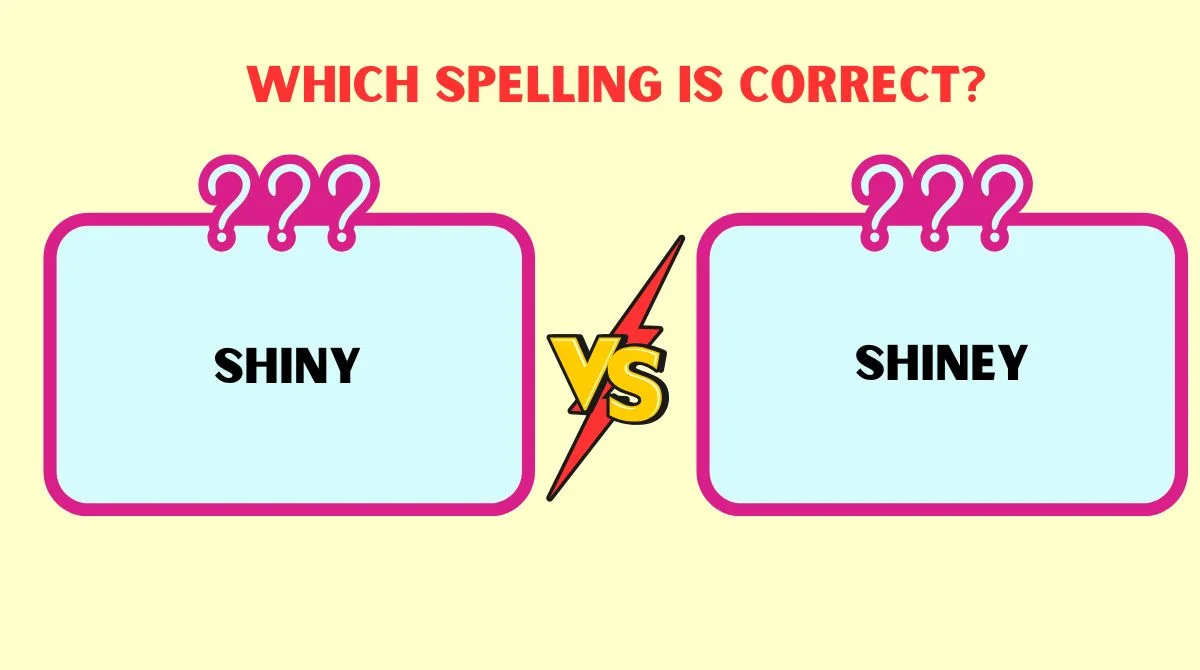
Have you ever paused while typing and wondered, “Is it shiny or shiney?”
You’re not alone. Many English learners — and even native speakers — get tripped up by this subtle spelling trap.
In this guide, you’ll find everything you need to know about the correct spelling of the word, why the confusion exists, and how to remember the right form every time.
The Quick Answer: Shiny Is Correct ✅
The correct spelling is “shiny.”
“Shiny” is the accepted form in all major English dictionaries (like Merriam-Webster, Oxford, and Cambridge).
“Shiney” is not recognized as a standard word in English.
Example:
- Correct: The car had a shiny new coat of paint.
- Incorrect: The car had a shiney new coat of paint.
When writing for school, work, or online, always use “shiny.”
Understanding “Shiny”
Definition of Shiny
According to leading dictionaries, shiny is an adjective that means:
- Reflecting light
- Bright, glossy, or polished in appearance
- Figuratively, attractive or impressive
In simple words: Something that looks bright because it reflects light.
Typical Usage of “Shiny”
You’ll see “shiny” used in everyday English in different contexts:
- Describing physical objects:
The shiny glass windows sparkled in the sun. - Expressing figurative meaning (something impressive or appealing):
Startups often chase shiny new ideas without testing them. - Talking about personal traits or looks:
He wore shiny leather shoes to the interview.
More examples in sentences:
- The shiny coins caught her attention.
- After the rain, the streets looked shiny and wet.
- She had a shiny smile that lit up the room.
Why People Write “Shiney”
The Common Spelling Mistake
The mistake usually happens because English spelling can be tricky.
Many people assume that since the root verb is “shine,” the adjective must keep the “e” before adding “-y.”
Phonetic Confusion
The long “i” sound in shine tempts writers to keep the e for consistency.
It feels natural to type “shiney” because it mirrors the pronunciation.
But English has its own spelling rules that override this instinct.
Historical and Linguistic Note
Historically, “shiney” has never been a standard spelling.
Early English texts consistently used “shiny.”
Spelling became more standardized in the 18th and 19th centuries, and modern dictionaries do not list “shiney.”
The Linguistic Foundation of “Shiny”
Root Word: Shine
The word shiny comes from the verb “shine” (Old English scīnan, meaning to emit light).
When we turn verbs into adjectives using the suffix “-y”, we often drop the silent final “e.”
Why the Final “e” Drops
Here’s a simple spelling rule:
When a word ends in a silent “e”, drop the “e” before adding a suffix that starts with a vowel, such as “-y.”
Examples:
- shine → shiny
- glare → glary
- slime → slimy
Keeping the “e” would break the rule and create an incorrect form: shiney.
Side-by-Side Comparison
| Aspect | Shiny (✅ Correct) | Shiney (❌ Incorrect) |
|---|---|---|
| Listed in dictionaries | Yes | No |
| Part of speech | Adjective | None (not standard) |
| Common usage | Formal, informal, global | Considered a spelling error |
| Examples | “A shiny coin” | “A shiney coin” |
| Accepted in education | Yes | No |
This comparison shows that “shiny” is the only form you should use in serious writing.
Real-World Examples
Correct Sentences Using Shiny
- The shiny surface of the lake mirrored the mountains.
- Kids love shiny stickers on their notebooks.
- Her shiny hair reflected the morning sunlight.
- The mechanic handed me a shiny new wrench.
- Investors often get distracted by shiny new technologies.
Incorrect Sentences Using Shiney
- ✗ He polished the car until it looked shiney.
- ✗ I saw a shiney star in the night sky.
- ✗ The jewelry store displayed shiney bracelets.
In each incorrect example, replace shiney with shiny to follow standard English.
Why Correct Spelling Matters
Clarity and Professionalism
Correct spelling shows attention to detail.
A single misspelled word can make your writing look careless and confuse your audience.
Search Engines and Digital Communication
If you write shiney online, your content may not show up in searches for “shiny.”
That’s a big issue for:
- Businesses writing product descriptions
- Bloggers wanting their content to rank
- Students sharing academic work
Educational and Formal Contexts
In exams, essays, résumés, or formal letters, incorrect spelling can lower your score or harm your credibility.
Teachers and hiring managers expect standard English.
Quick Tips to Remember the Correct Spelling
- Memory Trick: “Drop the e before adding y.”
- Association: Think of other words: slimy, glary, spiny.
- Visual Reminder: Picture the word shiny on a glossy magazine cover.
- Proofread: Always run a spell-check before finalizing your work.
- Practice: Write five sentences with “shiny” every day for a week to lock it in.
Top FAQs About Shiny vs Shiney
Is “shiny” or “shiney” correct?
Shiny is the correct spelling. “Shiney” is a common mistake and not found in dictionaries.
Why do people spell it “shiney”?
The confusion arises because the root word “shine” ends with an “e,” but English spelling rules drop the silent “e” before adding “-y.”
Was “shiney” ever used historically?
No. Major historical records and corpora show “shiny” as the standard spelling.
Is “shiney” acceptable in informal writing?
No. While you may see it online or in texts, it’s still incorrect and should be avoided.
How do I remember the spelling?
Use the rule: drop the e before adding y.
Compare it with similar words like “slimy” or “spiny.”
Does using “shiney” affect search rankings or professionalism?
Yes. Misspellings can lower search visibility and harm credibility in academic or professional contexts.
Conclusion
The verdict is clear: “Shiny” is the only correct spelling.
It follows English spelling rules, has historical consistency, and is universally accepted.
Next time you’re tempted to type “shiney,” remember the simple rule:
Drop the silent “e” before adding “y.”
Mastering small details like this not only improves your writing but also boosts your credibility as a communicator.
