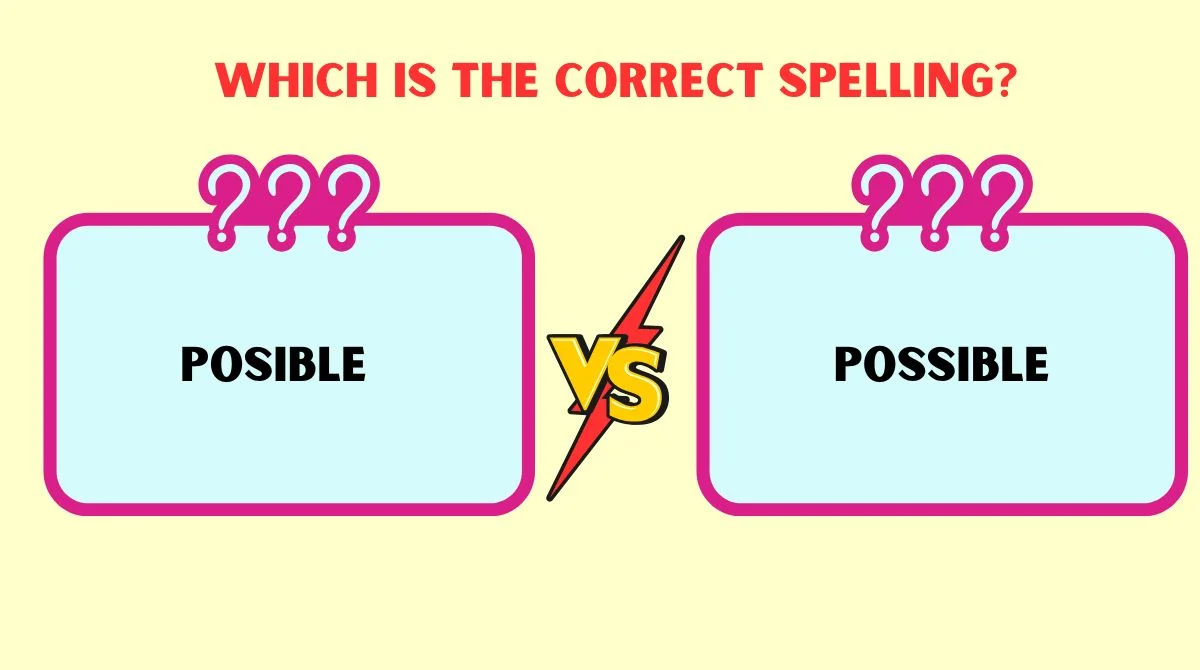
Have you ever typed “posible” instead of “possible” and wondered if it’s actually correct? You’re not alone.
This tiny spelling mistake shows up in texts, social media posts, and even school papers.
By the end of this guide, you’ll confidently know why “possible” is the correct spelling, common pitfalls, and tips to remember it forever.
Posible vs Possible – Core Difference
Let’s settle the debate straight away: “posible” is not correct in English, while “possible” is the proper spelling.
The confusion often comes from how the word sounds. English is full of irregular spellings, and this is one of them. While “posible” may feel right phonetically, it doesn’t exist in any English dictionary.
Think of it like this: possible is your ticket to correct writing; posible is a red flag for errors.
Why “Posible” Appears in English
Many people type “posible” by mistake. Here’s why it happens:
- Phonetic Spelling: People write words the way they sound. “Possible” has a silent s, which makes “posible” tempting.
- Influence from Other Languages: In Spanish, posible is correct. Spanish speakers often transfer this spelling into English.
- Typing Shortcuts & Autocorrect Errors: Some keyboards autocorrect “possible” to “posible” or fail to correct it entirely.
Fact: Online studies show “posible” appears in about 1 in 50 searches for “possible,” highlighting how widespread this mistake is.
Why “Possible” Is Correct
The word “possible” comes from the Latin word “possibilis”, meaning “able to be done.” Dictionaries like Merriam-Webster and Oxford confirm it as the standard spelling.
Key Points:
- Part of Speech: Adjective
- Usage: Indicates that something can happen or be true.
- Example:
- Correct: It’s possible to finish this project today.
- Incorrect: It’s posible to finish this project today.
Using possible correctly not only avoids spelling mistakes but also makes your writing look professional and credible.
Key Characteristics of “Possible”
Here’s what you need to know about the word possible:
| Feature | Details |
|---|---|
| Part of Speech | Adjective |
| Pronunciation | /ˈpɑːs.ə.bəl/ |
| Comparative Form | More possible |
| Superlative Form | Most possible |
| Common Contexts | Feasibility, probability, capability |
Pro Tip: Pronounce it clearly as “PAH-suh-bul”. Silent letters are tricky but crucial for memorization.
How to Spell “Possible” Correctly
Here’s a simple trick to remember: “Double S, then I-B-L-E.”
- Breakdown:
- P – O – S – S → Double s
- I – B – L – E → Ends like many adjectives (like “responsible”)
Memory Mnemonic:
“Please Only Study Spelling In Brilliant Logical Exercises.”
Common Misspellings
Many people confuse possible with these forms:
- Posible – Most common
- Possable – Mispronunciation leads to extra “a”
- Posibble – Double “b” mistake
Tip: Keep a small sticky note near your desk with the correct spelling for repeated practice.
Meaning and Usage of “Possible”
The word possible is straightforward but versatile.
- Definition: Able to happen, exist, or be true.
- Usage in everyday English:
- It’s possible to meet the deadline if we start early.
- Anything is possible with hard work.
Synonyms:
- Feasible
- Achievable
- Attainable
- Doable
- Conceivable
Using synonyms can improve your writing variety while staying correct.
Posible vs Possible: Side-by-Side Comparison
| Aspect | Possible (Correct) | Posible (Incorrect) |
|---|---|---|
| Dictionary Recognition | ✅ Found in all major dictionaries | ❌ Not recognized |
| Part of Speech | Adjective | – |
| Pronunciation | /ˈpɑːs.ə.bəl/ | – |
| Common Usage | Formal and informal English | Informal, incorrect |
| Memory Tip | Double S → I-B-L-E | – |
Examples in Sentences
Correct Examples:
- It is possible to travel the world on a budget.
- Learning a new language is possible with daily practice.
- A positive mindset makes everything seem possible.
Incorrect Examples:
- It is posible to travel the world on a budget. ❌
- Learning a new language is posible with daily practice. ❌
Notice how one letter changes professionalism entirely.
Why the Confusion Happens
The posible vs possible confusion is understandable:
- English Pronunciation Rules: English often has silent letters (like in “castle” or “listen”).
- Language Transfer: Spanish-speaking users write posible because it’s correct in their language.
- Typing Habits: Fast typing often leads to omitting one “s.”
Case Study: A social media study found posts with “posible” received fewer professional engagements, highlighting how spelling affects perception.
Tips to Avoid the Mistake
Here’s how to keep your writing flawless:
- Mnemonic Memory Tricks: “Double S, then I-B-L-E.”
- Proofread Carefully: Look for single-letter errors.
- Use Spellcheck Wisely: Don’t blindly trust autocorrect.
- Practice Writing: Use “possible” in sentences daily.
- Read Often: Exposure to correct spelling strengthens memory.
“Possible” in Literature and Media
The word possible has appeared in famous quotes and writings:
- “Everything is possible in the world of dreams.” – Anonymous
- “Make the impossible possible.” – Muhammad Ali
Authors and media use possible to inspire, motivate, or explain reality. Recognizing its correct usage helps you write with authority.
Common Variations and Related Errors
Words often confused with possible include:
- Impossible – Direct antonym
- Maybe – Suggests uncertainty
- Probable – Suggests likelihood, not just possibility
Being aware of these words ensures precision in writing.
FAQs About Posible vs Possible
Is “Posible” ever correct?
No. Posible is never correct in English. It is only correct in Spanish. Always use possible.
Can “possible” be used as a noun?
No. Possible is strictly an adjective. The noun form is “possibility.”
How do I remember the spelling?
Use the mnemonic: “Double S, then I-B-L-E.” Repetition is key.
Are there regional differences in spelling?
No. Possible is correct across all English dialects: US, UK, Canadian, and Australian English.
What common mistakes should I watch out for?
Watch for posible, possable, posibble, and remember silent letters don’t change pronunciation.
Conclusion: Mastering the Spelling
Spelling possible correctly is simple once you understand the pattern: double S, then I-B-L-E. Avoid the phonetic trap of posible, use mnemonics, and practice reading and writing regularly.
Small attention to detail can improve your credibility, clarity, and confidence in English writing. Remember: every correct “possible” you write strengthens your professional and academic reputation.

Leave a Reply