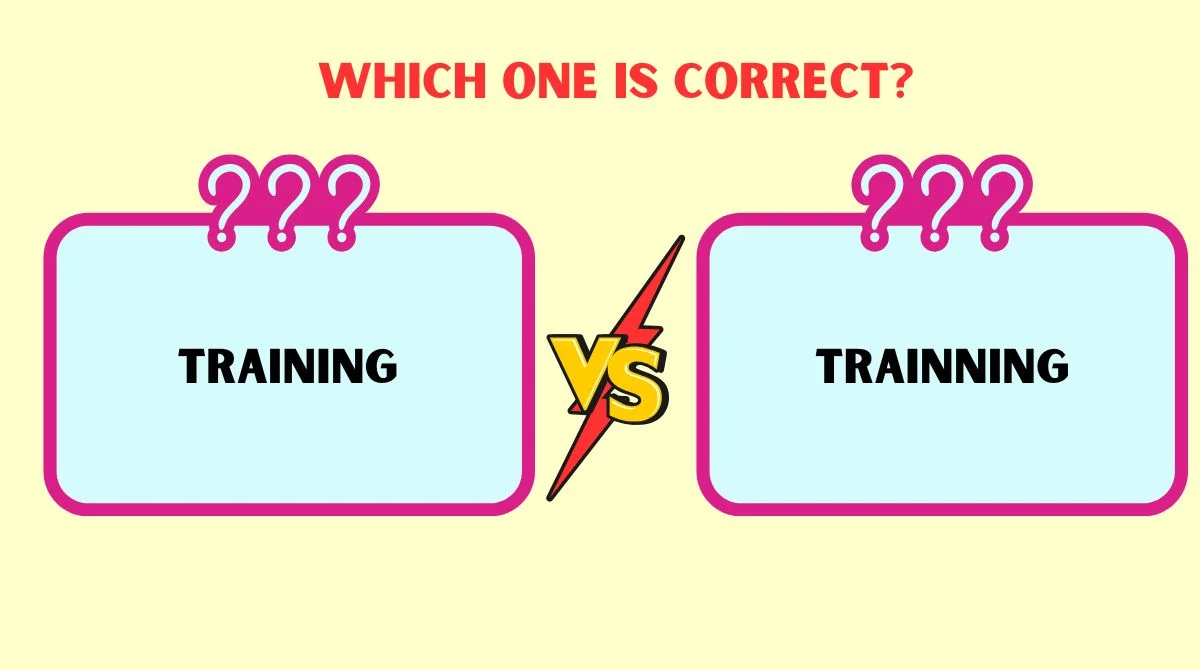
Spelling mistakes can cost you credibility, especially in professional and academic writing. One of the most common questions people face is whether “Training” or “Trainning” is correct.
In this post, we’ll dive deep into the topic, explain why “training” is correct, explore why people often make this mistake, and provide useful tips to avoid it.
Why “Training” is Correct
The word “training” is the proper spelling used in English across all contexts. Using “trainning” is incorrect and may negatively impact how others perceive your professionalism.
Origin and Meaning of “Training”
The word “training” comes from the verb “to train,” which originated from the Middle English “traine” and Old French “trainer,” meaning “to drag or pull.” Over time, the meaning evolved to signify teaching, instructing, and skill development.
Definition:
- Training (noun): The process of learning specific skills, knowledge, or behaviors.
- Training (verb): The act of teaching, practicing, or developing a skill.
Related Words:
- Trainer
- Trained
- Trainable
Common Contexts for Training
The word “training” appears in multiple professional, educational, and personal contexts:
- Workplace Learning: Employee development programs, onboarding sessions.
- Sports and Fitness: Gym exercises, athletic coaching, or physical conditioning.
- Education: Workshops, online courses, and skill-building classes.
Usage Examples
Here are some examples of correct usage:
- “The company offers training programs for new employees.”
- “She is training for the marathon next month.”
- “Online training has become essential in modern education.”
Why “Trainning” is Incorrect
Despite sounding similar, “trainning” is not a valid English word.
Why the Mistake Happens
- Phonetic Confusion: People sometimes double the “n” because of words like “running” or “beginning.”
- Autocorrect Errors: Software may suggest incorrect forms due to typing mistakes.
- Influence from Non-English Spelling Patterns: Learners of English might apply doubling rules inconsistently.
The Impact of Incorrect Spelling
Incorrect spelling of common words like “training” can have real consequences:
- Professional Reputation: Spelling errors on resumes, emails, or reports can lower credibility.
- Communication Clarity: Readers may misunderstand your message or question your expertise.
- Digital Presence: SEO ranking can suffer if key terms are misspelled online.
Quote: “Good spelling is a mark of professionalism and attention to detail.” – Career Experts
Side-by-Side Comparison: “Training” vs. “Trainning”
A quick glance at the differences makes it easy to remember:
| Word | Correct? | Common Contexts | Notes |
|---|---|---|---|
| Training | ✅ Yes | Work, sports, education | Standard spelling |
| Trainning | ❌ No | Typo only | Always incorrect |
Everyday Usage Examples
Correct:
- “Corporate training sessions improve productivity.”
- “Athletes undergo training to enhance performance.”
Incorrect:
- “The new employees will attend trainning tomorrow.” ❌
- “She is on a trainning program for advanced skills.” ❌
Tips for Remembering the Correct Spelling: “Training”
Getting spelling right is easier when you apply a few techniques:
Mnemonics and Memory Aids
- Mnemonic Example: “Only one ‘n’ is enough to move the train forward.”
- Visualize a train moving forward — no double “n” needed.
Pronunciation Tips
- Break it down: train-ing (two syllables)
- Stress on train reinforces correct spelling.
Common Misspellings and How to Avoid Them
- Trainin → Missing “g”
- Trainnig → Misplaced double “n”
- Trainning → Double “n” is unnecessary
Tips to Avoid Errors:
- Always use spell-check.
- Read writing aloud to catch mistakes.
- Practice writing the word in different sentences.
Special Contexts Where Spelling Matters
Spelling is more than just correctness—it can affect real-life outcomes.
Professional Applications
- Job Applications: Spelling errors in resumes or cover letters can reduce hiring chances.
- Business Communication: Clients may perceive you as careless.
- Training Certificates: Accuracy in official documentation is crucial.
Digital and Academic Contexts
- SEO Impact: Websites with correct keywords rank higher.
- Academic Submissions: Incorrect spelling can lead to lower grades or credibility issues.
Frequently Asked Questions
Is “trainning” ever correct?
No, “trainning” is always incorrect. The correct spelling is “training.”
Can British vs. American English affect this spelling?
No, both British and American English use “training” with one “n.”
What are the most common misspellings of “training”?
- Trainin
- Trainnig
- Trainning
How can I quickly check for correct usage?
- Use spell-check tools or grammar apps.
- Read aloud to see if it sounds natural.
- Memorize the mnemonic: one “n” is enough.
Why does spelling “training” correctly matter?
Correct spelling affects credibility, professional image, communication clarity, and even digital presence.
Conclusion
The correct spelling is “training”, while “trainning” is a common but incorrect mistake. Understanding the origin, meaning, and proper usage of training can improve your communication, professional credibility, and writing accuracy.
Use mnemonics, practice writing, and rely on proofreading tools to ensure this simple word never trips you up.
Spelling is not just a detail—it’s a reflection of your professionalism, care, and attention to the audience. By mastering training, you’ll write clearly, confidently, and correctly every time.
