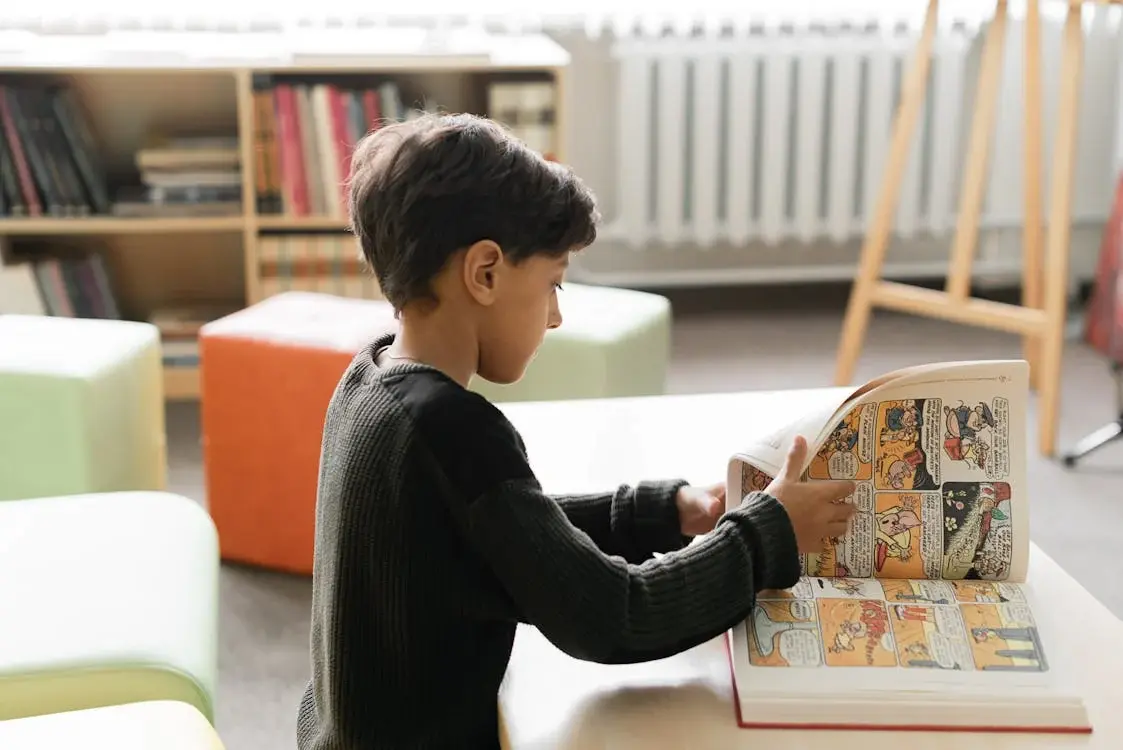
School libraries shouldn’t be boring.
But they often are.
There’s a reason most school libraries look the same. Rows upon rows of hard plastic chairs. Rectangular tables bolted to the floor. That weird brown carpet that’s been there since 1997. And students sighing when asked to go down for library time.
The problem isn’t biological. It’s fabricational.
The furniture choices being made in school libraries everywhere are telling students that this isn’t a place for them. That they’re supposed to sit quietly, read if they feel like it, and not disturb anyone.
Teachers know that’s not true. The library should be the place where curiosity is actively encouraged. Discovery awaits in every corner. Learning is what you do here.
That’s difficult to achieve when the furniture tells otherwise.
Everything Changes When You Choose the Right School Library Furniture…
Okay, so those vibes aren’t going to be achieved by furniture choices alone. But they will negatively impact how your library is used if you don’t get them right.
Choosing the right school library furniture starts with seats.
Most school libraries would benefit from investing in some sort of fabric school soft seating. Compared to hard seats and tables, soft seating invites students to use the library. To stay awhile. To explore.
You might be wondering…
- Won’t that cost a fortune?
- What about durability? Messy kids + fabric furniture? These are common concerns.
- Do I have to stick soft seating in corners? Do I need different types of soft seating?
Those questions (and more) are answered below…
Here’s what we’ll cover:
- Why Your Library Furniture Is Ruining Your Library
- Why Fabric School Soft Seating Works
- What Types of Soft Seating Are There?
- Using Furniture to “Zone” Your Library
- Things to Consider When Choosing Soft Seating
1. Why Your Library Furniture Is Ruining Your Library
If you had to sit on a hard plastic chair for an hour, how long do you think you could concentrate on the task in hand?
Probably not very long.
Students feel the same discomfort you do. School library chairs aren’t made for leisurely browsing or diving into a good book. They’re made to keep kids still. Preferably facing the front, too.
What does that tell your students about your library?
A study of 153 classrooms found that well-designed, student-centred classrooms can improve academic performance by up to 16%. Factors relating to personalisation of the learning environment (flexibility, student ownership of the space etc.) accounted for over a quarter of that increased performance.
A library is the easiest room at your disposal to incorporate these ideas. If you choose the right furniture.
2. Why Fabric School Soft Seating Works
How does furniture make your students feel?
Comfortable students concentrate for longer. They focus better. They’re more willing to engage with a task and see it through.
Uncomfortable students will actively avoid activities that require them to sit on hard surfaces for long periods of time. They know how you feel about sitting on a hard chair for an hour.
88% of students surveyed said that modern comfortable furniture had helped them learn. Two thirds of students said that classroom furniture had had a significant impact on their learning.
Students know what works for them. It’s worth listening.
Soft seating sends the subtle message to students that the library belongs to them. It’s a place to relax. A place to feel at ease. Even if it’s just for thirty minutes a day.
3. What Types of Soft Seating Are There?
Think about your library. The purpose it serves. How your students will use the space.
Not all soft seating is created equal. Some seats are better suited to different activities.
Areas to consider:
Modular soft seating Ideal for libraries. Can be arranged into different configurations depending on how the room is being used.
Bean bags/lounge chairs Welcome students to your reading corner. They’re comfy. Kids love them. And they’re great for encouraging students who wouldn’t usually pick up a book to have a go.
Curved/booth style seating Creates separation from the rest of the library. Ideal for focussed reading.
Low poufs / floor cushions Perfect for group collaboration. Low-level seating allows students to work together with less risk of disruption to others.
High-backed reading chairs Ideal for individual reading. High backs limit distractions.
Ps. All the above seating options are only this comfy because they’re made from FABRIC. Not only does fabric soft seating feel warmer and nicer to touch, it’s also quieter and more durable in the long run.
4. Using Furniture to “Zone” Your Library
Here’s the thing.
Most schools don’t zone their libraries.
They treat the library as one big space with one purpose.
But libraries serve many different purposes at once:
- Quiet reading (+ enclosed, soft seating)
- Group collaboration (+ round/tabletop soft seating)
- Book browsing (+ low seating that doesn’t obstruct sightlines)
- Group discussions (+ soft seating that can be pushed together in a cluster)
The furniture you choose dictates the zones you can create.
Using softer furniture textures and different seat sizes allows you to effortlessly “zone” your library without walls.
Try it. You’ll see.
5. Things to Consider When Choosing Soft Seating
If you’ve decided that soft seating could be a good fit for your library, keep the following in mind:
- Durability is key. Fabric chairs in a school library see a LOT of use. Make sure your chairs are durable and made with thick high-quality foam.
- Can it be wiped clean? Kids + furniture do not mix unless it’s easy to wipe clean. Water bottles. Packed lunches. Felt-tip pens. You name it. They’ll spill it.
- Buy different sizes. Libraries are used by students of all shapes and sizes. Make sure you cater for everyone by purchasing seats of different scales.
- Colour! Colours can affect mood and learning. Stick to calming tones of greens and blues for areas where you want students to focus. Use brighter colours for collaborative spaces.
- Can it be moved? Is your soft seating lightweight enough to be moved? Lighter seats allow for flexibility in the classroom. Teachers should be able to easily rearrange seating for group work.
Library Upgrades Don’t Have to Break the Bank
Soft seating comes in loads of different price ranges. Before you write-off soft seating as ‘too expensive’ have a look around.
You’d be surprised at how affordable it can be.
Library furniture can and should make your students feel at ease.
Throw out the hard chairs. Bring in some soft seating. Your library won’t look the same again.
Also Read
- How Commercial Remodels Benefit from Scheduled Dumpster Rotations
- What Employees Seek in Modern Payroll Benefits
- Industrial Safety and Fall Protection Solutions for Safer Work Environments
