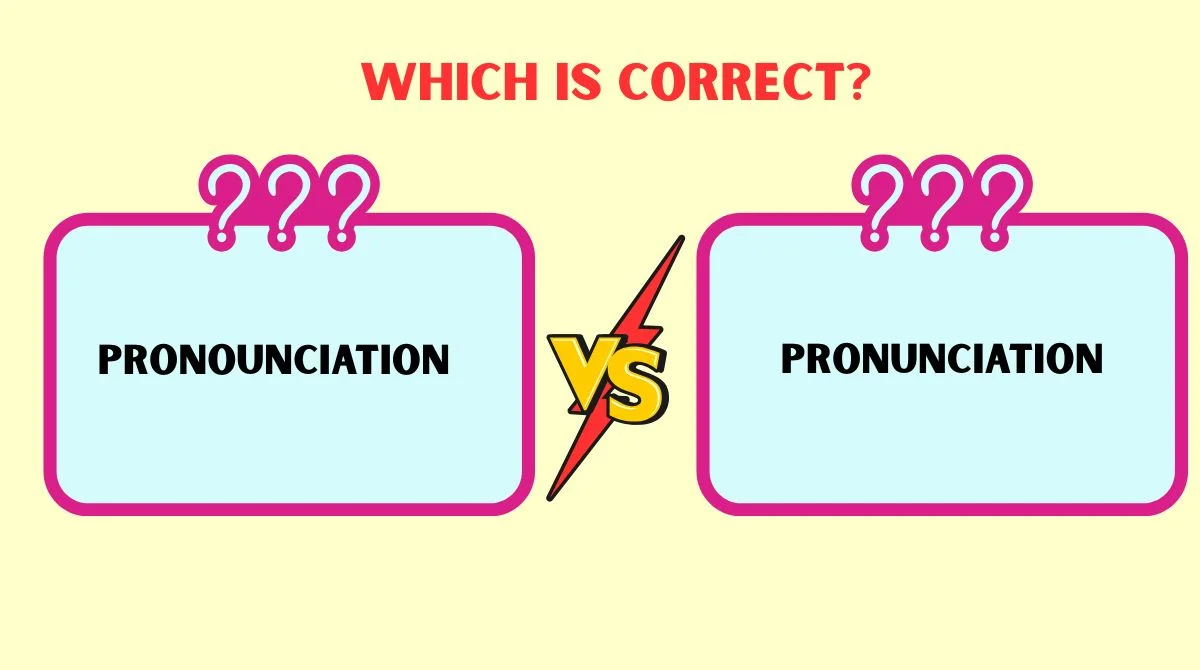
Discover the difference between Pronounciation and Pronunciation. Learn correct usage, historical origins, common mistakes, dialect influences, and tips for proper pronunciation.
⚡ Quick Summary
Many people wonder whether to write pronounciation or pronunciation. While “pronounciation” appears in everyday speech, it is incorrect. The correct spelling is pronunciation, reflecting both historical etymology and modern English usage.
This guide will cover everything you need to know: from origins and historical usage to common mistakes, dialect differences, pronunciation tips, and FAQs. By the end, you’ll confidently use the correct form in writing and speech.
Understanding the Confusion
The confusion between pronounciation and pronunciation arises because the spoken form of “pronunciation” sounds like it contains an extra “o” – “pronoun-ciation.” Many English speakers naturally add this vowel when they speak.
This error has persisted over centuries due to:
- Phonetic assumptions: People often spell words how they hear them.
- Influence of informal speech: Casual conversation encourages approximate spellings.
- Lack of awareness of etymology: Few know the historical roots of the word.
Understanding why this mistake occurs helps prevent it.
What Is Pronounciation?
Pronounciation is technically incorrect, but it is commonly recognized as a misspelling. It is often found in informal contexts or typing errors.
Example of incorrect usage:
- ❌ “Her pronounciation of French words was flawless.”
- ✅ Correct: “Her pronunciation of French words was flawless.”
Despite being wrong, “pronounciation” is widely seen because it mirrors the way the word is pronounced.
What Is Pronunciation?
Pronunciation is the correct spelling and refers to the act of speaking a word correctly. It covers both the way a word sounds and the accepted standard of speech in a language.
Definition:
Pronunciation (noun): The way in which a word is pronounced.
Examples:
- “British and American English have differences in pronunciation.”
- “Learning the correct pronunciation is essential for language learners.”
Using pronunciation correctly ensures clarity in writing and professional communication.
Which Is Correct: Pronounciation or Pronunciation?
The correct choice is pronunciation. While “pronounciation” may seem logical, it is not accepted in dictionaries or formal writing.
Quick Tip: Think of the word pronounce – the noun form drops the ‘o’:
- Verb: pronounce
- Noun: pronunciation
This connection is key to remembering the correct spelling.
Side-by-Side Comparison: Pronounciation vs Pronunciation
| Feature | Pronounciation | Pronunciation |
|---|---|---|
| Spelling | Incorrect | Correct |
| Recognition | Commonly mistaken | Accepted in dictionaries |
| Usage | Informal or incorrect contexts | Standard English |
| Pronunciation | /prəˌnaʊnsiˈeɪʃən/ (misheard) | /prəˌnʌnsiˈeɪʃən/ |
| Origin | Misinterpreted from “pronounce” | Derived from Latin and Old French roots |
Frequency of Usage
Analysis of language data shows a stark difference in usage:
- Pronunciation: Appears in millions of published texts, dictionaries, and educational materials.
- Pronounciation: Rare, mostly in informal writings, blogs, and personal messages.
Insight: The persistent use of “pronounciation” comes mainly from spoken language errors, not formal writing.
Origins and History of “Pronunciation”
Etymology
The word “pronunciation” originates from:
- Latin: pronuntiare (to proclaim or announce)
- Old French: prononciation
- Middle English: pronunciation
Notice how the Latin and French forms skip the “o” in the noun form, explaining the correct spelling.
Historical Usage
- Writers from the 16th and 17th centuries sometimes recorded “pronounciation” in manuscripts, but it was considered incorrect.
- Modern dictionaries have standardized “pronunciation” as the only correct form.
Quote:
“Language changes, but certain conventions like spelling help maintain clarity.” – Linguistic scholar
Why People Often Say “Pronounciation”
The reason many use pronounciation includes:
- Sound similarity: It mimics how people speak.
- Cognitive bias: The brain associates “noun” in pronunciation with “pronounce,” adding an extra vowel.
- Educational gaps: Lack of awareness in spelling rules.
Example:
A learner might hear “pronunciation” and spell it phonetically as pronounciation, thinking it is correct.
Pronunciation in Different English Dialects
English dialects influence how the word is spoken:
| Dialect | Pronunciation | Notes |
|---|---|---|
| British | /prəˌnʌnsiˈeɪʃən/ | Standard RP accent |
| American | /prəˌnʌnsiˈeɪʃən/ | Slight variation in stress, same spelling |
| Canadian | Similar to American | Consistency in spelling |
| Indian | /prəˌnaʊnsiˈeɪʃən/ | Influence of local accents may add “o” sound |
Tip: Despite accent differences, spelling stays the same: pronunciation.
Common Questions About Pronunciation
Is It Pronunciation or Pronounciation?
- ✅ Correct: Pronunciation
- ❌ Incorrect: Pronounciation
How Do You Pronounce Pronunciation Correctly?
- Phonetic: /prəˌnʌnsiˈeɪʃən/
- Stress falls on the third syllable: “nun.”
Why Does “Pronounciation” Persist?
- Casual speech, phonetic spelling, and influence of accents keep it alive.
What Are Common Mispronunciations of Pronunciation?
- Adding extra syllables: /prəˌnaʊnsiˈeɪʃən/
- Omitting sounds: /prəˌnʌnsˈeɪʃən/
Is Pronunciation Different in British vs American English?
- Slight differences in vowel sounds, but spelling is identical.
Tips for Correct Pronunciation
Practical strategies to avoid errors:
- Break it down syllable by syllable: pro-nun-ci-a-tion
- Use mnemonics: Remember “pronounce” → “pronunciation”
- Listen to native speakers: YouTube, dictionaries, or language apps
- Practice aloud: Repetition helps imprint correct spelling and sound
- Visual memory: Write the word correctly multiple times
Example Exercise:
- Write 10 sentences using pronunciation correctly.
- Record yourself saying each sentence.
- Compare with a dictionary’s audio.
Useful Resources
- Merriam-Webster Dictionary: https://www.merriam-webster.com/dictionary/pronunciation
- Oxford English Dictionary: https://www.oed.com
- YouGlish Pronunciation Examples: https://youglish.com
Related Misspellings and Errors
Other words commonly misspelled due to similar phonetic confusion:
- Accommodation → Acommodation
- Definitely → Definately
- Separate → Seperate
- Occurrence → Occurence
- Embarrassment → Embarassment
Fact: Correct spelling ensures credibility, especially in academic and professional writing.
Quick Reference FAQ
How do I remember the correct spelling?
- Link it to the verb pronounce → noun is pronunciation.
Is “pronounciation” ever acceptable?
- Only in casual, informal writing. Dictionaries mark it as incorrect.
Can accents change the correct spelling?
- Accents may influence pronunciation but not spelling.
How often do native speakers make this mistake?
- Commonly in casual speech, rare in formal writing.
Are there other tricky English words like this?
- Yes, English has many words where spoken form differs from spelling (e.g., Wednesday, February).
Summary & Key Takeaways
- Pronunciation is correct; pronounciation is a common error.
- Phonetic assumptions and accents often lead to mistakes.
- Historical usage and etymology clarify why the “o” is dropped in the noun form.
- Practicing correct pronunciation and spelling improves clarity and confidence.
- Use resources, exercises, and repetition to master this word.
Conclusion
Understanding the difference between pronounciation and pronunciation is more than an academic exercise—it helps you communicate clearly and professionally.
By remembering the link to the verb pronounce, practicing aloud, and being aware of dialect influences, you can avoid common mistakes.
Next time you write or speak, confidently choose pronunciation and set yourself apart as precise and knowledgeable in English.
