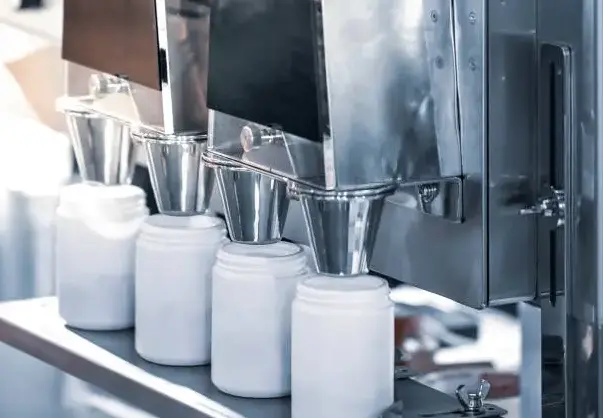
In industries working with powdered substances like food, nutrition, medicine, or chemicals, precision and cleanliness are necessary. Before a product can be sold, it must be properly filled, sealed, and packaged without contamination. Packaging is paramount to the overall product quality, and this is when a powder filling machine producer comes into play.
Primary powder filling machines excel in accuracy, speed, and seamless integration with other systems to maintain hygiene. Interiors and exteriors are designed with product flow control and auger systems, and other controls to maximize integrity and output efficiency. In highly regulated businesses, knowing the machines are engineered for accuracy allows the producers to gain a competitive advantage.
The Unique Complexity of Powder Packaging
Every type of packaging comes with its own challenges, but for powders, the issues can be especially pronounced. Unlike solids and liquids, powders are more diffused and variables like flow characteristics, moisture sensitivity, and density need to be taken into consideration. A fine powdered milk requires a different method to be handled for packaging. Other powders have coarser densities like protein blends and highly dense blends like pharmaceutical powders. All of these factors require different environments for sealing and precision in dosing.
So these powder filling machine manufacturers must design systems that can handle different types of powders without sacrificing efficiency or losing quality. Dust collection systems capture airborne powders and reduce housekeeping issues, and spillage from the filling systems can be managed through baffled filling systems and collection hoppers. Technologies such as auger fillers, vacuum fillers, and volumetric fillers can be designed and configured to prevent under and over-filling and collect dust.
In the packaging systems, sealing technologies, and retention systems are designed to control the introduction and circulation of air as well as to prevent moisture and other harmful contaminants from entering or nesting within the system.
Clean and consistent filling of powders within the stipulated guidelines creates trust over time within the competing market for B2B manufacturers.
Engineering Precision: The Core of Powder Filling Machines
Industrial powder filling systems must be designed and constructed to provide the necessary engineering precision. Contemporary systems in use are capable of incorporating auger fillers, real time control systems, and servo motors to maximize efficiency and maintain compliance over extended production periods. Each system component, be it the hopper, filling head, conveyor, or sealing unit, must be engineered to ensure effective processing of the powder and to maintain the necessary flow without causing blockages.
There is no doubt that the automation brings several benefits to the powder filling operation. Feedback systems constantly adjust the weight of the filling powder to avoid under filling and over filling of the container. These dynamic systems cut excess losses and improve returns to the business.
For example, you can find canning lines for sale and integrated powder filling systems that can achieve such volume and consistency. In such lines, powder fillers and their over wrappers or sealers, labelers, and even inspection is part of a fully functional, fully automated packaging line that removes the need for manual touch.
The machines also have protective enclosure systems to capture and contain dust, chambers to filter and purify the machine exhaust air (HEPA filters), and they are made of stainless steel to meet international standards of the food and pharmaceutical industries. These attributes significantly improve the machine usability and operational safety.
The Role of Automation and Digital Control Systems
Industrial packaging has been revolutionized by automation. Modern control systems allow unprecedented versatility and accuracy to powder filling machines. Through custom software and user-friendly touch screens, operators can change fill amounts, adjust speeds, and switch between container types with virtually no down time.
With data-driven technologies, integration allows for constant monitoring reporting, as machines’ performance, weight accuracy, and energy usages are tracked in real-time. Digital transparency allows B2B producers to make versatile, educated decisions, optimizing and preemptively scheduling maintenance for seamless processes.
The filling systems, alongside other packaging elements like conveyors, sealers, and inspection cameras, harmonization creates cohesive production lines capable of running multiple SKUs with reconfiguration.
Furthermore, to ensure production lines remain stable and reliable, AI-based analytical systems can spot minor deviations that may lead to discrepancies. These advancements reduce human dependence while also maintaining a high level of control and accuracy.
Saving Product Integrity Through Intelligent Design
The ultimate goal of the powder packaging system is to maintain product integrity, which is a focus from dosing, filling, sealing, to labeling. Additionally, product packaging powder design is critical to ensuring that the packaged product is protected from physical, chemical, or environmental harm.
An engineered filling system will ensure moist powders will retain their texture and quality will remain intact for the duration of production. Firmly sealed hoppers with unique geometric designs and vibratory systems avoid compaction or segregation of powder, ensuring consistency for each batch.
The mechanisms used for Air-tight sealing, nitrogen flushing, and vacuum systems to guard sensitive powders from degradation due to oxygen and moisture exposure.
In addition, contemporary filling machines accommodate various forms of packaging, such as cans, pouches, and bottles. A module system from any powder filling machine supplier, for instance, can come with a can sealing or labeling station, and module systems offer businesses the flexibility to adjust and expand their production lines without a complete system replacement when their production demands change.
This ultimately leads to the packaging process, which allows the products to be presented professionally and consistently, which increases the credibility of the brand.
Efficiency and Sustainability in Powder Packaging
Innovation in the industry is heavily influenced by Sustainability. Engineers in Packaging design new systems with the goal of minimizing waste, saving energy, and utilizing recyclable materials. Transitioning powder filling machines is where this high precision and resource saving works.
Improved filling methods help prevent overfilling, saving materials, and energy efficient drives, along with servo controlled motors, save electricity. Fine particles often get lost in the collection systems, however, a lot of these machines come with vacuum recovery to reclaim the lost particles during filling.
Hygienic design plays a part in encouraging sustainability by minimizing the use of strong cleaning chemicals and reducing the amount of water needed. Clean-in-place features help machines to be sanitized automatically, saving time and resources by reducing downtime.
The modular design of contemporary equipment also contributes to sustainable systems. Rather than replacing whole systems, companies can upgrade individual elements like fillers, conveyors, or sealing modules, prolonging the life of machines and cutting down on waste.
These developments allow B2B companies to incorporate sustainability measures into their businesses and make powder filling lines sustainable and profitable.
The Future of Powder Filling Technology
As industries undergo digital transformation, the most advanced powder filling machines will be equipped with predictive, flexible, and sustainable technologies. More advanced artificial intelligence will be used to optimize filling processes by predicting the best parameters needed to fill various powder types
Future systems will use digital twins to create and test virtual prototypes of machines before building them, minimizing time spent on design and maximizing efficiency.
The use of robots to perform tasks that are repetitive, require high accuracy, or are time-consuming will be a further evolution of these systems. This will improve efficiency and reduce errors caused by humans.
Innovation will still be impacted by sustainability, though. Machines that are constructed using recyclable materials, consume less energy, and produce no waste will be created. For international B2B distributors, the foreseeable future of automation in the field of powder filling will be smart and sustainable—integrated technology that is environmentally responsible, and green technology.
Conclusion
In powder-based production, one critical aspect is the function of the filling: precision. Every stage in the packaging process needs to be designed to maintain the packing integrity of the product while enhancing the packaging process’s efficiency and throughput. That is why the role of a powder filling machine manufacturer has never been greater.
With advanced automation systems, consideration of sanitary design, engineered sustainability, and data driven smart systems, these manufacturers are changing the way industries scale their operations to handle powders. In systems designed to work together, such as a canning line for sale and powder filling machine combination, the productivity of the system is greatly increased, and designed for fast and precise delivery over long operational periods.
For B2B companies, the investment in more advanced powder filling technology represents more than just the ability to increase the speed of operations. It represents the ability to enhance the quality of the product, protect operational compliance, and enhance system efficiency to ensure operational success for the long term.
Also Read-How to Avoid Hidden Fees When Selling Your Home Quickly
