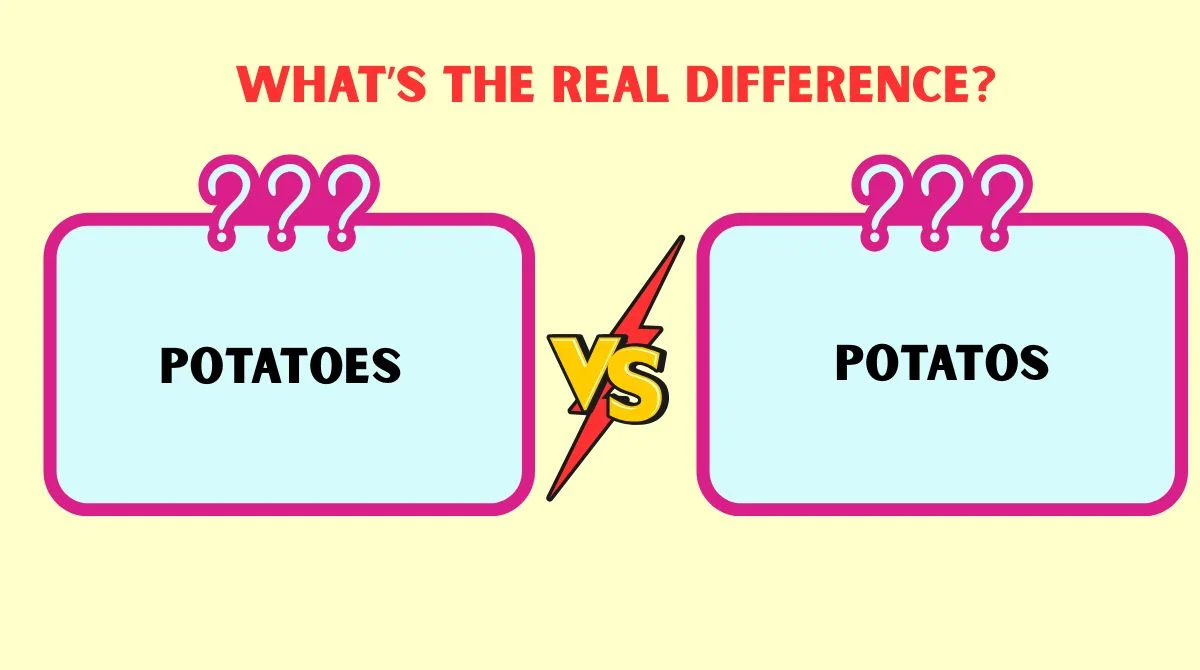
Ever found yourself staring at the word potatoes and wondering if it should be spelled potatos instead? You’re not alone.
This confusion has puzzled students, writers, cooks, and even seasoned English speakers.
In this article, you’ll learn the fascinating history, grammar rules, and practical tips to ensure you never mix up these two spellings again.
Introduction: Why This Spelling Debate Still Confuses People
The battle between “potatoes” and “potatos” isn’t just a typo problem. It reflects the quirks of English pluralization rules. You’ll see “potatos” pop up in recipes online, memes on social media, and even in advertisements.
This confusion persists because English has both regular and irregular plural forms, and many words ending in “-o” don’t follow the same rule. By the end of this guide, you’ll have a solid grasp on the correct spelling and the history behind it.
“Good spelling is not about memorizing a list — it’s about understanding patterns.”
The History Behind the Word “Potato”
The story of the word potato is as rich as the soil it grows in.
- The word originates from the Spanish “patata”, which itself blended two words:
- Papa (from the Quechua language in the Andes)
- Batata (from the Taíno language of the Caribbean)
When Spanish explorers brought the vegetable to Europe in the 16th century, they also carried the word.
In English texts from the late 1500s, the spelling varied — sometimes potato, sometimes potata or even potado. By the 18th century, “potato” became the standard in dictionaries and schoolbooks.
Fun fact: Early printed English had far less standardized spelling. Words often shifted depending on regional accents and printers’ preferences.
Singular and Plural: The Core Rule
At the heart of the confusion is the singular versus plural form.
- Singular: Potato – refers to one vegetable.
- Plural: Potatoes – the standard English plural form.
Why does the plural form add “-es” instead of just “-s”?
English typically adds “-es” to nouns ending in “-o” when they’re preceded by a consonant, such as:
- Potato → Potatoes
- Tomato → Tomatoes
- Hero → Heroes
This pattern is due to historical grammar rules in Middle English, where adding just “-s” made the word harder to pronounce.
Common Reasons for the Confusion
English is notorious for exceptions, which fuels the debate.
- Other “-o” words don’t add ‘-es’:
- Photo → Photos
- Piano → Pianos
- Solo → Solos
- Digital typos and autocorrect:
Predictive text sometimes changes “potatoes” to “potatos.” - Phonetic simplicity:
When spoken, potatoes and potatos sound identical. - Pop culture references:
Occasionally, jokes or memes use “potatos” for comic effect, spreading incorrect spelling.
Potatoes vs Potatos: Rules and Misconceptions
✅ The Correct Form: Potatoes
- Definition: The starchy tuber vegetable we all know.
- Usage: Always the right plural in modern English.
- Examples:
- “We need three pounds of potatoes for the soup.”
- “The farmers harvested thousands of potatoes this season.”
Grammatically, adding “-es” maintains the natural pronunciation and follows centuries-old English conventions.
❌ The Incorrect Form: Potatos
“Potatos” is a spelling mistake, but it became common due to the influence of other “-o” words that only take “-s” in the plural.
- Historical appearances: In some 17th- and 18th-century texts, you may find potatos. These were transitional forms before standardization.
- Modern usage: Considered incorrect in all formal writing.
“Spelling ‘potatos’ is like saying ‘tomatos.’ It looks wrong because it is wrong.”
Practical Examples: Get It Right Every Time
Learning through examples is the fastest way to remember.
Correct Usage
- “I bought two potatoes for the experiment.”
- “These potatoes are perfect for baking.”
Common Mistakes
- ❌ “The farmer planted potatos in the field.”
- ❌ “We roasted the sweet potatos last night.”
Quick Comparison Table
| Form | Status | Example Sentence |
|---|---|---|
| Potato | Singular | “This potato is fresh.” |
| Potatoes | Correct Plural | “We peeled five potatoes for lunch.” |
| Potatos | Incorrect | “The potatos were stored in a sack.” |
Memorization Tips: Never Get It Wrong Again
Here are some tried-and-true techniques to remember the right spelling:
- Mnemonic trick:
“If it ends in -o and you can eat it, add -es.”
Works for both potatoes and tomatoes. - Word association:
Think of the famous rhyme: “One potato, two potatoes, three potatoes, four…” - Pattern practice:
List other words that follow the same pattern:- Tomatoes
- Heroes
- Echoes
- Volcanoes
- Reinforcement:
Write sentences daily using the plural form until it feels natural.
Other Words with Similar Spelling Patterns
Some English words ending in “-o” also take “-es” in the plural. This makes them easy companions to remember with potatoes.
| Singular | Plural |
|---|---|
| Tomato | Tomatoes |
| Hero | Heroes |
| Veto | Vetoes |
| Echo | Echoes |
| Mosquito | Mosquitoes |
Exceptions:
Words like piano, photo, and halo take only “-s” because of different historical roots and pronunciation rules.
Top Case Study: When “Potatos” Caused a Stir
In 1992, then US Vice President Dan Quayle corrected a student’s correct spelling of potato to potatoe during a spelling bee. The incident went viral (long before social media) and highlighted how easily spelling rules can trip up even public figures.
This episode serves as a reminder: spelling errors can stick in public memory for decades.
FAQs: Quick Answers to Common Queries
How do you spell the plural of potato?
Always potatoes. Never use potatos in modern English.
Is “potatos” ever correct in informal writing?
No. Even informally, it’s a recognized misspelling.
Why does potato take “-es” but piano does not?
Because of different historical word origins and pronunciation ease.
What about sweet potatoes?
The same rule applies: singular sweet potato, plural sweet potatoes.
Are there other food words with tricky plurals?
Yes: tomato/tomatoes, mango/mangoes, avocado/avocados (often with either -s or -es accepted).
What’s the best trick to remember the spelling?
Use the mnemonic: “If it ends in -o and you can eat it, add -es.”
Final Thoughts: Mastering the Plural Spelling Once and for All
The difference between “potatoes” and “potatos” is simple but often overlooked. English grammar can feel inconsistent, yet this rule follows a clear pattern.
Stick with potatoes as the correct plural form. With a little practice and awareness of similar words, you’ll avoid this common spelling trap.
“Language rules aren’t barriers; they’re tools for clearer communication.”
