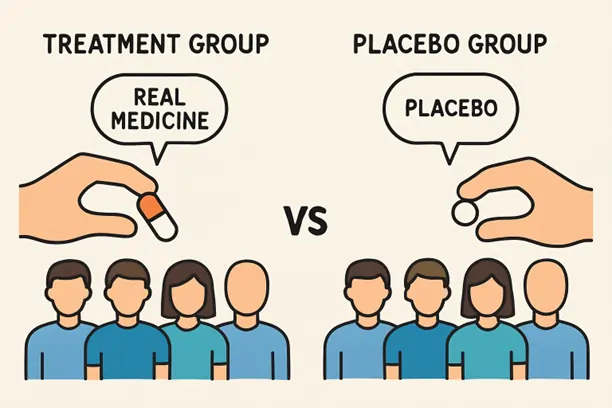
In clinical research, accurately measuring the success of a new treatment depends on a rigorous study design. Two key components in establishing whether a treatment truly works are the use of placebos and control groups. These essential tools help researchers lay a scientific foundation for comparison, enabling them to distinguish real results from outcomes driven by patient expectations or the natural history of an illness. Understanding the role of these concepts is particularly important for anyone interested in how medical advances are tested, especially in the first phase of a clinical trial, when the initial effects of new interventions are explored.
A placebo is an inactive substance or procedure that mimics the experimental treatment, while a control group serves as the reference point against which the effects of the experimental treatment are measured. Both provide benchmarks that are critical for scientific credibility, protecting clinical trials from the influence of psychological or external factors. By using these tools effectively, researchers can deliver results that advance medical knowledge and ultimately improve patient care.
The use of placebos is rooted in decades of scientific research, revealing that patient belief alone can trigger real physiological changes, an effect commonly called the placebo effect. Control groups counteract this and other biases, making clinical trials more objective and outcomes more reliable.
Understanding Placebos in Clinical Trials
Placebos are more than inert “sugar pills.” They can be injections, topical creams, or even mock procedures, depending on the study’s context. The placebo effect, the measurable improvement in patients who believe they are receiving a treatment, is a powerful testament to the mind-body connection. Researchers incorporate placebos into trials to separate improvements caused by expectation from those caused by the actual treatment being tested.
This distinction is crucial in early clinical trial phases, as it prevents overestimating a treatment’s benefits. Without placebos, it can be nearly impossible to know if a therapy is genuinely effective or if perceived gains are tied to patient optimism or natural fluctuations in symptoms.
The Role of Control Groups
Control groups are the backbone of robust clinical trials. They allow researchers to identify what happens when a patient receives no intervention, a placebo, or the gold-standard existing treatment. Without this comparative anchor, the true impact of a new drug or therapy could remain hidden or misinterpreted.
A trial might have several types of control groups, depending on ethical and practical considerations. Strategic use of controls helps eliminate alternative explanations for outcomes, such as improvements due to other medications, lifestyle changes, or even seasonal variation in symptoms.
Types of Control Groups
- Placebo-Controlled Groups: Participants receive a placebo indistinguishable from the investigational treatment. This design is the hallmark of determining a therapy’s effectiveness beyond mental or psychological responses alone.
- Active-Controlled Groups: In these groups, volunteers are given an established standard-of-care treatment rather than a placebo. This helps determine if a new therapy surpasses what is already available or simply matches it.
- Historical Controls: When using historical controls, outcomes from earlier studies or patient populations are used for comparison. While useful in rare diseases where recruitment is challenging, this type faces criticism for potential differences in data collection or healthcare standards over time.
Ethical Considerations
Ethics lies at the heart of clinical research design, especially concerning the use of placebos and control groups. Regulatory frameworks, such as the Declaration of Helsinki, emphasize that placebos are ethically permitted only when no proven or effective therapy exists for the condition being studied. When alternative treatments are established, withholding them could endanger participants, making placebo use inappropriate.
Transparency about the use of placebos is essential. Participants must be fully informed and voluntarily consent to the study’s conditions. Ethical review boards oversee protocols to ensure participant welfare is prioritized at every step.
Challenges in Blinding
Blinding, or masking, aims to keep patients and researchers unaware of which group receives the actual treatment, thereby counteracting conscious or unconscious biases. Effective blinding can be difficult, particularly if new therapies have noticeable side effects or distinctive characteristics. When blinding is compromised, even highly controlled trials risk generating biased results.
To address these challenges, researchers fine-tune their trial designs, sometimes employing double-blinding (where neither patients nor study staff know assignment) or using “active placebos” that mimic side effects. This meticulous planning is vital for unbiased results.
Innovations in Control Methods
The growing field of synthetic control arms is reshaping clinical research. These methods use real-world patient data from electronic health records or registries to create virtual control groups. Particularly useful in rare diseases, synthetic controls reduce the need for large patient cohorts and allow studies to continue even when recruiting participants for traditional control groups is infeasible. These data-driven advances make trials more flexible while upholding scientific rigor, offering a promising avenue for complex or urgent medical questions.
Public Perception of Placebos
Patients’ understanding of placebos can influence trial outcomes. Some view placebos as harmless scientific tools, while others see them as “fake treatments.” Communicating the rationale for placebo use and its impact on scientific discovery is crucial for building trust in research. People who strongly believe in the potential benefits of a placebo may experience stronger effects, underscoring the need for well-designed trials and clear information for participants.
Final Thoughts
The use of placebos and control groups underpins the integrity of clinical research, enabling investigators to distinguish genuine treatment effects from psychological or incidental factors. While ethical and methodological challenges must be navigated carefully, ongoing innovations in trial design and data management ensure that these fundamental concepts remain central to the development of safe, effective medical interventions.
Read more: A Beginner’s Guide to Paint Protection Films
How Technology Is Shaping the Future of Home Buying
How Track Surface Choice Affects Athlete Performance and Injury Risk
