Blog

  • 📅 Next Friday vs This Friday: Clear Up the Confusion Today!

    📅 Next Friday vs This Friday: Clear Up the Confusion Today!

    The phrases “Next Friday” and “This Friday” might seem straightforward at first glance, but they often lead to confusion.

    Is “next Friday” the Friday coming up or the one after that? Does “this Friday” include today if it’s already Friday? Misunderstanding these terms can lead to missed appointments, scheduling errors, and general frustration.

    In this guide, we’ll break down the differences between these phrases, provide examples, and offer tips to help you navigate these terms confidently.


    Understanding the Basics of “Next Friday” and “This Friday”
    Next Friday vs This Friday

    When we talk about “Next Friday” or “This Friday,” we’re referencing specific points in the week. The confusion often arises because these phrases depend on where we are in the current week.

    “Next Friday” or “This Friday”? These phrases often cause confusion! Learn the key differences, practical examples, and tips to avoid scheduling misunderstandings.

    • “This Friday” typically refers to the Friday in the same week as the current day.
    • “Next Friday” usually refers to the Friday in the following week, though some interpret it differently based on context.

    Understanding these basics is the first step to using these terms correctly.


    Common Misconceptions and the Week’s Structure

    One of the most common misconceptions about “next” and “this” relates to how people perceive the week’s structure. Here are a few key points:

    • The week starts on Monday for some people (e.g., workweek) and on Sunday for others (e.g., traditional calendar).
    • The meaning of “this Friday” can change depending on whether the speaker is referring to the current or the next occurrence of Friday.

    Example:

    • If today is Wednesday, “this Friday” is in two days.
    • If today is Saturday, “this Friday” likely refers to the Friday that just passed unless otherwise specified.

    What You Might Be Getting Wrong

    Miscommunication about “next Friday” and “this Friday” often happens due to assumptions. Here’s what to watch for:

    • Assuming everyone interprets “next” or “this” the same way you do.
    • Failing to account for how far into the week you are when speaking.
    • Ignoring regional or cultural differences in how these terms are used.

    To avoid these pitfalls, always clarify what you mean when discussing days of the week.


    How Days of the Week Play a Role

    The day of the week you’re currently on can drastically influence the meaning of “this” and “next.” Let’s break it down:

    • Monday to Wednesday:
      • “This Friday” refers to the upcoming Friday within the same calendar week.
      • “Next Friday” likely refers to the Friday in the following week.
    • Thursday or Friday:
      • “This Friday” is the current day or the next day.
      • “Next Friday” could mean the Friday of the following week.
    • Saturday or Sunday:
      • “This Friday” might refer to the Friday that just passed.
      • “Next Friday” is often interpreted as the upcoming Friday.

    By understanding the relationship between the current day and the terms used, you can better anticipate potential misunderstandings.


    Defining “Next Friday” – More Than Just Seven Days Away

    “Next Friday” doesn’t always mean the Friday after seven days. Context plays a crucial role here.

    • Literal Definition: The Friday of the week following the current one.
      Example: If today is Tuesday, “next Friday” is 10 days away.
    • Colloquial Usage: Sometimes used to refer to the immediate upcoming Friday.

    Tip: To clarify, use phrases like “Friday next week” or specify the date when scheduling important events.


    “This Friday” Explained – Navigating the Current Week

    When people refer to “this Friday,” they generally mean the Friday within the same week as the current day. However, exceptions occur based on the context and timing.

    • If today is Monday, “this Friday” is clear—it’s four days away.
    • If today is already Friday, “this Friday” may cause confusion. Does it mean today or the Friday of the upcoming week?

    Key takeaway: When in doubt, ask for clarification or refer to the specific date to avoid miscommunication.


    Identifying “This Friday” When the Weekend Hits

    The confusion surrounding “this Friday” becomes more pronounced during the weekend.

    • Saturday or Sunday: Some people consider “this Friday” to be the Friday that just passed.
    • Others may interpret it as the upcoming Friday.

    Real-world impact: If someone says, “Let’s meet this Friday,” while talking on a Sunday, confirm whether they mean the upcoming Friday or the one that just passed.


    Real-Life Scenarios: Examples of “Next Friday”

    Here are practical examples to understand how “next Friday” works:

    1. Today is Monday:
      • “Next Friday” refers to the Friday of the following week.
      • Example: “Our vacation starts next Friday,” meaning 11 days from now.
    2. Today is Thursday:
      • “Next Friday” could mean 8 days away.
    3. Ambiguity:
      • If someone says, “I’ll call you next Friday,” ask whether they mean tomorrow or the Friday after next.

    Real-Life Scenarios: Examples of “This Friday”

    Examples to illustrate “this Friday” include:

    1. Today is Tuesday:
      • “This Friday” is in three days.
      • Example: “We have a meeting this Friday,” referring to the same week.
    2. Today is Friday:
      • “This Friday” could mean today or the upcoming Friday.
    3. Weekend Ambiguity:
      • If someone on Saturday says, “I meant this Friday,” clarify whether they’re talking about the day that just passed or the next Friday on the calendar.

    Navigating Ambiguity: Tips for Clear Communication

    To avoid confusion, try these strategies:

    • Use specific dates whenever possible.
      Example: “Let’s meet on Friday, February 21st.”
    • Clarify your intent by adding context.
      Example: “This Friday, as in the 16th.”
    • Avoid relying solely on “next” or “this” when the timing might cause ambiguity.

    Pro Tip: If in doubt, ask for clarification. It’s better to confirm than to assume incorrectly.


    Questions to Ask for Clarity

    When someone says “this Friday” or “next Friday,” here are questions you can ask:

    • “Do you mean this Friday in two days or next week’s Friday?”
    • “Are you referring to the upcoming Friday or the Friday after that?”
    • “Can you confirm the date for Friday you’re talking about?”

    Understanding Regional Differences in Usage

    Did you know the interpretation of “next Friday” and “this Friday” varies by region?

    • United States: “Next Friday” typically means the Friday of the following week.
    • United Kingdom: Some interpret “next Friday” as the very next occurrence of Friday.

    Cultural Context: When speaking to someone from a different region, it’s especially important to clarify what you mean.


    FAQs

    What does “this Friday” mean?

    “This Friday” typically refers to the upcoming Friday within the current calendar week. However, if it’s already Friday, some may use it to mean the current day.

    What does “next Friday” mean?

    “Next Friday” usually refers to the Friday in the following week. However, some interpret it as the immediate upcoming Friday. Clarifying with the exact date is always a good idea.

    Does “this Friday” include today if it’s Friday?

    If it’s already Friday, “this Friday” might refer to the current day or the next Friday, depending on context. Clarify to avoid confusion.

    How can I avoid confusion between “next Friday” and “this Friday”?

    Use specific dates or phrases like “this upcoming Friday” or “Friday next week.” When in doubt, confirm with the other person to ensure clarity.

    Do regional differences affect the meaning of “next Friday”?

    Yes! In the U.S., “next Friday” often means the Friday in the following week, while in the U.K., it may refer to the immediate upcoming Friday. Always clarify in cross-regional conversations.


    Conclusion: Mastering the Timing of “Next” vs. “This”

    While “next Friday” and “this Friday” might seem confusing at first, understanding their meanings in context can help you avoid miscommunication.

    Always consider the day of the week, the speaker’s intent, and regional nuances. When in doubt, confirm the exact date to ensure everyone is on the same page.

    By mastering these distinctions, you’ll not only improve your scheduling but also your communication skills. Have you encountered any funny or frustrating situations because of these terms? Share your experiences in the comments below!
  • 🕰️ Appreciate It vs Appreciated It: Mastering Verb Tense for Gratitude

    🕰️ Appreciate It vs Appreciated It: Mastering Verb Tense for Gratitude

    Language often comes with its fair share of confusing phrases, and figuring out whether to say appreciate it or appreciated it can leave even native speakers scratching their heads.

    Both phrases are correct, but their usage depends on the context, especially in terms of verb tense.

    This comprehensive guide will explore their differences, helping you understand when and how to use them effectively.


    Understanding ‘Appreciate It’ in American English

    Appreciate It vs Appreciated It

    The phrase appreciate it is commonly used in American English to express gratitude or acknowledge something in the present moment.

    Is it “appreciate it” or “appreciated it”? Discover how verb tense affects their meanings and learn the right context for using each phrase.

    It’s a polite, conversational way to show thankfulness, often heard in everyday situations.

    What Does It Mean?

    When someone says I appreciate it, they’re conveying their gratitude for something happening or being done at that moment. It reflects immediate or ongoing acknowledgment.


    The Present Tense Use of ‘Appreciate’

    The verb appreciate in the present tense highlights a current state of gratitude. It’s typically used with “it” to refer to a specific act, favor, or gesture.

    Key Characteristics:

    • Tense: Present simple
    • Usage: To express gratitude or value for something happening now or in general.

    Examples:

    • “Thanks for helping me with this project—I really appreciate it.”
    • “I appreciate it when you take the time to explain things clearly.”

    Notice how these examples emphasize something ongoing or relevant in the present moment.


    Examples of ‘Appreciate It’ in Everyday Conversations

    You’ll often hear appreciate it in casual conversations, whether at work, with friends, or even in customer service settings. Here are some scenarios:

    • At Work:
      “Could you send me that report by tomorrow? I’d really appreciate it.”
    • With Friends:
      “Thanks for picking up the tab last night—I appreciate it.”
    • In Customer Service:
      “Thank you for calling to resolve the issue. I appreciate it!”

    Key point: In each example, the gratitude refers to something happening in the present or future.


    The Past Tense Nuance of ‘Appreciated It’

    In contrast, appreciated it is used to express gratitude for something that happened in the past. It’s the past tense of appreciate, which means it’s used when the act or gesture being referred to is no longer ongoing.

    When Is It Used?

    You use appreciated it to acknowledge an act of kindness, help, or consideration that has already occurred.


    Grammar Deep-Dive: When to Use ‘Appreciate It’

    To determine whether to use appreciate it, consider the time frame of the action. Is the act ongoing or about to happen? If yes, appreciate it is the correct choice.

    Grammar Breakdown:

    • Verb Tense: Present
    • Usage: Describes immediate or upcoming gratitude.

    Examples:

    • Correct: “I appreciate it if you could reply by tomorrow.”
    • Incorrect: “I appreciated it if you could reply by tomorrow.” (Mixing tenses creates confusion.)

    Tip: Remember, appreciate it is rooted in present or future time frames.


    Exploring ‘Appreciated It’ in Past Scenarios

    Appreciated it, on the other hand, reflects gratitude for a completed act. It’s perfect for acknowledging something that has already occurred.

    Grammar Breakdown:

    • Verb Tense: Past
    • Usage: Refers to a specific instance in the past.

    Examples:

    • “I appreciated it when you helped me move last weekend.”
    • “Thanks for explaining the process earlier—I really appreciated it.”

    In both examples, the gratitude is tied to a past action.


    ‘Appreciate It’ vs. ‘Appreciated It’: The Contextual Difference

    The key difference between appreciate it and appreciated it lies in the verb tense. Let’s summarize the differences in a simple table:

    PhraseTenseUsageExample
    Appreciate itPresentGratitude for something now or upcoming“Thanks for your help—I really appreciate it.”
    Appreciated itPastGratitude for something in the past“I appreciated it when you helped me last week.”

    Key Takeaway: Use the tense to align with the time frame of the action being acknowledged.


    Determining the Appropriate Usage Through Context

    To choose the correct phrase, ask yourself two questions:

    1. Is the gratitude for something happening now or soon? (Use appreciate it.)
    2. Is the gratitude for something that happened in the past? (Use appreciated it.)

    Understanding context is essential to avoid mistakes.


    Conveying Gratitude: Which Phrase to Choose?

    Sometimes, subtle context clues can help you decide. Consider these scenarios:

    • Scenario 1: Someone helps you carry groceries to your car.
      • “I appreciate it.” (Happening in the moment)
    • Scenario 2: A friend helped you plan a surprise party last week.
      • “I appreciated it.” (Referring to a completed act)

    Real-world Examples of ‘Appreciate It’ and ‘Appreciated It’

    Examples of Appreciate It:

    • “I appreciate it if you can help me finish this task by today.”
    • “Thanks for your advice—I really appreciate it.”

    Examples of Appreciated It:

    • “I appreciated it when you explained that complicated topic last class.”
    • “The team appreciated it when you stayed late to finish the presentation.”

    How Native Speakers Use These Phrases

    Native English speakers often rely on these phrases in informal and formal contexts. You’ll notice that appreciate it is more common because it’s frequently used to show present or general gratitude.

    Observation:

    • Appreciate it is often paired with polite qualifiers like “really” or “so much.”
      • Example: “I really appreciate it when you’re honest with me.”
    • Appreciated it is commonly paired with time references like “when” or “earlier.”
      • Example: “I appreciated it earlier when you explained the process clearly.”

    Tips to Remember the Correct Use of ‘Appreciate’ and ‘Appreciated’

    Here are some tips to avoid confusion:

    1. Focus on the Time Frame:
      • Present or future? Use appreciate it.
      • Past? Use appreciated it.
    2. Look for Context Clues:
      • Words like “now,” “today,” or “soon” signal appreciate it.
      • Words like “yesterday,” “last week,” or “earlier” signal appreciated it.
    3. Practice with Examples:
      • Write your own sentences using each phrase to solidify your understanding.
    4. Listen to Native Speakers:
      • Pay attention to how these phrases are used in movies, podcasts, or conversations.

    FAQs

    What’s the difference between “appreciate it” and “appreciated it”?

    “Appreciate it” is in the present tense, expressing gratitude for something happening now or in the future. “Appreciated it” is in the past tense, referring to gratitude for a completed action.

    When should I use “appreciate it”?

    Use “appreciate it” to express gratitude for something that’s currently happening or about to happen. For example, “I appreciate it if you could assist me with this task.”

    Is “appreciated it” grammatically correct?

    Yes, “appreciated it” is correct when referring to gratitude for something that happened in the past. For example, “I appreciated it when you helped me last week.”

    Can “appreciate it” be used in formal writing?

    Yes, “appreciate it” is acceptable in formal and informal contexts. However, for formal settings, consider using “I greatly appreciate it” to enhance politeness.

    How can I avoid confusing “appreciate it” with “appreciated it”?

    Focus on the time frame: if the action is in the present or future, use “appreciate it.” If it’s in the past, go with “appreciated it.”


    Conclusion

    The choice between appreciate it and appreciated it boils down to verb tense and context.

    Whether you’re expressing gratitude in the moment or reflecting on past kindness, knowing the difference ensures your communication is clear and accurate.

    Gratitude is a universal language, so mastering these phrases will help you convey it effectively, no matter the situation. Keep practicing, and soon it’ll feel as natural as saying “thank you”!

  • 🌌 Nighttime or Night Time: Solve the Spelling Mystery

    🌌 Nighttime or Night Time: Solve the Spelling Mystery

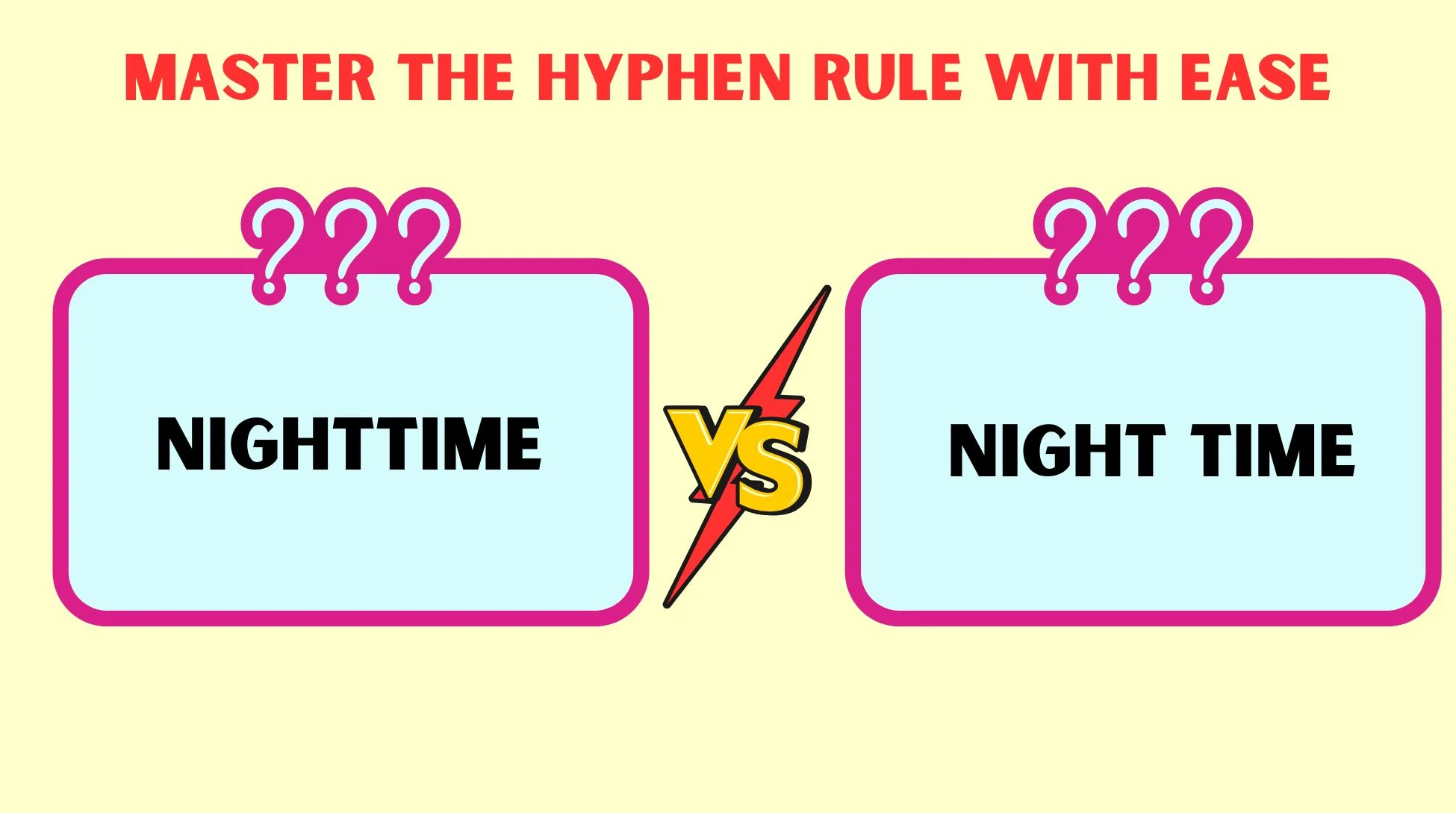
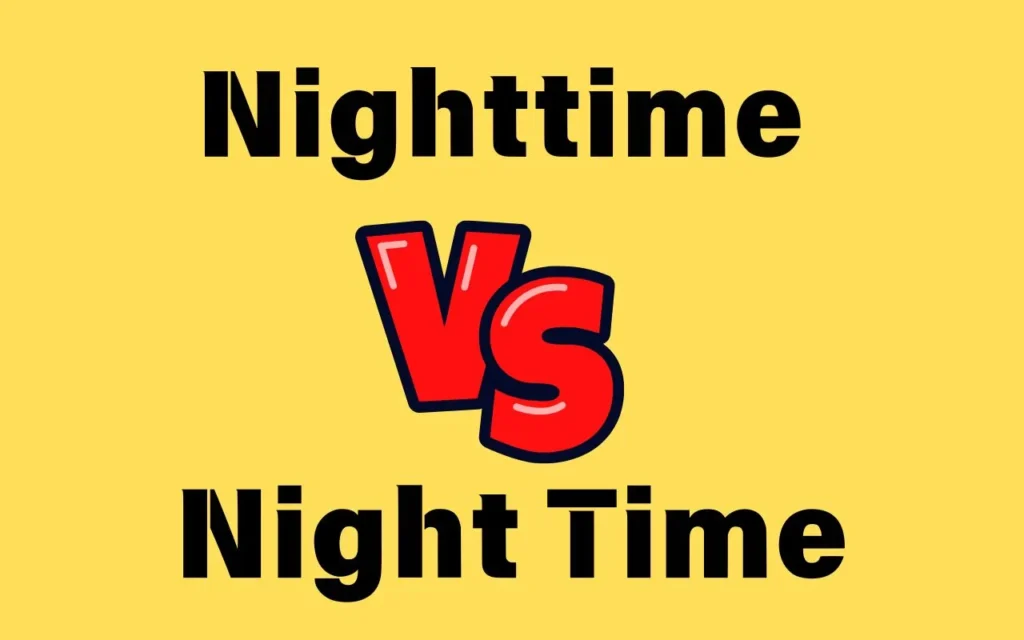
    The English language often leaves us questioning the correct usage of certain terms, and “nighttime” versus “night time” is no exception. Is it one word? Is it two? Does it matter?

    The answer lies in understanding the nuances of language, its evolution, and how grammar shapes its usage.

    Is it “nighttime” or “night time”? Discover the correct spelling, its usage, and why “nighttime” is the preferred form in modern English.

    Let’s explore this in detail and settle the debate once and for all.


    Understanding the Correct Term: ‘Nighttime’ or ‘Night Time’?

    Nighttime or Night Time

    The distinction between “nighttime” and “night time” often confuses writers, readers, and even language enthusiasts.

    While both forms are technically correct in certain contexts, one is far more commonly used and widely accepted in modern English.

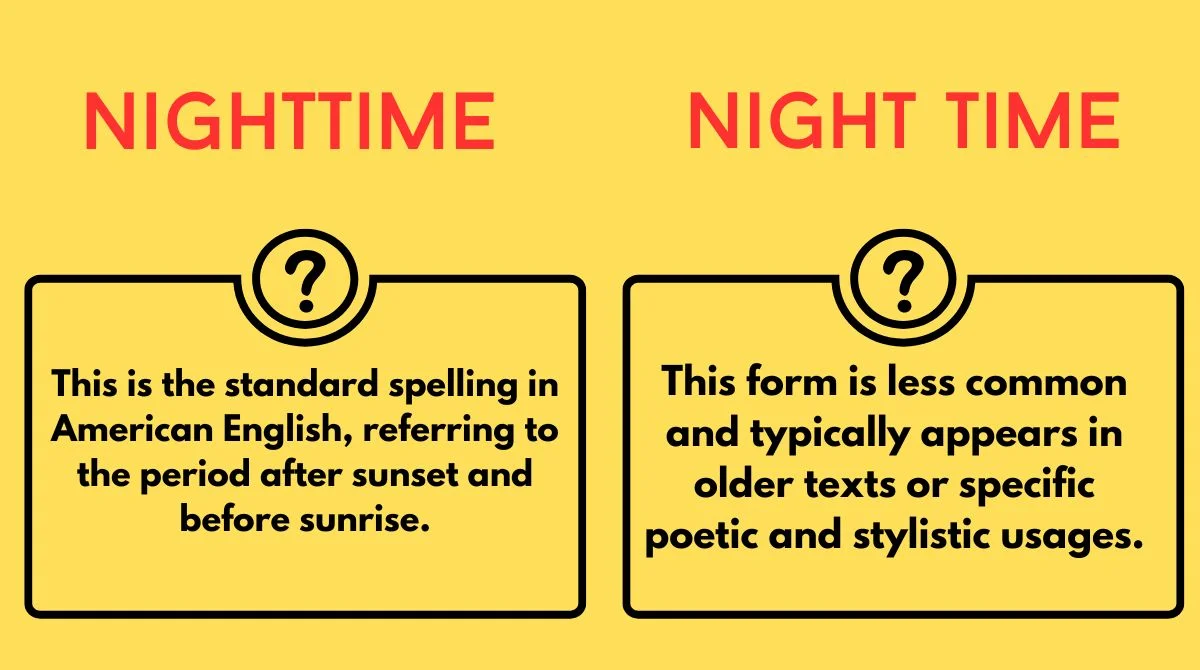
    • Nighttime (One Word): This is the standard spelling in American English, referring to the period after sunset and before sunrise.
      Example: “The temperature drops significantly during the nighttime.”
    • Night Time (Two Words): This form is less common and typically appears in older texts or specific poetic and stylistic usages.
      Example: “The night time sky was filled with stars.”

    Key takeaway: If you’re unsure which to use, “nighttime” is the safer and more accepted choice in modern contexts.


    Exploring the Language: Is It One Word or Two?

    The debate boils down to whether the term should function as a compound noun (nighttime) or as two separate words (night time).

    Compound Nouns

    “Nighttime” fits the category of compound nouns, where two words combine to create a single term with a distinct meaning. Similar examples include:

    • Daytime (the period during the day).
    • Bedtime (the time one goes to bed).

    Two-Word Phrases

    In contrast, “night time” as a two-word phrase emphasizes the individual meanings of “night” and “time.” This form is typically seen in poetic or less formal contexts, where the separation creates a stylistic effect.

    Quick Comparison Table

    FormUsage ContextModern Acceptability
    NighttimeStandard compound noun in EnglishWidely accepted globally
    Night TimeOlder, poetic, or informal usageRare in modern writing

    The Transition from Two Words to a Single Compound

    Historically, many English compound words began as separate terms before merging into one. This transition reflects the natural evolution of language and its tendency to simplify over time.

    Historical Context

    In the past, “night time” was more commonly used as two words, appearing in older English texts and literature. Over time, as language conventions leaned toward brevity and efficiency, “nighttime” became the standard in American English.

    Modern Usage

    Today, “nighttime” has become the default spelling, particularly in formal writing, newspapers, and academic texts. The two-word version, “night time,” persists in creative works but is otherwise rare.


    Consulting the Authoritative Dictionaries

    Dictionaries play a crucial role in clarifying such debates. Let’s see what the experts say:

    • Merriam-Webster: Lists “nighttime” as a single word and defines it as “the time of darkness between sunset and sunrise.”
    • Oxford English Dictionary (OED): Recognizes “nighttime” as the standard, with “night time” mentioned as an archaic or poetic variant.
    • Cambridge Dictionary: Supports “nighttime” as the preferred spelling, especially in American English.

    Fact Check

    • Nighttime: Universally acknowledged and listed as the primary form.
    • Night time: Included only as an alternative or outdated spelling.

    Language Evolution and Current Usage Trends

    The shift from “night time” to “nighttime” mirrors broader trends in the English language:

    1. Simplicity and Brevity: Over time, compound nouns like “day time” and “night time” were simplified into single words: “daytime” and “nighttime.”
    2. Consistency: Modern English favors uniformity in grammar and spelling, making “nighttime” the standard.

    Current Trends

    • In American English, “nighttime” dominates both spoken and written language.
    • British English occasionally permits “night time” in stylistic contexts, but even there, “nighttime” is increasingly prevalent.

    ‘Nighttime’ in American English: The Accepted Standard

    Nighttime or Night Time

    In American English, “nighttime” is not just preferred—it’s expected. Most formal writing and publications exclusively use this form.

    Why Is ‘Nighttime’ the Standard in American English?

    • Linguistic Efficiency: Americans generally adopt shorter, streamlined forms of words.
    • Cultural Influence: Standardized education and media ensure uniformity in spelling.

    Example Sentences:

    • “Nighttime is when the city truly comes alive.”
    • “She enjoys taking nighttime walks along the beach.”

    The Grammatical Roles of ‘Nighttime’

    Understanding the grammatical functions of “nighttime” helps clarify how it fits into sentences.

    ‘Nighttime’ as a Noun Explained

    As a noun, “nighttime” refers to the period of darkness between sunset and sunrise. It often appears as the subject or object in a sentence.

    Examples:

    • Subject: “Nighttime brings cooler temperatures and quiet streets.”
    • Object: “They planned their activities around nighttime.”

    Descriptive Use: ‘Nighttime’ as an Adjectival Noun

    In some cases, “nighttime” functions as an adjectival noun, modifying another noun.

    Examples:

    • “The nighttime sky was crystal clear.”
    • “She wore a nighttime outfit perfect for stargazing.”

    Common Usage and Example Sentences Demonstrating ‘Nighttime’

    Here are examples of how “nighttime” is used in different contexts:

    Everyday Speech

    • “The best stargazing happens during nighttime.”
    • “Nighttime routines help children fall asleep faster.”

    Literature

    • “Nighttime had settled over the forest like a soft blanket.”
    • “In the stillness of nighttime, her thoughts ran wild.”

    Professional Contexts

    • “Nighttime work shifts require additional safety measures.”
    • “The study observed animal behaviors during the nighttime.”

    Table: Correct Usage of Nighttime

    ContextExample Sentence
    Everyday Use“Nighttime is the perfect time to relax.”
    Poetic Use“Nighttime wrapped the city in its quiet embrace.”
    Technical Use“Sensors measure temperatures during nighttime hours.”

    FAQs

    Is it “nighttime” or “night time”?

    The correct and widely accepted spelling is “nighttime.” The two-word form “night time” is now mostly used in poetic or archaic contexts.

    Why is “nighttime” one word?

    “Nighttime” is a compound noun, combining “night” and “time” into a single word for brevity and efficiency, aligning with modern language trends.

    When should I use “night time”?

    Use “night time” only in creative or poetic writing where stylistic emphasis on the individual words is desired.

    What is the grammatical role of “nighttime”?

    “Nighttime” functions as a noun, referring to the period of darkness after sunset, and can also serve as an adjectival noun, modifying another noun (e.g., “nighttime sky”).

    What are some synonyms for “nighttime”?

    Synonyms for “nighttime” include “night,” “dark hours,” “evening,” and “after dark,” depending on the context.


    Conclusion

    When it comes to “nighttime” versus “night time,” the answer is clear: “nighttime” is the correct and widely accepted form in modern English.

    As language evolves, compound words like “nighttime” simplify communication, aligning with trends of brevity and consistency.

    While “night time” may occasionally appear in older texts or poetic contexts, it’s rarely used in formal or everyday writing today.

    Understanding the difference between these terms ensures your writing is precise and professional. So, next time you’re wondering which to use, stick with “nighttime” and confidently embrace the standard spelling!

  • 📏 Gauging Interest vs Gaging Interest: Learn the Key Difference

    📏 Gauging Interest vs Gaging Interest: Learn the Key Difference

    Language is full of nuances, and even the smallest spelling differences can lead to confusion.

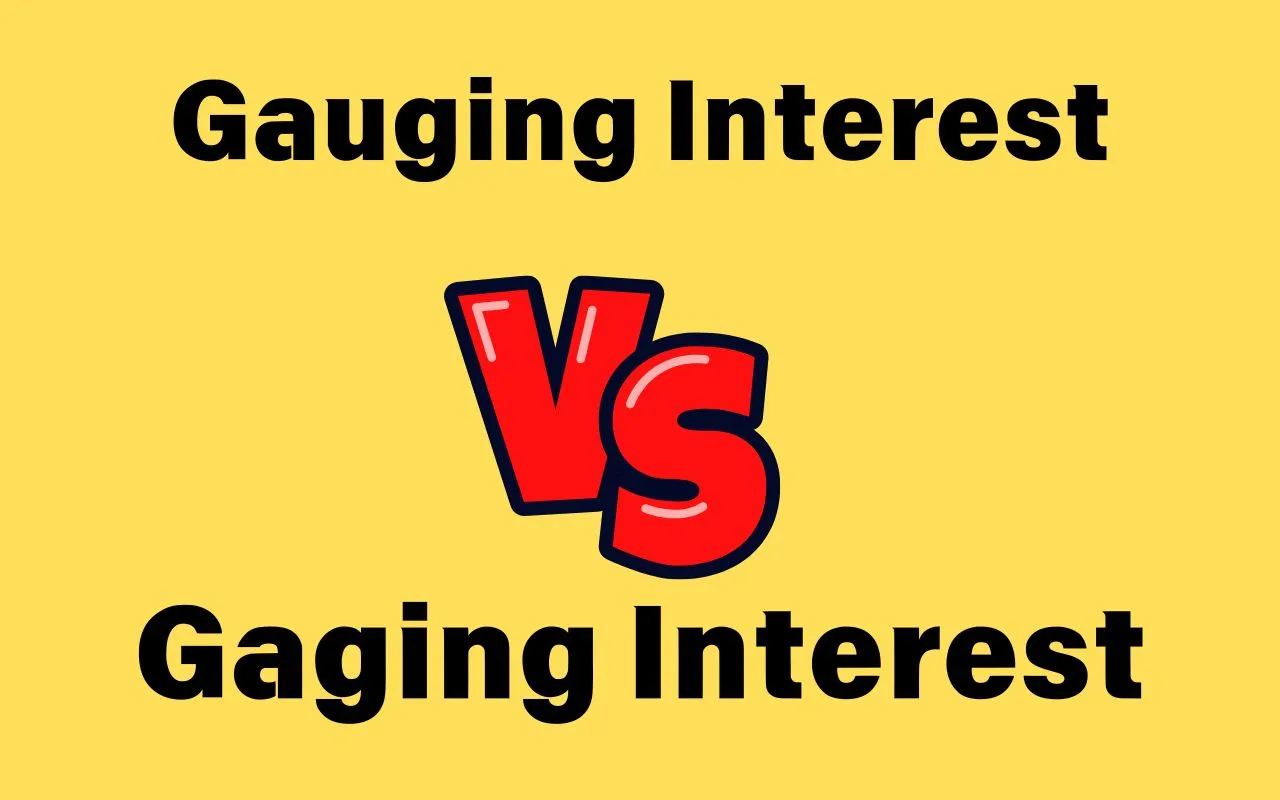
    A common example is the debate between “gauging interest” and “gaging interest.” While both terms sound similar, their meanings, spellings, and contexts differ significantly.

    Is it “gauging interest” or “gaging interest”? Discover the correct term, its meaning, and why “gauging” is the right choice for measuring interest.

    In this article, we’ll dive into the origins, usage, and distinctions between “gauge” and “gage” to clarify which term is appropriate in various scenarios.


    Exploring the Common Confusion Between “Gauging” and “Gaging”

    Gauging Interest vs Gaging Interest: Learn the Key Difference

    When deciding whether to use “gauging interest” or “gaging interest,” the confusion often stems from how similar these words look and sound.

    At first glance, it might seem like either spelling could be correct. However, their roots and meanings set them apart.

    • “Gauge” relates to measuring or assessing something.
    • “Gage” is a less common word with historical and specific uses, often unrelated to measurement.

    Although the two terms overlap in appearance, their contexts diverge greatly.


    The Definition and Origin of “Gauging Interest”

    To gauge interest means to measure or assess someone’s curiosity, enthusiasm, or willingness about an idea, product, or opportunity. For example:

    • “The company sent out a survey to gauge interest in their new app.”

    Origins of “Gauge”
    The word “gauge” traces back to Old French jauge, which referred to measuring devices like rods or containers used to assess quantity or size. Over time, its meaning expanded to include more abstract measurements, such as emotions or opinions.


    The Meaning of “Gauge” in the English Language

    In modern English, the word “gauge” functions as both a noun and a verb:

    • As a noun: It refers to tools or devices used for measurement, such as a fuel gauge in a car.
    • As a verb: It describes the act of measuring, estimating, or evaluating something.

    Examples:

    • “The weather gauge indicated a drop in temperature.”
    • “It’s essential to gauge customer feedback before launching a product.”

    In the context of “gauging interest,” the verb form is used to describe the process of evaluating opinions or enthusiasm.


    Historical Usage of “Gauge” and Its Evolution

    The term “gauge” has evolved over centuries, maintaining its core meaning of measurement. Initially tied to physical tools, it now extends to abstract concepts, such as:

    • Gauging public opinion.
    • Gauging emotional responses.
    • Gauging the potential success of a project.

    Its versatility has solidified its place in both professional and everyday language, making it the preferred choice for assessing interest.


    Why “Gauging Interest” Is the Widely Accepted Term

    “Gauging interest” is the standard term because it aligns with the verb “gauge,” which directly means to measure or assess. On the other hand, “gaging” might seem like an alternative spelling, but it introduces unnecessary ambiguity due to its limited usage.

    Consider this comparison:

    • Correct: “She conducted a poll to gauge interest in the upcoming event.”
    • Incorrect: “She conducted a poll to gage interest in the upcoming event.”

    Using “gaging” instead of “gauging” might confuse readers or appear as a spelling error.


    Variations in Spelling: A Global Perspective

    The spelling and usage of “gauge” remain consistent across English-speaking countries. However, variations can occasionally occur due to differences in British and American English.

    • British English: Heavily favors “gauge” for both the noun and verb forms.
    • American English: Also predominantly uses “gauge,” but some archaic references to “gage” persist in niche contexts.

    Despite minor regional differences, “gauge” is the globally recognized spelling for assessing or measuring interest.


    “Gage” vs. “Gauge”: Understanding the Difference

    While “gauge” is the standard word for measuring or assessing, “gage” has distinct meanings, which can cause confusion:

    1. As a noun: Historically, “gage” referred to a pledge, challenge, or something offered as security.
      • Example: “He offered his sword as a gage of loyalty.”
    2. As a verb: It could mean to offer a pledge or wager, though this usage is now rare.

    Because “gage” lacks the meaning of measuring or assessing, it doesn’t apply in the context of evaluating interest.


    The Archaic Use of “Gage” in Modern English

    In modern English, “gage” has largely fallen out of common usage. Its archaic meanings, like pledges or challenges, are primarily encountered in historical texts or niche literary contexts.

    Example of Archaic Usage:

    • “The knight accepted the gage thrown by his opponent.”

    Using “gage” instead of “gauge” in contemporary writing can confuse readers, as it doesn’t convey the intended meaning.


    Contextual Examples to Distinguish Between the Two

    Understanding the context is crucial to using these terms correctly. Let’s look at practical examples:

    ContextCorrect WordExample
    Measuring interest or opinionGauge“The survey was conducted to gauge interest.”
    Offering a pledge or wagerGage“He gave his gage of commitment to the project.”
    Measurement toolGauge“The pressure gauge displayed low readings.”

    These examples illustrate how “gauge” dominates in contexts involving measurement, while “gage” is rare and specific.


    Professionals’ Stance on Using “Gage” in Writing

    Gauging Interest vs Gaging Interest

    Linguists, editors, and communication experts agree that “gaging interest” is incorrect. Using “gauge” ensures clarity and aligns with widely accepted grammar and usage conventions.

    What Experts Say:

    • “Gaging is not a substitute for gauging. It’s important to use the correct spelling to maintain professionalism in writing.” – Language Expert
    • “Stick to gauge when describing measurement or assessment. Gage is archaic and rarely appropriate in modern contexts.” – Editor

    Practical Applications: How to Gauge Interest Effectively

    Gauging interest involves more than just picking the right word—it’s about effectively assessing curiosity or enthusiasm. Here are some practical strategies:

    Methods to Gauge Interest:

    1. Surveys and Polls:
      • Use tools like Google Forms or SurveyMonkey to collect opinions.
    2. Social Media Engagement:
      • Post questions, polls, or teasers to gauge audience reactions.
    3. Focus Groups:
      • Conduct small group discussions to gather detailed feedback.
    4. Open-Ended Questions:
      • Ask directly: “What do you think about this idea?”
    5. Analytics Tools:
      • Track metrics like click-through rates and time spent on pages to infer interest.

    Pro Tip: Always analyze results critically to make informed decisions based on the interest gauged.


    Enhancing Your Vocabulary: Synonyms for “Gauging Interest”

    If you want to diversify your language, consider using these synonyms for “gauging interest”:

    • Assessing interest
    • Measuring enthusiasm
    • Evaluating curiosity
    • Testing reactions
    • Probing responses

    Using these alternatives can help maintain variety in your writing while preserving clarity.


    FAQs

    What is the correct term: “gauging interest” or “gaging interest”?

    The correct term is “gauging interest,” as it means measuring or assessing curiosity or enthusiasm.

    What does “gauging interest” mean?

    “Gauging interest” refers to evaluating or measuring someone’s level of interest, curiosity, or enthusiasm about an idea or opportunity.

    Is “gaging interest” ever correct?

    No, “gaging interest” is not correct. The word “gage” refers to pledges or challenges, not measurement or assessment.

    What is the origin of the term “gauge”?

    The word “gauge” comes from Old French jauge, originally referring to tools for measurement, and has evolved to include abstract forms of assessment.

    How can I gauge interest effectively?

    You can gauge interest by conducting surveys, analyzing social media engagement, hosting focus groups, or using analytics tools to measure responses.


    Conclusion

    So, is it “gauging interest” or “gaging interest”? The answer is clear: “gauging interest” is the correct and widely accepted term. While “gage” exists as a word, it carries archaic meanings that don’t align with the act of measurement.

    By understanding the difference between “gauge” and “gage,” you can communicate more effectively and avoid common pitfalls in your writing.

    Remember, gauging interest is all about measuring curiosity, enthusiasm, and potential—and now, you know exactly how to do it right!

  • 🤔 Requester or Requestor? Simplifying Their Usage and Context

    🤔 Requester or Requestor? Simplifying Their Usage and Context

    Language is ever-evolving, and English often presents us with words that seem interchangeable but have subtle differences in usage or meaning.

    One such pair is requester and requestor. At first glance, they may appear identical, but their usage can vary depending on context, geography, and even professional fields.

    Is it requester or requestor? Discover the differences, contextual usage, and examples that clarify when to use each word correctly.

    In this article, we’ll dive deep into the meanings, differences, and usage of requester and requestor with clear examples and historical insights.


    The Meaning and Usage of “Requester” and “Requestor”

    Requester or Requestor?

    Requester

    A requester is someone who makes a request. The term is commonly used in everyday English and general contexts. It conveys the act of asking for something formally or politely.
    Example:

    • “The requester submitted a form for approval.”

    Requestor

    Requestor also refers to someone making a request, but it is often used in specialized contexts, such as legal, financial, or technical fields.
    Example:

    • “The requestor initiated a transaction on the blockchain.”

    Key Difference

    While both words describe someone who makes a request, requester is more commonly used in general language, while requestor is reserved for technical or professional domains.


    Exploring the Prevalence of “Requester” in American English

    Requester or Requestor

    In American English, requester is by far the preferred term. This preference aligns with its simpler, more conversational tone, making it a natural choice for everyday communication.

    Examples in American English

    • “The requester waited patiently for their turn at the DMV.”
    • “Requesters must provide identification when accessing confidential records.”

    Studies of word usage frequency show that requester appears more often in written and spoken American English, reflecting its broader acceptance.


    Common Examples and Usage in Daily Language

    Here are examples of how requester is used in daily scenarios:

    • Online Services: “The requester filled out the form to retrieve their password.”
    • Customer Support: “Each ticket is assigned to the requester who submitted it.”
    • Workplace Requests: “The requester is required to clarify their needs before the IT team can assist.”

    These examples illustrate how natural and widely accepted requester is in casual and professional communication.


    Impact of Language Trends on Word Preference

    Language trends and technology significantly influence word usage. In modern contexts, requester aligns more with natural language processing tools, user-friendly interfaces, and plain language principles.

    For example:

    • Websites and software interfaces often label forms or actions with terms like requester because it feels less formal and easier to understand for general users.

    On the other hand, requestor maintains a foothold in specialized industries where formal, technical language is common.


    Requestor in British English and Specialized Contexts

    In British English, requestor is occasionally used but less commonly than requester. When it does appear, it is often in niche contexts, such as legal or financial documentation.

    Example in British Context:

    • “The requestor filed a formal appeal to the council.”

    In these instances, requestor adds a formal tone that aligns with the traditional use of legal and technical jargon.


    Examples of Requestor in Specialist Contexts

    Legal Contexts

    • “The requestor submitted a Freedom of Information Act request.”
    • “Only the requestor has the right to withdraw their application.”

    Technical Contexts

    • “The API requires authentication from the requestor before granting access.”
    • “In blockchain systems, the requestor initiates a transaction that must be verified by the network.”

    These examples show that requestor is more precise in situations requiring formal documentation or technical specificity.


    Understanding Language Variations

    The choice between requester and requestor often depends on:

    1. Geographical Location:
      • Requester is more common in American English.
      • Requestor occasionally appears in British English, though it remains less frequent.
    2. Field of Use:
      • Requester suits general or casual contexts.
      • Requestor is preferred in technical, legal, or specialized fields.

    Table Comparing Usage

    WordContextExample
    RequesterEveryday Language“The requester submitted a ticket for IT support.”
    RequestorLegal/Technical Use“The requestor initiated a financial transaction in the new system.”

    Etymology and Evolution of the Term “Requester”

    Historical Perspective of the Word “Request”

    The word request originates from the Latin term requaerere, meaning “to seek” or “to ask.” It evolved through Old French as requeste and entered Middle English as request.

    The Emergence of “Requester” in Modern Usage

    The noun form requester likely developed in the 15th century to describe a person who makes a formal appeal or asks for something. Over time, it became the standard term in everyday language.


    Practical Examples: How to Use “Requester” in Sentences

    To wrap things up, let’s look at practical examples of how to use requester effectively:

    1. Business Communication:
      • “The requester must attach all relevant documents to the application.”
    2. Online Platforms:
      • “The system logs the actions of the requester for security purposes.”
    3. Customer Service:
      • “If the requester doesn’t respond within 48 hours, the ticket will be closed.”
    4. Everyday Life:
      • “The requester kindly asked for a refill at the café.”

    These examples demonstrate the versatility and practicality of requester in both casual and professional contexts.


    FAQs

    What is the difference between requester and requestor?

    Requester is used in general or casual contexts, while requestor is often reserved for formal, legal, or technical fields.

    Which is more commonly used: requester or requestor?

    Requester is more common, particularly in American English, whereas requestor is less frequent and typically seen in specialized contexts.

    How do you use requester in a sentence?

    Example: “The requester submitted a support ticket to resolve their issue.”

    Can requestor and requester be used interchangeably?

    While they have similar meanings, their usage depends on context. Requester is better for general language, and requestor suits formal or technical fields.

    Why is understanding the difference between requester and requestor important?

    Choosing the right term ensures clarity and professionalism in writing, especially in technical, legal, or everyday communication.


    Conclusion

    Both requester and requestor describe someone who makes a request, but their usage depends on context. If you’re writing for a general audience, requester is your best choice.

    However, for technical or formal documents, requestor might be more appropriate. By understanding these nuances, you can confidently choose the right word for any situation.

  • 💡 Respond or Response? A Simple Guide to Perfect Usage

    💡 Respond or Response? A Simple Guide to Perfect Usage

    Language is full of nuances, and understanding subtle differences between words can elevate your communication skills.

    Response and respond are two such terms that often cause confusion. Are they interchangeable? What contexts demand one over the other?

    Is it response or respond? Learn the key differences between these two words, their grammatical roles, and how to use them effectively with examples!

    This comprehensive guide will break down the distinctions between these two words, provide practical examples, and explore their usage across various fields.


    Unraveling the Definitions: Response vs. Respond

    Respond or Response

    Let’s start with the basics:

    Response

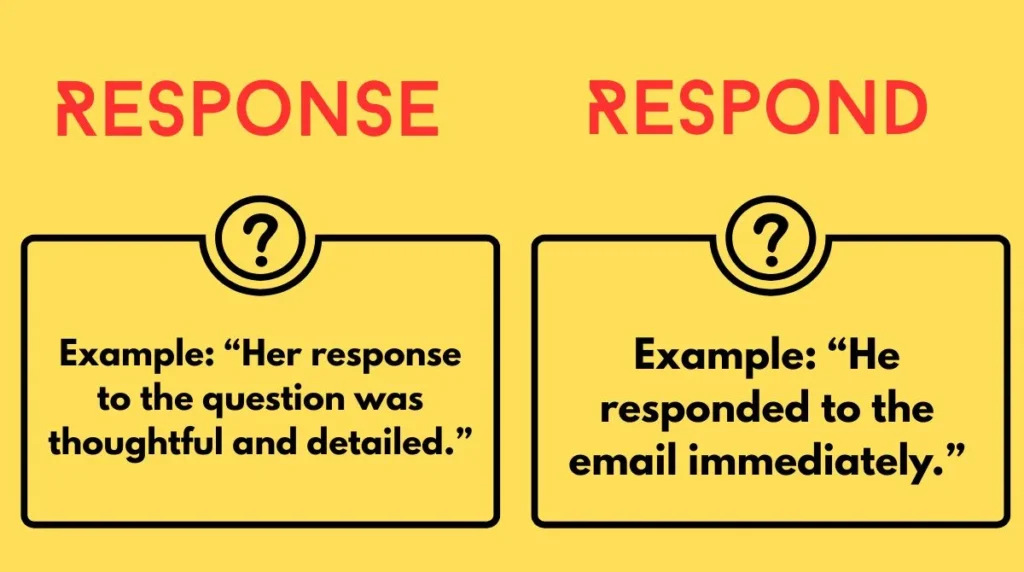
    Response is a noun, referring to a reaction to a stimulus, event, or situation. It captures the result or outcome of an action.

    • Example: “Her response to the question was thoughtful and detailed.”

    Respond

    Respond is a verb, describing the act of reacting or replying. It emphasizes the process rather than the result.

    • Example: “He responded to the email immediately.”

    Key takeaway: Use response when focusing on the outcome and respond when highlighting the act of reacting.


    Grammar Essentials: When to Use Response and Respond

    Understanding their grammatical roles is crucial to avoid errors.

    • Response (Noun): Often preceded by articles (a, the) or possessive adjectives (his, her).
      Correct: “The response was encouraging.”
      Incorrect: “She response quickly.”
    • Respond (Verb): Often followed by prepositions (to, with) or directly paired with a subject.
      Correct: “She responded with enthusiasm.”
      Incorrect: “His respond was immediate.”

    Response in Action: Real-World Noun Usage

    Respond or Response

    The word response frequently appears in professional, casual, and academic contexts.

    Common Scenarios:

    1. Customer Service:
      Example: “The company’s quick response to complaints improved customer satisfaction.”
    2. Science and Research:
      Example: “The study measured participants’ physiological responses to stress.”
    3. Event Reactions:
      Example: “Her response to the surprise party was priceless.”

    Visualizing Response Usage

    ContextExample Sentence
    Customer Interaction“The manager sent a prompt response to the feedback.”
    Academic Study“Researchers recorded the students’ responses.”
    Personal Interaction“Her response to the joke was laughter.”

    From Complaints to Compliments: How ‘Response’ Captures the Result

    A response often reflects the outcome of communication, whether it’s a complaint, question, or compliment.

    • Complaints: “We value your feedback and aim to provide a swift response.”
    • Questions: “His detailed response clarified all our doubts.”
    • Compliments: “The singer’s heartfelt response to the applause touched the audience.”

    Medical and Emergency Contexts: The Importance of Prompt ‘Response’

    In medical and emergency scenarios, response takes on a critical role.

    Medical Usage

    • Patient Response: Refers to how the body reacts to treatment.
      Example: “The patient showed a positive response to the medication.”
    • Emergency Services: Quick responses can save lives.
      Example: “The ambulance’s rapid response ensured the victim’s survival.”

    Real-World Case Study

    SituationResponse Outcome
    Fire Emergency“The firefighters’ response time was under 5 minutes.”
    Medical Trial“Participants’ responses to the vaccine were monitored closely.”

    Respond’s Verb Form: Identifying Interactive Scenarios

    Unlike response, respond is dynamic, describing the act of engaging or replying.

    Everyday Usage

    • Conversations: “She responded politely to his criticism.”
    • Emails: “I’ll respond to your message by the end of the day.”
    • Crises: “The government responded swiftly to the disaster.”

    Nuanced Meanings of Respond

    1. Physical Action: “The dog responded to its name by wagging its tail.”
    2. Emotional Reaction: “He responded to the news with a mix of shock and relief.”

    Examples from Literature and News: ‘Response’ and ‘Respond’ in Context

    To understand how these words are used effectively, let’s explore some examples:

    Literature Example (Response):

    • “The response of the people was one of overwhelming gratitude.” – Charles Dickens

    News Example (Respond):

    • “The company responded to the accusations with a detailed statement.” – The New York Times

    Why It Matters: Using the correct word in professional and creative writing enhances clarity and impact.


    Psychological Perspective: Behavioral Responses vs. Physical Responding

    From a psychological standpoint, response and respond differ in subtle but meaningful ways:

    Behavioral Response

    Refers to a measurable reaction to stimuli.

    • Example: “The child’s response to positive reinforcement was immediate.”

    Physical Responding

    Focuses on the act of reacting physically or verbally.

    • Example: “He responded with a nod to show agreement.”

    Emotional Contagion: How Individuals ‘Respond’ to Others’ Feelings

    Human interactions often involve emotional responses and reactions.

    • Empathy: “She responded to her friend’s sadness with comforting words.”
    • Mirror Neurons: The brain’s response to observing others’ emotions leads to empathetic actions.

    Pro Tip: Understanding emotional responses can improve interpersonal communication.


    Decision Making: The Cognitive ‘Response’ to External Stimuli

    Decision-making processes often involve cognitive responses to external inputs.

    • Analysis: “The team’s response to the new data was to adjust their strategy.”
    • Adaptation: “Leaders must respond quickly to changing market conditions.”

    Fact: Research shows that faster cognitive responses often improve problem-solving outcomes.


    Etymology and Evolution: Tracing the Origins of Response and Respond

    • Response: Originates from the Latin responsum, meaning “something offered in return.”
    • Respond: Stems from the Latin respondere, meaning “to answer or reply.”

    The shared roots highlight their connected meanings but distinct grammatical roles.


    FAQs

    What is the difference between response and respond?

    Response is a noun that refers to a reaction or outcome, while respond is a verb that describes the act of reacting or replying.

    Can response and respond be used interchangeably?

    No, they cannot. Use response as a noun (e.g., “Her response was detailed”) and respond as a verb (e.g., “He responded immediately”).

    How do you use response in a sentence?

    Example: “The team’s quick response to the feedback improved the project timeline.”

    What are some examples of respond in action?

    Examples include: “She responded politely to the criticism” and “The government responded swiftly to the crisis.”

    Why is understanding response and respond important?

    Knowing the difference enhances your grammar and helps convey clear, accurate messages in both writing and speaking.


    Improving Communication Skills: Tips for Using ‘Response’ and ‘Respond’ Correctly

    1. Know the Grammar: Remember that response is a noun and respond is a verb.
    2. Check Context: Use response when discussing outcomes and respond when focusing on actions.
    3. Proofread Your Work: Misusing these terms can affect the clarity of your message.
    4. Practice with Examples:
      • Response: “The response from the audience was overwhelming.”
      • Respond: “They responded to the feedback by making changes.”
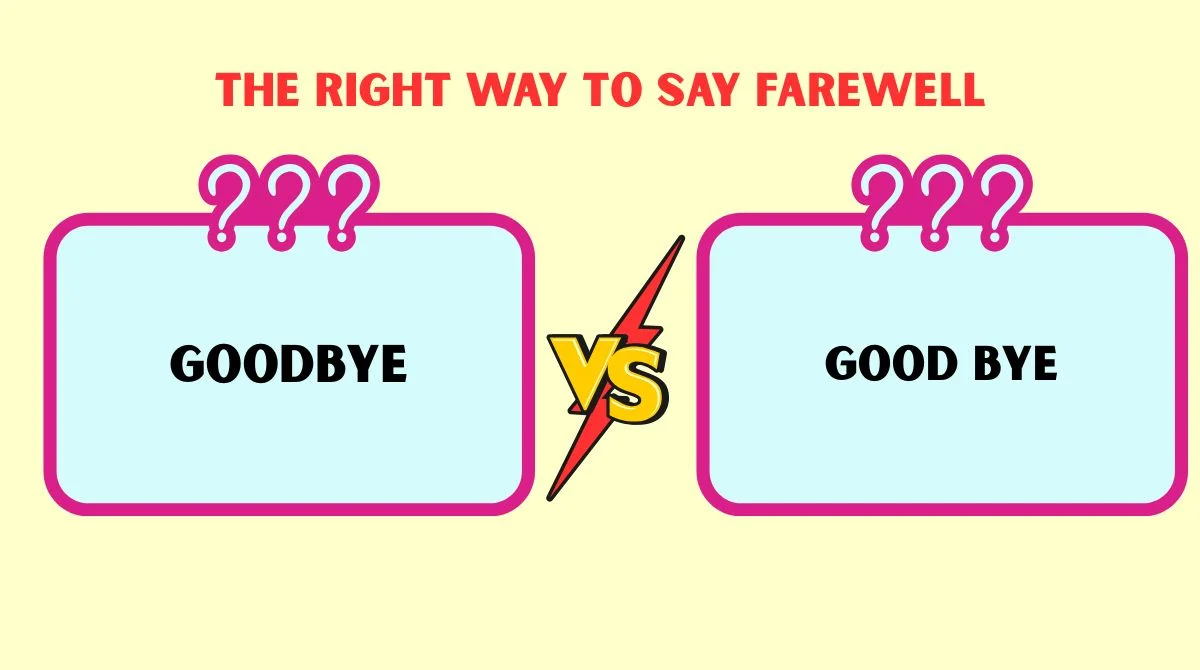
  • 👋 Goodbye vs Good bye or Good-bye? The Right Way to Say Farewell

    👋 Goodbye vs Good bye or Good-bye? The Right Way to Say Farewell

    Language evolves over time, and the way we spell and use words often reflects these changes.

    The word “goodbye” is no exception, with its variations — goodbye, good bye, and good-bye — sparking debates about proper usage.

    Goodbye, good-bye, or good bye—which one is correct? Explore the history, evolution, and proper use of this timeless farewell expression!

    If you’ve ever wondered which form is correct and why, this comprehensive guide will help you navigate the nuances of this common farewell expression.


    The Evolution of the Term ‘Goodbye’

    The word goodbye has undergone significant changes over centuries. Its origins trace back to the expression “God be with ye,” a religious phrase used as a parting blessing in the 16th century.

    Over time, the phrase was shortened to “good-b’w’y” and eventually became the modern term goodbye.

    The shift reflects not only linguistic evolution but also cultural changes. As religious influences on language lessened, the word took on a more secular tone, becoming a simple way to say farewell without overt spiritual connotations.


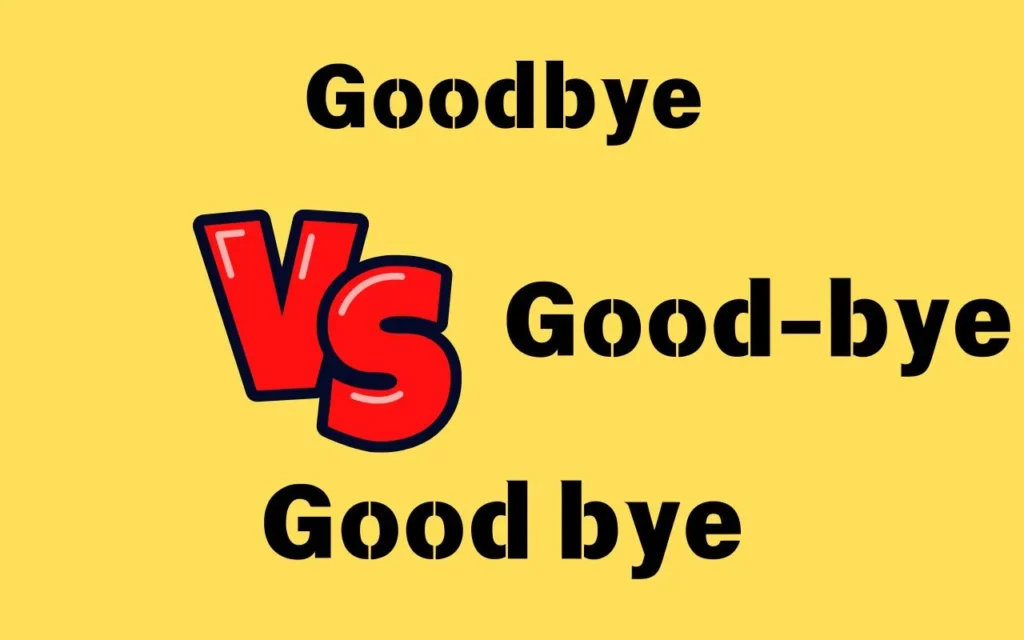
    Goodbye, Good bye, or Good-bye: Which Is Correct?

    Goodbye vs Good bye or Good-bye?

    The Answer: Goodbye

    The most widely accepted and modern form of the word is goodbye. Style guides, dictionaries, and common usage overwhelmingly favor this spelling as the standard form in contemporary English.

    What About Good-bye?

    Good-bye was historically the preferred spelling, especially in older literature and formal writing. However, hyphenated forms of words have largely fallen out of favor in modern English, leading to the dominance of the unhyphenated goodbye.

    And Good bye?

    Good bye as two separate words is considered incorrect in most contexts today. While it may occasionally appear in informal or creative writing, it is not recognized as standard English.

    Key takeaway: If you want to use the most accepted version, stick with goodbye.

    FormStatusExample Usage
    GoodbyeStandard“Goodbye, see you tomorrow!”
    Good-byeOutdated but acceptable“She waved and said, ‘Good-bye.’”
    Good byeIncorrect or informal“Good bye, my friend!” (rarely used)

    The Role of Dictionaries and Style Guides

    Dictionaries like Merriam-Webster, Oxford English Dictionary, and Cambridge English Dictionary all list goodbye as the primary spelling. Similarly, major style guides such as The Chicago Manual of Style and AP Stylebook advocate for goodbye as the standard.

    However, good-bye may still be seen in older publications or used by writers aiming for a vintage tone. This is a reminder that language evolves, and what was once common may eventually become archaic.

    Tip: Always refer to your preferred style guide or dictionary when in doubt about spelling in professional or academic writing.


    Regional Variations in Using Goodbye

    While the spelling of goodbye is largely uniform across English-speaking regions, slight cultural and contextual variations exist in how the term is used:

    • United States: Goodbye is commonly used in both formal and informal settings. Shortened alternatives like bye and see ya are frequent in casual speech.
    • United Kingdom: Similar to the U.S., goodbye is the standard spelling, but phrases like cheerio or ta-ra are also popular informal farewells.
    • Australia/New Zealand: While goodbye is widely understood, phrases like catch ya later and hooroo reflect local colloquialism.
    • India: In addition to goodbye, phrases like ta-ta or bye-bye are widely used, often influenced by regional languages and cultural nuances.

    These differences demonstrate how regional preferences can shape the way we say farewell.


    Common Misconceptions About Saying Farewell

    Misconception 1: Goodbye Is Too Formal

    Many believe that goodbye is too formal and outdated for everyday use. However, it remains a versatile term that can suit both formal and informal contexts.

    Misconception 2: All Variations Are Interchangeable

    While some people use good-bye or good bye interchangeably with goodbye, these spellings can confuse readers or appear inconsistent. Sticking to the modern standard avoids ambiguity.

    Misconception 3: Abbreviations Like “Bye” Are Improper

    Shortened forms like bye or bye-bye are perfectly acceptable in informal speech and writing. These variations are widely recognized and carry the same meaning.


    Examples of Saying Goodbye in Different Contexts

    Examples of Saying Goodbye

    Formal Situations

    • “Goodbye, it was a pleasure meeting you.”
    • “Thank you for your time. Goodbye!”

    Informal Situations

    • “Bye! See you later!”
    • “Catch you soon. Bye!”

    Professional Settings

    • “Goodbye, and thank you for attending the meeting.”
    • “I’ll follow up via email. Goodbye!”

    Creative Writing

    • “Goodbye,” she whispered, her voice tinged with sadness.
    • He smiled, saying, “Goodbye for now, but not forever.”

    Tip: Match the tone of your farewell to the context and audience.


    The Contraction ‘Goodbye’ and Its Historical Roots

    Did you know that goodbye is actually a contraction? It stems from the phrase “God be with ye,” which was a common farewell in the 16th century. Over time, the phrase was shortened to “God b’w’ye,” then “good-b’ye,” and finally, goodbye.

    This historical evolution highlights how language simplifies and adapts to everyday use. While we no longer use the original religious phrase, its essence remains in the word we use today.


    Tracing the Etymology: From ‘God Be With Ye’ to Today

    • 16th Century: “God be with ye” was used as a blessing when parting.
    • 17th Century: The phrase was shortened to “good-b’ye” or “good-b’ye,” reflecting changes in speech patterns.
    • 18th Century: The hyphenated form good-bye became standard in writing.
    • Modern Day: Goodbye emerged as the dominant form, with good-bye becoming less common.

    Fun fact: The evolution of goodbye mirrors similar transformations in other farewell phrases like farewell and adieu.


    Impact of ‘Goodbye’ on Language and Culture

    The word goodbye holds emotional and cultural significance. It marks moments of parting, often symbolizing transitions, endings, and even new beginnings.

    • In Literature: Goodbye is frequently used to evoke emotion, whether in heartfelt farewells or bittersweet goodbyes.
      Example: “So long as we live, they too shall live, for they are now a part of us, as we remember them. Goodbye, dear friend.”
    • In Pop Culture: Songs like “Goodbye Yellow Brick Road” by Elton John and “Goodbye My Lover” by James Blunt reflect its emotional resonance.

    The word has become a universal symbol of closure, making it a key part of human expression.


    Creative Ways to Say Goodbye in Writing and Speech

    Looking for a more unique way to say goodbye? Here are some creative alternatives:

    • Formal:
      • Farewell
      • Until we meet again
      • Take care
    • Informal:
      • See ya later
      • Catch you soon
      • Take it easy
    • Playful/Creative:
      • Adios, amigo
      • Bye for now
      • Toodle-oo

    By tailoring your goodbye to the context, you can leave a lasting impression.


    FAQs

    What is the correct spelling: goodbye, good-bye, or good bye?

    The correct spelling is “goodbye.” It is the modern and widely accepted form, while “good-bye” is outdated, and “good bye” is incorrect.

    Why is goodbye spelled without a hyphen today?

    Language evolves, and hyphenated forms like “good-bye” have fallen out of favor in modern English. “Goodbye” is now the standard spelling.

    What is the origin of the word goodbye?

    “Goodbye” originates from the 16th-century phrase “God be with ye,” which was gradually shortened over time to its current form.

    Is goodbye too formal for casual use?

    Not at all! “Goodbye” is versatile and works in both formal and informal settings. For casual use, alternatives like “bye” are also common.

    How does the use of goodbye differ regionally?

    While “goodbye” is standard globally, regions like the U.K. and Australia also use informal phrases like “cheerio” or “catch ya later.”


    Conclusion

    When it comes to saying farewell, the word goodbye stands out as the most versatile and widely accepted form. Understanding its history, variations, and usage ensures you’ll always use it correctly, no matter the context.

    Whether you’re writing a heartfelt letter or simply signing off a text, choosing the right version of goodbye conveys clarity and thoughtfulness.

    So, next time you say farewell, remember the rich history and significance behind this simple yet powerful word!

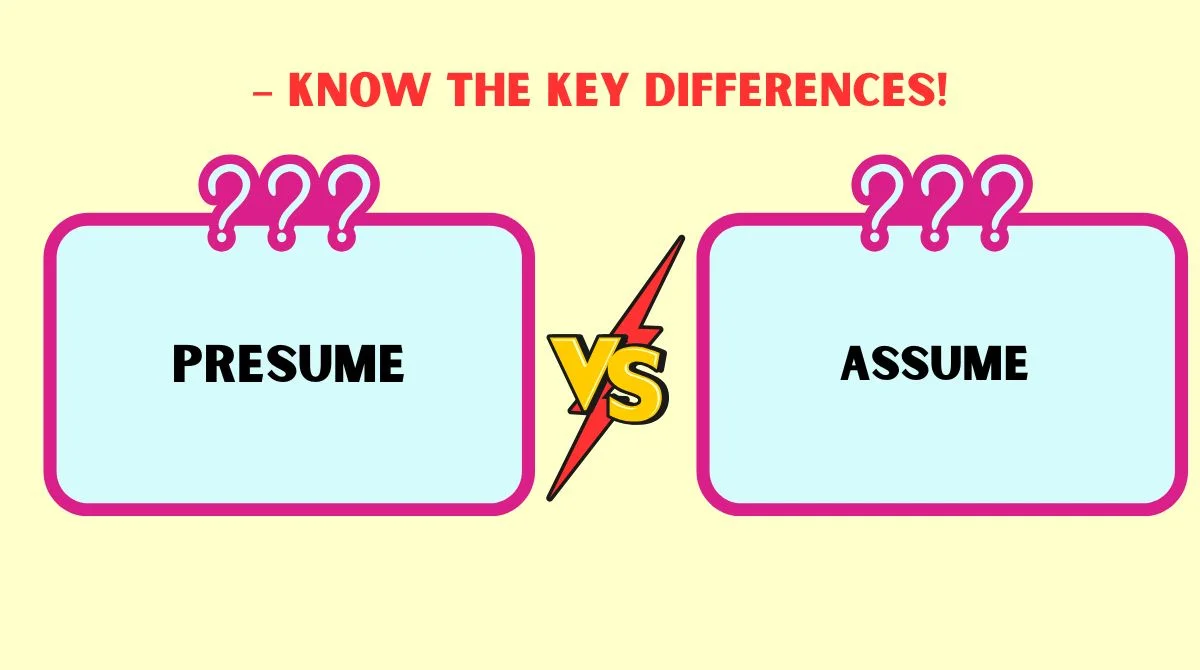
  • Assume vs Presume vs Infer 🤔 – Know the Key Differences!

    Assume vs Presume vs Infer 🤔 – Know the Key Differences!

    English can be a challenging language, especially when it comes to words that seem similar but carry distinct meanings.

    Assume, presume, and infer are three verbs that are often used interchangeably but actually have unique nuances. Misusing them can confuse your message or even change its meaning entirely.

    Assume, presume, and infer may seem similar but differ in meaning. Assume means believing without evidence, presume implies probability, and infer involves drawing conclusions from evidence. Learn when to use each word correctly!

    This comprehensive guide will break down the differences, provide real-world examples, and give you practical tips to master their correct usage.


    Understanding the Nuances of English Verbs

    Assume vs Presume vs Infer

    The verbs assume, presume, and infer all deal with beliefs, thoughts, or conclusions, but their subtleties lie in how those beliefs are formed.

    • Assume: To accept something as true without evidence.
    • Presume: To accept something as true based on probability or prior experience.
    • Infer: To draw a conclusion from available information or evidence.

    Each word operates in different contexts, and understanding these contexts is key to using them correctly.


    Examples of Correct Verb Usage

    Here are some quick examples to clarify how each verb is used:

    • Assume: “I assumed the meeting was canceled since no one was there.”
    • Presume: “Given the dark clouds, I presumed it would rain soon.”
    • Infer: “From the look on his face, I inferred he was unhappy.”

    Notice the difference: assume lacks evidence, presume relies on probability, and infer draws conclusions from information.


    The Basics of Assume: Believing Without Evidence

    The verb assume means to take something as true without proof or evidence. It often reflects a guess, belief, or expectation that isn’t based on solid reasoning.

    Examples of Assume in Action:

    • “She assumed the store was open, but it was actually closed.”
    • “Don’t assume I’ll help you without asking me first.”

    Key Characteristics of Assume:

    • Often associated with uncertainty or guesswork.
    • Can lead to misunderstandings if the assumption is wrong.

    Pro Tip: Use assume when discussing beliefs or decisions made without verifying facts.


    When to Use Presume and Its Connection to Probability

    Unlike assume, presume implies a higher degree of certainty. It’s used when there’s some evidence, context, or prior experience supporting the belief, even if it isn’t conclusive.

    Examples of Presume in Action:

    • “I presumed he was at home because his car was in the driveway.”
    • “The teacher presumed the students had completed their homework.”

    Key Characteristics of Presume:

    • Stronger than assume, with some level of evidence or reasoning.
    • Often used in legal or formal contexts (e.g., “presumption of innocence”).

    Pro Tip: Use presume when there’s reasonable probability behind the belief, even if it isn’t fully verified.


    The Art of Inference: Drawing Conclusions from Information

    Infer differs from both assume and presume because it involves processing information or evidence to reach a conclusion. It’s an active process of reasoning.

    Examples of Infer in Action:

    • “From the tone of his email, I inferred he was upset about the project delay.”
    • “Based on her enthusiasm, I inferred she loved the idea.”

    Key Characteristics of Infer:

    • Always based on available evidence, even if indirect.
    • Involves critical thinking and logical deduction.

    Pro Tip: Use infer when your conclusion is drawn directly from facts or observations.


    Key Differences Between Infer and Its Counterparts

    VerbMeaningLevel of EvidenceExample
    AssumeAccept as true without proofNone“I assumed he knew the way, so I didn’t give directions.”
    PresumeAccept as true based on probability or contextPartial (but reasonable)“I presumed she’d arrive on time since she always does.”
    InferDraw a conclusion based on informationStrong (evidence-based)“From the laughter, I inferred they enjoyed the movie.”

    Practical Examples of Inference in Everyday Situations

    Inference is a vital skill in daily life, allowing us to make sense of situations based on clues. Here are some practical examples:

    1. Social Cues:
      • Observation: Your coworker is unusually quiet in a meeting.
      • Inference: They might be upset or distracted by something.
    2. Detective Work:
      • Observation: There are muddy footprints leading to the backyard.
      • Inference: Someone walked outside after it rained.
    3. Decision-Making:
      • Observation: A restaurant is packed with customers.
      • Inference: The food is likely good.

    Inference allows us to interpret and respond to situations effectively, often without needing explicit explanations.


    Common Misuses and Confusions in Context

    Misuse 1: Swapping Assume and Presume

    • Incorrect: “I assumed he was guilty based on the evidence.”
    • Correct: “I presumed he was guilty based on the evidence.”

    Misuse 2: Confusing Infer with Imply

    • Incorrect: “She inferred she didn’t want to come.” (Infer means to deduce; imply means to suggest.)
    • Correct: “She implied she didn’t want to come, and I inferred her hesitation.”

    Misuse 3: Using Assume for Inference

    • Incorrect: “I assumed from her smile that she was happy.”
    • Correct: “I inferred from her smile that she was happy.”

    Assume and Presume: Are They Really Interchangeable?

    While assume and presume are sometimes used interchangeably in casual speech, their meanings differ in precision.

    Key Distinctions:

    • Assume: No evidence; often speculative.
    • Presume: Some basis for belief; more confident.

    Consider these sentences:

    • “I assumed the package would arrive today, but I had no tracking information.”
    • “I presumed the package would arrive today based on the email confirmation.”

    Here, assume reflects uncertainty, while presume shows confidence based on context.


    Mastering Correct Usage: Tips to Remember

    1. Think About Evidence:
      • No evidence? Use assume.
      • Some evidence or probability? Use presume.
      • Solid evidence or facts? Use infer.
    2. Context Is Everything:
      • Legal or formal contexts often prefer presume.
      • Scientific or analytical writing leans on infer.
    3. Mnemonic Device:
      • Assume = Assume = A (Absent evidence).
      • Presume = Probability = P (Partial evidence).
      • Infer = Information = I (Information-based reasoning).
    4. Practice Makes Perfect:
      • Review examples in books, articles, or media to reinforce correct usage.

    FAQs

    What does “assume” mean?

    “Assume” means accepting something as true without any evidence or proof. It often reflects a guess or speculation.

    How is “presume” different from “assume”?

    “Presume” suggests accepting something as true based on probability or prior experience, while “assume” involves no supporting evidence.

    What does “infer” mean in English?

    “Infer” means drawing a conclusion based on available information or evidence. It involves reasoning and logical deduction.

    Can I use “infer” and “imply” interchangeably?

    No. “Infer” means deducing a conclusion, while “imply” refers to suggesting something indirectly. For example, “She implied she was tired, and I inferred she wanted to leave.”

    What are practical examples of assume, presume, and infer?

    • Assume: “I assumed he was late because of traffic.”
    • Presume: “I presumed it would rain based on the forecast.”
    • Infer: “I inferred from her tone that she was upset.”

    Conclusion

    Mastering the differences between assume, presume, and infer is all about understanding the role of evidence and context.

    Whether you’re making an educated guess, working through probability, or drawing conclusions based on facts, each verb has its place in clear, precise communication.

    By following the guidelines and examples in this guide, you’ll not only avoid common mistakes but also enhance your writing and speaking skills.

    Remember: language is about clarity, and choosing the right word makes all the difference!

  • Beloved or Loved? 🤔 Key Differences Explained with Examples

    Beloved or Loved? 🤔 Key Differences Explained with Examples

    Language is a powerful tool for expressing emotions, but not all words carry the same weight. Beloved and loved are two words often used to describe affection, yet their meanings and emotional intensity differ significantly.

    Understanding these differences can help you communicate more effectively, whether you’re writing, speaking, or simply reflecting on your feelings.

    Discover the key differences between “beloved” and “loved”! While “beloved” expresses a deeper, cherished emotion, “loved” covers a broader range of affection. Find out when and how to use these words effectively.

    In this article, we’ll explore the nuances between beloved and loved, providing examples and context to guide your understanding.


    Understanding the Emotional Depth of ‘Beloved’ and ‘Loved’

    Beloved or Loved

    While both beloved and loved describe affection, beloved often conveys a deeper, more enduring sentiment.

    It suggests a profound, cherished connection, often with a sense of reverence. In contrast, loved is broader and can range from casual fondness to strong affection.

    Key Differences in Emotional Depth:

    WordEmotional DepthTypical Usage
    BelovedDeep, enduringRefers to someone or something cherished deeply (e.g., “my beloved spouse”).
    LovedGeneral affectionDescribes someone or something for whom love is felt (e.g., “She was loved by many”).

    The key distinction lies in the intensity of the emotion conveyed.


    Exploring the Intensity: How ‘Beloved’ Distinguishes Itself from ‘Loved’

    The word beloved is inherently more intense and formal than loved. It often appears in contexts where love is elevated to a near-spiritual level.

    • Beloved: Implies admiration, attachment, and deep affection.
      Example: “The teacher was beloved by her students for her kindness.”
    • Loved: Indicates affection or regard but is less intense or poetic.
      Example: “He loved his dog and spent hours playing with him.”

    Analogy for Better Understanding:

    Think of beloved as a rare gem in language—something reserved for the most cherished and special moments. On the other hand, loved is like a versatile piece of jewelry: beautiful but more commonly worn.


    Defining the Unique Intensity of ‘Beloved’

    Formality and Elegance

    The word beloved often carries a sense of formality and is commonly used in literature, speeches, and memorials. It elevates the subject to an extraordinary status, symbolizing eternal love or admiration.

    • Example in Literature:
      “She is thy life, thy beloved, and thy bride.” – Alfred Lord Tennyson

    Modern-Day Usage

    In contemporary language, beloved is less common but still used in formal or poetic expressions.

    • Example: “Beloved friends, we gather here today to celebrate.”

    Cultural Significance

    In some cultures, beloved reflects spiritual or romantic devotion. For instance, in religious texts, it often symbolizes divine or eternal love.


    Contextual Usage: When to Use ‘Beloved’

    Using beloved appropriately requires understanding its weight and tone. It’s best suited for moments or contexts where affection is profound and lasting.

    When to Use Beloved:

    • Formal Writing or Speeches:
      Example: “Our beloved grandmother will always be remembered.”
    • Memorials and Tributes:
      Example: “In loving memory of our beloved father.”
    • Romantic Expressions:
      Example: “You are my beloved, now and forever.”

    Avoid Overusing Beloved

    Using beloved in casual or mundane contexts can feel out of place. For example, saying, “My beloved pizza” might come across as overly dramatic unless intentionally humorous.


    Expressing Deep Affection Through Language

    Language allows us to convey emotions in nuanced ways, and the choice between beloved and loved can make a big difference in how your feelings are received.

    Tips for Expressing Affection:

    1. Consider Your Audience: Use beloved for formal or heartfelt expressions, and loved for casual or general affection.
    2. Match the Tone: If you’re writing a poem, beloved might add depth. In contrast, loved suits everyday conversation.
    3. Be Specific: Pair these words with examples or details to strengthen your message.
      • Instead of “He was loved,” try “He was loved for his unwavering kindness and humor.”

    The Nuanced Usage of ‘Loved’ in Everyday Language

    Loved is more versatile and widely used in both written and spoken language. It encompasses a broad range of emotions and can describe anything from fondness for a friend to romantic attachment.

    Common Contexts for Loved:

    • Family and Friends:
      Example: “She loved spending time with her children.”
    • Hobbies and Interests:
      Example: “He loved playing the piano on quiet afternoons.”
    • General Affection:
      Example: “Their dog was loved by everyone in the neighborhood.”

    Subtle Variations:

    The meaning of loved often depends on the context:

    • Deep Love: “He deeply loved his partner.”
    • Casual Fondness: “She loved the way the sun lit up the room.”

    ‘Beloved’ in Literature and Culture: A Legacy of Endearment

    Beloved in Classic Literature

    Authors have long used beloved to describe characters or relationships that are central to their stories.

    • Example: William Shakespeare often used beloved to emphasize enduring affection in sonnets and plays.
      “From fairest creatures we desire increase, that thereby beauty’s rose might never die; but as the riper should by time decease, his tender heir might bear his memory, thou art thy mother’s glass, and she in thee, calls back the lovely April of her prime.”

    Cultural Legacy

    In many cultures, beloved is associated with enduring, unbreakable bonds. For instance:

    • In South Asian culture, beloved is often tied to romantic devotion in poetry and music.
    • Religious texts often use beloved to symbolize a connection with the divine.

    Historical References and Modern Examples

    Historical Use

    The word beloved has been used in English since the 14th century, often appearing in religious texts and literature. In contrast, loved has broader historical usage, appearing in various forms of communication over centuries.

    Modern Examples

    • Beloved:
      “Her beloved book collection was passed down to her grandchildren.”
    • Loved:
      “He loved his morning coffee and quiet time to read.”

    Fun Fact:

    The word beloved has seen a resurgence in wedding vows and personalized memorials, where its profound tone adds emotional weight.


    Practical Examples Showcasing ‘Beloved’ vs. ‘Loved’

    SentenceCorrect WordWhy?
    “She was his __________ wife.”BelovedIndicates deep, romantic, and cherished love.
    “The actor was __________ by many fans.”LovedDescribes broad admiration and affection.
    “This book is one of my __________ favorites.”BelovedHighlights deep personal attachment.
    “He __________ watching sunsets by the sea.”LovedRefers to casual fondness.


    FAQs

    What does “beloved” mean?

    “Beloved” refers to someone or something deeply cherished and admired, often used in formal or poetic contexts to express profound affection or endearment.

    How is “loved” different from “beloved”?

    “Loved” describes general affection and is versatile for everyday use, while “beloved” conveys a deeper, more enduring emotion, often reserved for special moments or formal contexts.

    Can I use “beloved” in casual conversations?

    Though possible, “beloved” is more suited for formal or poetic expressions. In casual contexts, “loved” is a better fit for describing affection.

    Is “beloved” still used in modern English?

    Yes, “beloved” is used in modern English, particularly in formal speeches, literature, or tributes, where profound emotion needs to be conveyed.

    What are some examples of “beloved” in sentences?

    • “Our beloved teacher retired after 30 years of service.”
    • “This is my beloved childhood home, filled with memories.”

    Conclusion

    Choosing between beloved and loved isn’t just about vocabulary—it’s about capturing the depth and tone of your emotions.

    Beloved conveys profound, lasting affection, often reserved for formal or heartfelt moments. On the other hand, loved is versatile and suits a wide range of expressions.

    By understanding their nuances and context, you can enhance your communication and express yourself with greater clarity and impact.

  • 🔍 Window Seal or Sill? Clear Up the Confusion!

    🔍 Window Seal or Sill? Clear Up the Confusion!

    When it comes to windows, the words “seal” and “sill” are often confused, leading to common spelling errors and misunderstandings.

    While they sound similar, their meanings, roles, and uses differ significantly.

    Confused between window seal and sill? Learn their differences, roles, and when to use each term correctly. Avoid common mistakes with this guide!

    This article will help you clearly distinguish between the two and explain when to use “seal” or “sill” correctly. Let’s settle this debate once and for all.


    Understanding the Confusion Between “Seal” and “Sill”

    “Seal” and “Sill”

    At first glance, “seal” and “sill” seem like they could be interchangeable when talking about windows. However, this confusion arises because both words are associated with windows but refer to entirely different components.

    Adding to the mix is their similar pronunciation, which often trips people up.

    To understand the distinction, it’s crucial to explore what each term specifically refers to and how they’re used in the context of window installation and maintenance.


    The Definition of Window Seal

    Window Seal or Sill

    A window seal refers to the material or mechanism used to create a tight, protective barrier around the edges of a window.

    Its primary purpose is to prevent air, water, or other elements from passing through gaps in or around the window frame.

    Key Characteristics of a Window Seal:

    • Made from flexible materials like rubber, silicone, or foam.
    • Ensures energy efficiency by preventing air leakage.
    • Found in modern windows, especially double- or triple-pane glass.

    Example Usage:

    • “The window seal was damaged, causing drafts in the room.”
    • “Upgrading the window seals improved the home’s insulation.”

    The Role of a Window Seal in Home Protection

    Window seals play a vital role in maintaining a home’s comfort and structural integrity. Here’s why they’re essential:

    1. Energy Efficiency: Seals prevent air leakage, keeping heating and cooling costs low.
    2. Waterproofing: Proper seals stop water from entering during rain or storms.
    3. Noise Reduction: Sealed windows block external noise effectively.
    4. Prolonging Window Life: They protect internal components of the window from exposure to elements.

    Pro Tip: Regularly inspect your window seals for cracks or wear to ensure optimal performance.


    Popular Uses of Window Seals in Everyday Life

    Window seals are used in a variety of contexts beyond residential homes:

    • Cars: Vehicle windows and windshields rely on rubber seals for weatherproofing.
    • Airplanes: Seals are critical for maintaining cabin pressure and temperature.
    • Appliances: Refrigerator doors use seals to maintain temperature control.

    These examples show how seals serve as a critical barrier in various settings, keeping things secure and protected.


    Exploring the Window Sill and Its Functions

    In contrast to a seal, a window sill is a structural element of the window. It refers to the horizontal ledge or surface at the base of the window frame, often extending outward.

    Functions of a Window Sill:

    1. Structural Support: Provides a base for the window frame.
    2. Weather Protection: Helps redirect water away from the wall below the window.
    3. Aesthetic Value: Often serves as a decorative element.

    Example Usage:

    • “The wooden window sill was rotting due to water damage.”
    • “They placed potted plants on the wide window sill.”

    A Quick Comparison Table:

    AspectWindow SealWindow Sill
    DefinitionA barrier preventing leaks or draftsThe horizontal ledge at a window base
    MaterialRubber, silicone, foamWood, metal, stone, or plastic
    FunctionSeals gaps for insulationProvides structural and water redirection support

    Seal or Sill: Context Matters in Spelling

    Choosing the right word depends entirely on the context:

    • Use seal when referring to insulation or airtight protection.
    • Use sill when discussing the physical structure of a window’s base.

    Examples in Context:

    • Correct: “The window seal needed replacement after years of wear.”
    • Correct: “The stone window sill added charm to the historic building.”
    • Incorrect: “The window sill prevented air drafts.” (Should be “seal”)

    Paying attention to the context ensures your writing is both accurate and professional.


    When to Use “Window Seal” Correctly

    A window seal is appropriate when describing actions or materials that involve insulation, airtightness, or preventing external elements from entering.

    Correct Scenarios for Using “Window Seal”:

    1. Repairing or replacing damaged rubber around windows.
    2. Discussing energy efficiency improvements.
    3. Talking about double- or triple-pane windows with airtight layers.

    Identifying the Right Scenarios for “Window Sill”

    A window sill is appropriate when describing the physical structure or the functional ledge beneath a window.

    Correct Scenarios for Using “Window Sill”:

    1. Cleaning or repairing the horizontal ledge at the bottom of the window.
    2. Discussing decorative accents, such as adding flowers or ornaments.
    3. Explaining water drainage systems in window design.

    Historical Usage: Window Seal versus Window Sill

    The origins of the terms highlight their specific meanings:

    • Seal: Derived from the Latin word sigillum, meaning a stamp or secure closure, later evolving to describe airtight or watertight protection.
    • Sill: Traces back to Old English syll, meaning foundation or base, reflecting its structural role.

    While both terms have long histories, their modern usages remain distinct, shaped by function and practicality.


    Preventative Measures: Ensuring Proper Window Installation

    Proper window installation is critical to maintaining both seals and sills. Follow these steps for long-lasting performance:

    1. Inspect Seals Regularly: Look for cracks, gaps, or wear, especially after extreme weather.
    2. Ensure Proper Sill Drainage: Make sure water flows away from the sill to prevent damage.
    3. Use Quality Materials: Invest in durable seals and sturdy sill materials to extend their lifespan.
    4. Hire Professionals: Improper installation can compromise both seals and sills.

    Choosing the Right Materials for Longevity and Functionality

    The materials used for seals and sills impact their durability and performance:

    Best Materials for Window Seals:

    • Silicone: Flexible and resistant to temperature changes.
    • Rubber: Affordable and effective but may degrade over time.
    • Foam: Great for quick fixes but less durable.

    Best Materials for Window Sills:

    • Stone: Durable and weather-resistant.
    • Aluminum: Lightweight and resistant to corrosion.
    • Wood: Aesthetic but prone to rot if not treated properly.

    Choosing the right material ensures your windows function well and remain visually appealing.


    FAQs

    What is a window seal used for?

    A window seal prevents air and water leaks around a window frame, ensuring energy efficiency, insulation, and protection against external elements.

    What is the purpose of a window sill?

    A window sill provides structural support for the window frame, redirects water away from walls, and often serves as a decorative ledge.

    How do I know if my window seal is damaged?

    Signs of a damaged window seal include drafts, condensation between panes, or increased energy bills due to air leaks.

    Can window seals and sills be repaired?

    Yes, window seals can be replaced if damaged, and window sills can be repaired or replaced depending on the material and extent of wear or damage.

    Which materials are best for window sills and seals?

    Silicone and rubber are ideal for seals due to flexibility and durability, while stone, aluminum, or treated wood are great choices for sills.


    Concluding the Seal vs. Sill Debate

    In conclusion, the confusion between “window seal” and “window sill” boils down to context and function. A seal protects against leaks and drafts, while a sill provides structural support and water redirection.

    Understanding their roles, materials, and uses helps you use the correct spelling and ensures your windows stay efficient and long-lasting.