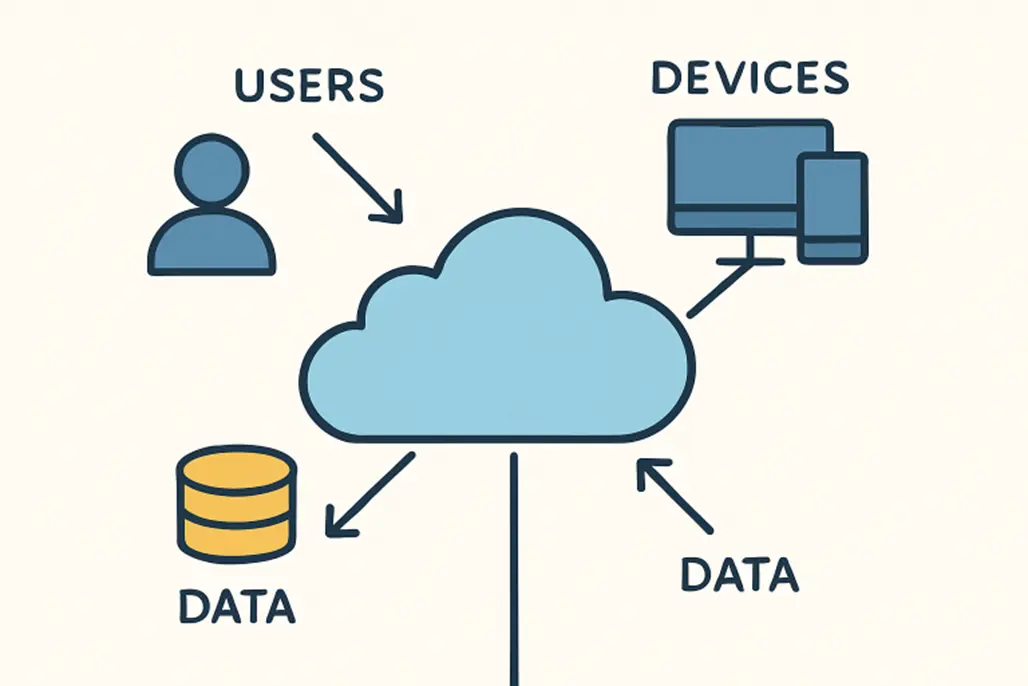
As organizations accelerate their migration to cloud-based infrastructures, the principles of network security are evolving rapidly. What once relied on clearly defined perimeters now requires a dynamic, adaptive approach—one that recognizes the borderless nature of modern networks. Secure access and resiliency are paramount as businesses adapt to an environment where users, devices, and data are everywhere, and threats are increasingly sophisticated. Companies examining these shifts should consider integrated solutions such as Versa Secure Access Service Edge, which unite network and security capabilities for cloud-focused operations.
This transformation means that decision-makers must approach network security not just as a technical challenge, but as a fundamental business concern. Updated methodology, intelligent automation, and resilient infrastructure form the new backbone of organizational defense. Adopting frameworks designed for cloud-first enterprises amplifies the ability to identify, prevent, and mitigate threats proactively and efficiently.
By focusing on adaptive security models and leveraging emerging technologies, organizations stand better equipped to protect distributed resources and sensitive data, even as cyber risks grow in complexity. In turn, this improves not only the security posture but also enables business continuity and fosters trust in digital innovation. Adapting to these changes is no longer optional—it’s essential for long-term viability in a hyper-connected marketplace.
Recognizing that traditional approaches must give way to more intelligent and more contextual controls helps organizations get ahead of new challenges, from identity-centric threats to cloud-based attacks. Rapid adoption of modern security paradigms, such as Zero Trust and SASE, positions businesses to remain agile and resilient as they navigate cloud connectivity.
Shifting from Perimeter-Based to Identity-Centric Security
The era of defined perimeters, where users and data reside within a clear corporate boundary, has primarily come to an end. As more businesses adopt multi-cloud, SaaS, and remote work models, the traditional “castle and moat” approach fails to provide adequate coverage. An identity-centric approach shifts the focus to verifying individuals and their access contexts, regardless of network location. This realignment is foundational to securing assets when employees and resources may be distributed across the globe.
Identity-centric security is often formalized through the adoption of Zero Trust principles, which operate under the assumption that no user, device, or application—internal or external—can be trusted by default. Access is granted based on identity, behavior, risk level, and device health, all of which are assessed in real-time. This granular, context-aware approach provides a more adaptive, risk-based foundation for protecting modern connected environments.
Implementing Zero Trust Principles
Zero Trust Network Access (ZTNA) has become central to secure cloud operations. Within this framework, every access attempt—regardless of its origin—is continuously scrutinized. By enforcing strict authentication, micro-segmentation, and least-privilege access, ZTNA minimizes the attack surface and mitigates risks posed by compromised credentials or insider threats. Cloud-native organizations benefit especially, as Zero Trust aligns security controls with dynamic, distributed infrastructure and continually shifting network boundaries.
Beyond limiting excessive user privileges, Zero Trust also promotes continuous monitoring and automated threat response. This ensures that when anomalous activities are detected, they can be addressed quickly, further hardening cloud and hybrid environments.
Leveraging AI for Enhanced Threat Detection
Manual threat detection is no longer sufficient against advanced, fast-evolving cyberattacks targeting cloud platforms. Artificial Intelligence (AI) and machine learning have emerged as essential allies, enabling the analysis of massive data streams for suspicious activity in real-time. AI-driven solutions excel at recognizing early indicators of breaches and automating responses to prevent attacks from causing severe damage. This speed and precision are vital for defending against unique threats, such as AI-generated phishing campaigns, credential stuffing, and lateral movement within virtualized infrastructures.
Enhanced AI platforms enable organizations to transition from a reactive defense to a more proactive and adaptive model of network security. By incorporating real-world threat feeds and behavioral analytics, these technologies enable organizations to stay ahead of sophisticated adversaries. For more on the rise of AI-powered cyber defense, visit CSO Online’s coverage of AI in cybersecurity.
Addressing the Challenges of Distributed Denial-of-Service (DDoS) Attacks
Cloud scalability is a double-edged sword—while it enables rapid business growth, it also presents lucrative targets for Distributed Denial-of-Service (DDoS) attacks. Malicious actors exploit cloud elasticity to amplify their attacks, causing widespread service outages. Major providers like Azure have demonstrated the importance of robust mitigation strategies; for instance, Microsoft’s successful defense against a historic 15.3 Tbps attack shows that modern cloud protection demands high-bandwidth scrubbing, intelligent filtering, and automated incident response.
Defending against DDoS threats requires not only technical barriers but also a coordinated fusion of network design, traffic analysis, and cloud-native protection tools. By continually adapting these defenses, organizations can maintain service availability and customer trust, even in the face of record-breaking volumetric attacks.
Enhancing Network Resilience with Advanced Infrastructure
Resilience is another cornerstone of modern network security. To prevent disruptions caused by outages, cyberattacks, or network congestion, cloud providers are investing in advanced infrastructure, including transatlantic subsea cables, expanded backbone networks, and redundant data centers. Projects like Amazon’s “Fastnet” subsea cable exemplify these enhancements, providing greater bandwidth, reduced latency, and alternative routing options in the event of physical or logical failures. Such investments are essential for organizations that rely on uninterrupted global connectivity and data integrity.
By proactively upgrading their infrastructure, enterprises can safeguard operations against both conventional disruptions and emerging threats, ensuring robust business continuity and a secure digital transformation.
Embracing Secure Access Service Edge (SASE)
The Secure Access Service Edge (SASE) model is an innovative convergence of networking and security functions delivered from the cloud. SASE combines key capabilities such as Secure Web Gateways, Cloud Access Security Brokers, Firewall-as-a-Service, and Zero Trust Network Access into a unified platform. This enables organizations to protect users, applications, and information seamlessly, regardless of location or device.
As organizations manage increasingly mobile and dispersed workforces, SASE simplifies connectivity and security operations—enabling secure, direct access to cloud applications while enforcing consistent policies and reducing complexity. For detailed guidance on building secure multi-cloud architectures, see Network World’s multi-cloud security best practices.
Conclusion
In the era of ubiquitous cloud connectivity, organizations must adopt robust security frameworks tailored to the realities of distributed infrastructure. Modernizing with Zero Trust and SASE, harnessing the agility of AI-driven defenses, and investing in resilient network architecture empowers businesses to confidently face current and future threats. By continually updating strategies and staying informed about industry innovations, companies can safeguard their operations while unlocking the full potential of cloud-driven transformation.
Also Read-Unselect vs Deselect: Which Term Should You Use in Tech? 🖱️💡
