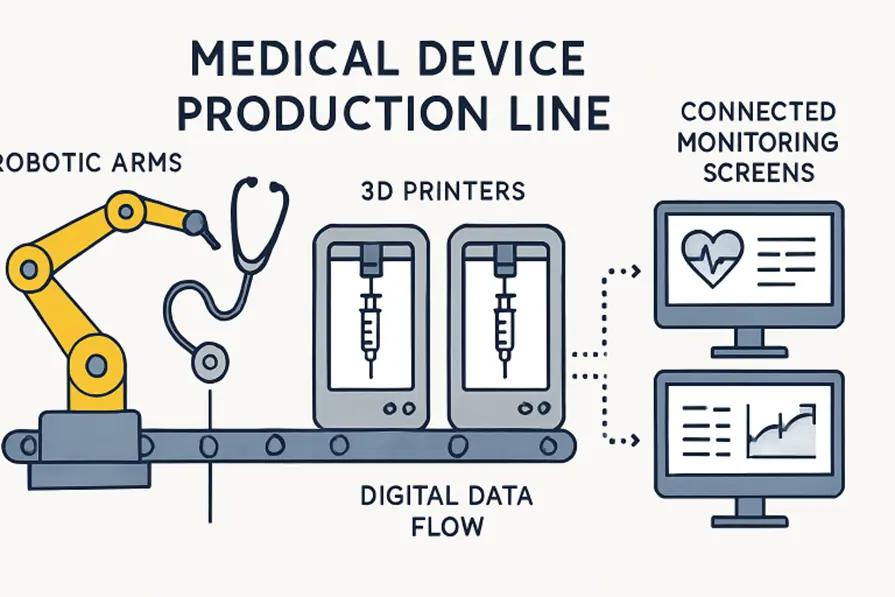
The rapid evolution of medical device manufacturing is fundamentally reshaping patient care by integrating cutting-edge technologies and more innovative production methods. These innovations enable precision, efficiency, and customization once unimaginable, addressing the increasing demands of modern healthcare while adhering to stringent regulatory requirements. The industry’s embrace of advanced solutions not only enhances device functionality but also prioritizes patient safety and comfort.
With the healthcare sector facing ever-growing pressures to deliver more effective treatments, manufacturers are leveraging new approaches to stay ahead. Technologies such as artificial intelligence, Internet of Things (IoT), and next-generation sterilization are helping to streamline production workflows, minimize errors, and ensure traceability. Improved materials and digital manufacturing tools are driving significant advances in the quality and integration of medical devices in daily practice.
Advancements in 3D Printing and Additive Manufacturing
The adoption of 3D printing in the creation of medical devices has revolutionized how tailored solutions reach patients. Additive manufacturing enables the fabrication of intricate structures and patient-specific products, including implants and prosthetics, which traditionally posed significant design challenges. Materials such as titanium alloys and bioresorbable polymers have emerged as popular choices, offering improved performance and patient compatibility.
As 3D printing technologies mature, the global healthcare market for these solutions is expected to surpass $6 billion by 2027, underscoring the technology’s growing influence on manufacturers and clinicians. These techniques foster faster prototyping, streamlined production runs, and more cost-effective development of highly complex devices, as outlined by BBC News.
Artificial Intelligence in Quality Control
Incorporating artificial intelligence into manufacturing has significantly raised quality assurance standards across the industry. AI-driven vision systems now outperform human inspectors, swiftly identifying microscopic defects and inconsistencies that may otherwise go unnoticed during manual inspections. This level of accuracy can reduce scrap rates by up to 30 percent and ensure compliance with international standards such as ISO 13485, which governs the safety and effectiveness of medical devices.
Notably, AI frameworks such as those developed by Akridata exemplify real-time defect detection by classifying imperfections on the manufacturing line. These advances have achieved high scalability and reliability, ensuring that only top-tier products reach the market without causing production delays or unnecessary waste.
IoT-Enabled Smart Factories
IoT technology transforms traditional manufacturing plants into fully connected, data-rich smart factories. By deploying networked sensors and machines, manufacturers can collect production metrics in real time, resulting in a 50 percent reduction in downtime and a 40 percent reduction in maintenance costs. Such systems enable predictive maintenance, rapid troubleshooting, and seamless optimization for critical products, from diagnostic equipment to surgical instruments.
The shift to connected environments enables automated workflows and centralized monitoring, allowing manufacturers to adapt quickly to changes in demand or regulatory conditions. IoT’s predictive analytics further help minimize disruptions and deliver products faster, helping healthcare providers ensure continuous care.
Emerging Materials and Sterilization Techniques
Innovative materials are at the forefront of safer and more effective medical tools. Bioresorbable polymers, for instance, are designed to be absorbed or degraded by the body, reducing patient risk and enhancing recovery outcomes. These advancements have led to a 20 percent reduction in device rejection rates and broader adoption of wearable and implantable medical products.
Meanwhile, new sterilization approaches such as low-temperature plasma not only maintain the structural integrity of sensitive materials but also reduce sterilization times by up to 40 percent. This enables manufacturers to confidently deliver sterile, ready-to-use devices on demand, meeting increasingly stringent health and safety standards. For more information on low-temperature sterilization technologies, refer to the CDC’s guidelines.
Digital Twin Technology
Digital twin technology has introduced a virtual paradigm to manufacturing, where engineers create detailed digital replicas of medical devices and their production processes. These digital simulations enable comprehensive testing, performance analysis, and process optimization without disrupting the actual manufacturing line. Early identification of potential flaws ensures reduced costs associated with workflow interruptions, rework, or recalls.
Especially in the context of life-sustaining devices, such as cardiac implants or artificial joints, digital twins enable manufacturers to perfect their products before physical deployment. This predictive capability is crucial for ensuring reliability and regulatory compliance in medical technology.
Personalized Medicine and Customization
The trend toward personalization in healthcare has spurred a new era of patient-specific devices. By harnessing advanced manufacturing and digital design, companies can fabricate treatments tailored to individual needs, from anatomical implants to connected health monitors. This level of customization boosts treatment efficacy by up to 30 percent and supports a growing movement toward personalized medicine.
Such advancements empower clinicians to deliver targeted interventions, thereby enhancing patient satisfaction and clinical outcomes. Moreover, integrating feedback from patients and healthcare providers drives continual refinement of device designs and functionalities.
Blockchain for Supply Chain Transparency
Blockchain technology is providing unprecedented traceability across the medical device supply chain. By maintaining a secure, immutable ledger of each transaction and component, manufacturers and regulators can track the origins, handling, and quality of every device. This level of visibility can reduce counterfeit risks by as much as 90 percent and ensure compliance with increasingly complex global regulations.
Enhanced transparency and accountability throughout the supply chain not only protect patients but also streamline recalls and interventions when necessary, helping manufacturers safeguard their reputations and market access.
Conclusion
Medical device manufacturing is at a crossroads where innovation, precision, and safety converge to transform patient outcomes. The adoption of technologies such as 3D printing, artificial intelligence, IoT, new materials, and blockchain is driving robust change across the sector. By embracing these advancements, manufacturers are better equipped to meet evolving healthcare needs, strengthen supply chain integrity, and deliver safer, more effective solutions. As global healthcare continues to grow, staying at the forefront of technological progress will be vital for supporting patient care and well-being on an even greater scale.
Also Read
- Making Eye Exams Smoother With Better Tech
- Uncharacteristic Odds Movement in the Bundesliga Explained
- Why 4inbandana’s Custom Neck Gaiter Works Better for Skiing
