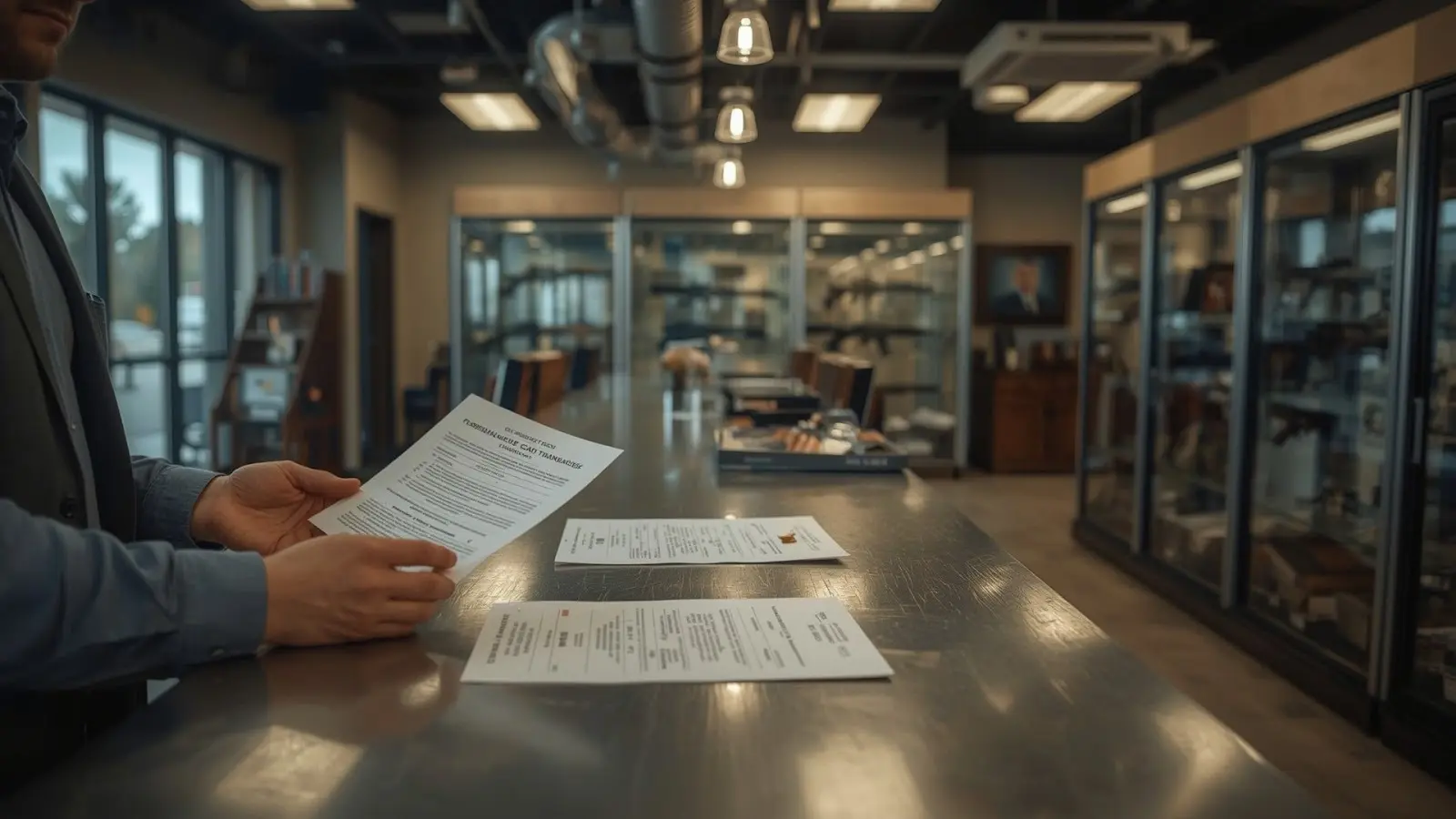
Buying a gun online is completely legal in the United States, but it works differently than ordering almost anything else online. You cannot have a firearm shipped directly to your front door. Federal law requires every online gun purchase to go through a licensed dealer, known as an FFL, before you can take possession of the firearm. Understanding this process upfront saves you time, money, and frustration.
The good news is that once you know the steps, the process is straightforward. Millions of Americans buy firearms and ammo online every year through reputable retailers, and the system is designed to keep purchases both accessible and accountable. This guide walks you through every stage, from choosing a firearm to walking out of your local dealer with it in hand.
Key Takeaways
- FFL transfer is required by federal law: all online firearm purchases must be transferred through a licensed firearms dealer near you before pickup.
- A background check is mandatory: you will complete ATF Form 4473 and pass a NICS check at your local FFL dealer, not at the point of online purchase.
- State laws add extra requirements: some states require waiting periods, permits, or additional documentation beyond federal minimums.
- Transfer fees vary by dealer: most FFL dealers charge between $20 and $50 per transfer, and you should confirm this before buying.
- Shipping goes dealer to dealer: the online retailer ships to your chosen FFL, not to your home address.
What Is an FFL and Why Do You Need One?
Quick Answer: An FFL, or Federal Firearms Licensee, is a business licensed by the ATF to sell and transfer firearms. Federal law requires all online gun purchases to route through a local FFL dealer so a background check can be completed before the buyer takes possession.
The Gun Control Act of 1968 established that firearms sold across state lines must transfer through a licensed intermediary. When you buy a gun online, the retailer holds a federal firearms license. Your local gun shop, pawn shop, or sporting goods store likely holds one too. The online seller ships the firearm to your chosen local FFL, who then processes your background check and hands the gun to you.
Finding a local FFL is simple. Most gun shops accept transfers. You can also search the ATF’s online FFL locator by zip code. Call ahead to confirm they accept transfers and ask about their fee before you finalize your online purchase.
How Does the Online Gun-Buying Process Work Step by Step?
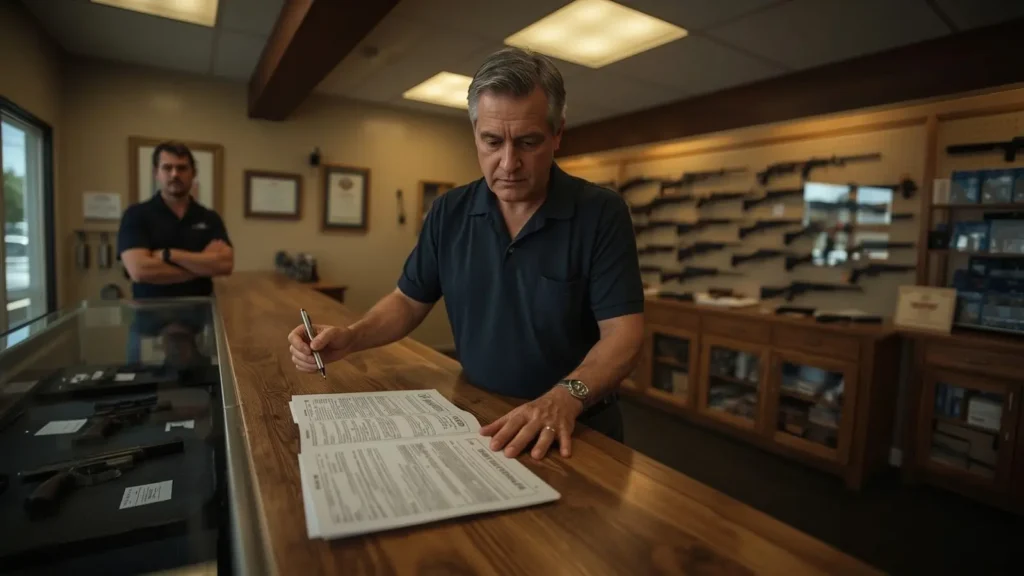
Quick Answer: Choose a firearm online, select a local FFL dealer for delivery, provide that dealer’s contact info to the retailer, pay online, wait for shipment, visit your FFL for the background check and Form 4473, then take your firearm home if approved.
Step 1: Choose Your Firearm and Retailer
Browse licensed online retailers the same way you would any e-commerce store. Filter by caliber, brand, action type, or price. A reputable retailer will display clear pricing, include manufacturer details, and show accurate inventory. When you buy firearms and ammo online, confirm the retailer is licensed and check their return and shipping policies before adding anything to your cart.
Step 2: Select Your Local FFL Dealer
Before checkout, you will be asked for your receiving FFL’s information. Contact your local dealer first. Get their name, address, license number, and preferred contact email. Some dealers have a specific process for receiving inbound transfers, so asking in advance prevents delays.
Step 3: Complete Checkout and Wait for Shipment
Pay for the firearm online. The retailer ships it directly to your FFL, not your home. Shipping typically takes three to seven business days. Many online retailers provide tracking so you and your local dealer can monitor the shipment.
Step 4: Complete Your Background Check at the FFL
Once your FFL receives the firearm, they will contact you. Visit the dealer in person with a valid government-issued photo ID. You will complete ATF Form 4473, a federal document capturing basic identifying information. The dealer then submits your information to the FBI’s NICS system for an instant background check. Most checks clear in minutes.
What Disqualifies Someone From Buying a Gun Online?
Quick Answer: Federal law prohibits firearms purchases by anyone convicted of a felony, subject to a domestic violence restraining order, adjudicated as mentally ill, or unlawfully using controlled substances. State laws may add further restrictions.
| Disqualifying Factor | Legal Authority | Check Method | Applies To |
|---|---|---|---|
| Felony conviction | 18 U.S.C. § 922(g) | NICS background check | All buyers nationwide |
| Domestic violence misdemeanor | Lautenberg Amendment | NICS background check | All buyers nationwide |
| Active restraining order | 18 U.S.C. § 922(g)(8) | NICS background check | All buyers nationwide |
| Unlawful controlled substance use | 18 U.S.C. § 922(g)(3) | Form 4473 self-disclosure | All buyers nationwide |
| State permit requirement | Varies by state | Presented at FFL | CA, IL, MA, NY, others |
Do State Laws Affect Online Gun Purchases?
Quick Answer: Yes. States like California, Illinois, Massachusetts, and New York require additional permits, waiting periods of 10 to 30 days, or state-specific registration before you can take possession of a firearm purchased online.
Federal law sets the floor, but states can build higher requirements on top of it. California requires a Firearm Safety Certificate and a 10-day waiting period. Illinois requires a Firearm Owner’s Identification (FOID) card before any purchase. Some states restrict certain firearm features like magazine capacity or pistol grip designs.
Before you browse, research your state’s specific rules. Many online retailers, including this online firearms retailer type of platform, will flag or block shipment to states where the specific firearm model is restricted. Your local FFL dealer is also a reliable resource for explaining what your state requires.
How Much Does It Cost to Buy a Gun Online vs. In Store?
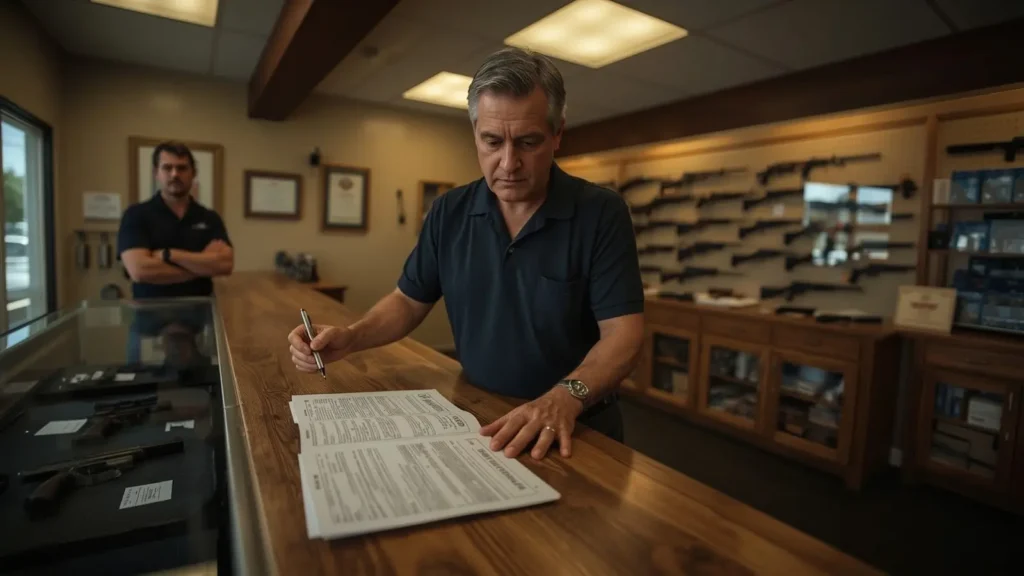
Quick Answer: Online prices are often 10 to 20 percent lower than retail store prices, but you must add the FFL transfer fee of $20 to $50 and shipping, typically $25 to $40. Total savings depend on the firearm’s base price.
Online buying makes the most financial sense for higher-priced firearms. On a $600 handgun, saving $80 online while paying a $35 transfer fee and $30 shipping still puts $15 back in your pocket. On a $200 budget pistol, the math may favor your local shop. Always calculate the full landed cost before assuming online is cheaper.
Is It Safe to Buy a Gun From an Online Retailer?
Quick Answer: Yes, when buying from an ATF-licensed retailer. Look for secure checkout (HTTPS), verified customer reviews, a physical business address, and clear return policies. Avoid private party sites that bypass the FFL transfer requirement.
Reputable online gun retailers operate under the same federal licensing as your local gun shop. The transfer system itself adds a layer of accountability since no firearm changes hands without an in-person background check. Stick to retailers that show their FFL number and have transparent policies.
Frequently Asked Questions
Can I buy a gun online without going to a gun store?
No. Federal law requires all online firearm purchases to transfer through a licensed FFL dealer in person. You must visit the local dealer, complete Form 4473, and pass a background check before taking possession of any firearm.
How long does the online gun-buying process take?
From order to pickup, expect seven to fourteen days total. Shipping takes three to seven business days, and the background check at your FFL typically clears in minutes. State waiting periods can extend this timeline by ten days or more.
Can I return a gun I bought online?
Return policies vary by retailer and are often limited for firearms. Most retailers accept returns only for unfired guns with documented defects. Review the retailer’s policy before purchasing, and understand that once a background check is completed, the transfer is generally considered final.
Do online gun retailers ship to all 50 states?
Most licensed retailers ship to all states that allow the specific firearm being purchased. Some states restrict certain models, features, or calibers. The retailer’s website typically flags restricted items at checkout, but confirming with your local FFL before ordering is always a smart move.
Also Read
- Making Eye Exams Smoother With Better Tech
- Marketing for Business Growth
- How FINRA Arbitration Helps Investors Recover Losses From Securities Fraud
