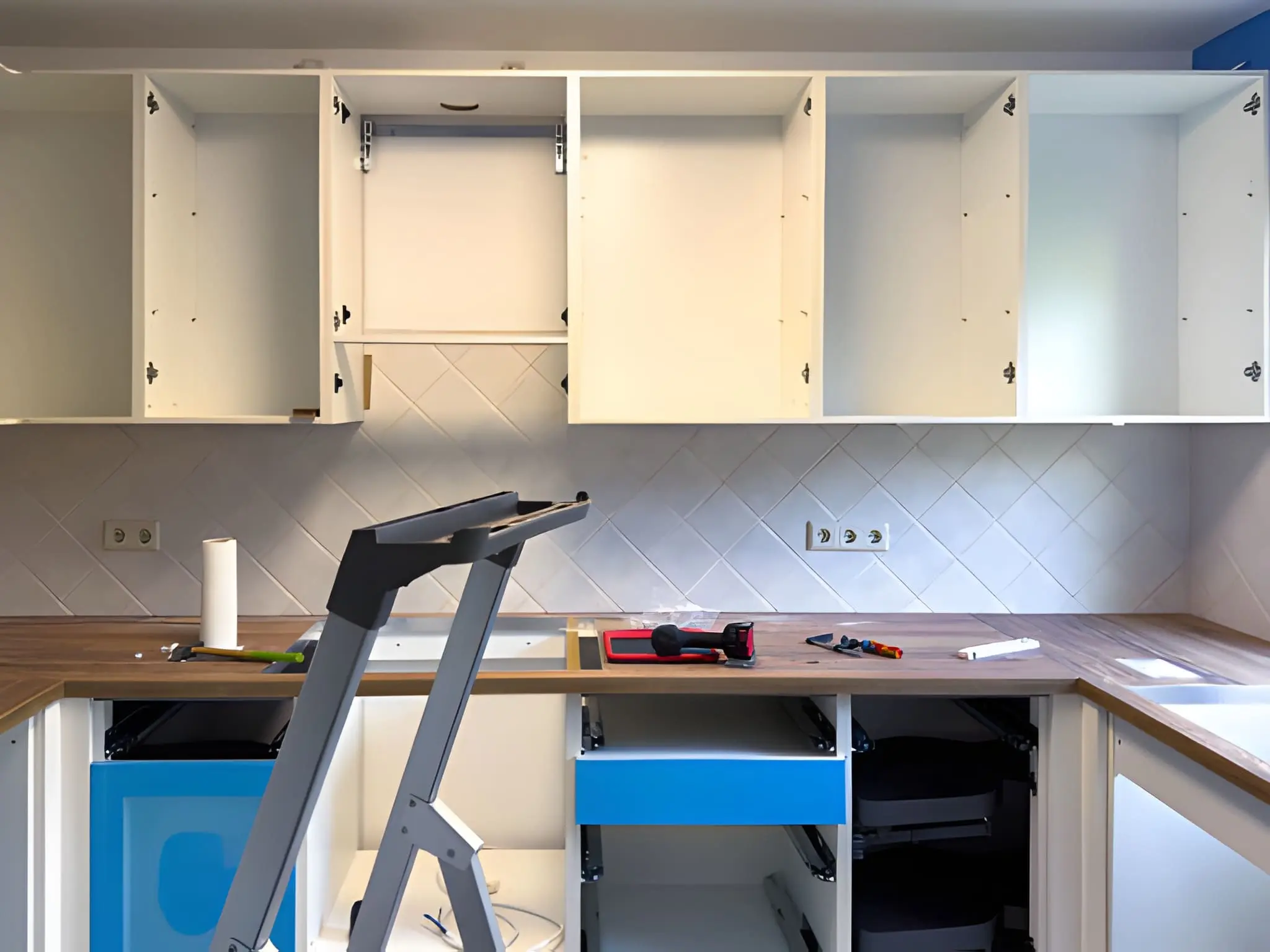
Kitchen renovations are often judged by how they look on completion day. But what really determines long-term satisfaction is how well everything fits, functions, and holds up to daily use. Doors that don’t align, cabinets that waste space, or benches that feel just slightly off can turn excitement into quiet frustration.
On-site manufacturing takes a different approach. Instead of relying solely on pre-made components, parts are built specifically for the space they will live in. That precision makes a noticeable difference—not just visually, but in how the kitchen works every single day.
Why Fit Matters More Than People Expect
Most homes aren’t perfectly square.
Walls may lean slightly. Floors can slope. Ceilings often vary by a few millimetres from one side of the room to the other. These small variations are normal, but they create challenges when installing factory-made components designed for “average” spaces.
On-site manufacturing accounts for these realities. Measurements are taken from the actual room, and components are built to suit those exact conditions.
This is similar to tailoring clothing. Off-the-rack sizes work for many people, but tailored garments fit better because they account for individual proportions. Kitchens benefit from that same level of attention.
When cabinetry fits the space precisely, there are fewer gaps, cleaner lines, and better use of every centimetre.
Precision Leads to Better Quality
Quality isn’t just about materials—it’s about execution.
On-site manufacturing enables real-time adjustments. If something needs refining, it can be corrected immediately rather than forcing a compromise.
In manufacturing industries, this approach aligns closely with precision engineering, where components are produced to exact tolerances to ensure performance and reliability. The same principle applies to kitchen renovations.
Instead of forcing the room to fit the product, the product is shaped to fit the room.
That precision improves durability, appearance, and overall performance.
Fewer Compromises, Better Results
Traditional renovation processes often involve workarounds. Fillers are added. Panels are trimmed. Small gaps are hidden with finishes.
On-site manufacturing reduces the need for these compromises. Components are created with the space in mind from the start, resulting in cleaner joins and more cohesive results.
In automotive repair, custom parts often outperform generic replacements because they’re designed for a specific vehicle. Kitchens work the same way.
When fewer compromises are made, the final result feels intentional rather than adjusted.
Adapting to Real-World Conditions
Renovation rarely happens in perfect conditions.
Unexpected obstacles—hidden pipes, uneven surfaces, or structural quirks—are common. On-site manufacturing allows designs to adapt quickly when these realities appear.
In construction and architecture, adaptability is critical. Plans that can respond to real-world conditions produce better outcomes than rigid systems.
This flexibility reduces delays and avoids last-minute design changes that can affect quality.
Better Use of Space
One of the most noticeable benefits of on-site manufacturing is improved space efficiency.
Cabinets can be built to full height. Corners can be used more effectively. Awkward gaps can be eliminated.
In logistics, storage systems are designed to maximise available space while minimising access restrictions. Kitchens benefit from the same thinking.
Better use of space means more storage, cleaner lines, and a kitchen that feels larger and more organised—even if the footprint hasn’t changed.
Consistency Throughout the Kitchen
Consistency is what makes a kitchen feel cohesive.
When components are manufactured on-site, finishes, proportions, and alignments are controlled closely. This creates a sense of balance throughout the room.
In interior architecture, consistency builds visual calm. When elements align properly, the space feels intentional and refined.
That consistency is often subtle—but it’s what separates a good kitchen from a great one.
Reducing Installation Stress
Installation is where many renovation issues surface.
Pre-made components may require adjustments during installation, increasing the risk of damage or delay. On-site manufacturing simplifies installation because pieces are already built for the space.
In event staging or exhibition design, custom-built components reduce setup issues because everything fits as planned. Kitchens benefit from that same predictability.
Smoother installation means less disruption and fewer surprises.
Durability Over Time
Kitchens endure daily wear. Doors open and close thousands of times. Drawers carry weight. Surfaces face heat, moisture, and impact.
When components fit properly, stress is distributed more evenly. Hinges last longer. Panels stay aligned. Wear happens more slowly.
In mechanical systems, proper fit reduces friction and failure. Kitchen components follow the same rule.
On-site manufacturing contributes to longevity, not just aesthetics.
A More Personal Outcome
Because components are made specifically for the home, the result feels personal rather than generic.
Details can be tailored—handle placement, storage height, internal layouts—all reflecting how the household uses the kitchen.
In user-centred design, products perform better when they’re built around real users rather than averages. Kitchens designed this way feel intuitive and comfortable.
That personalisation enhances daily experience, not just visual appeal.
Seeing the Difference Midway Through Planning
As homeowners explore renovation approaches that prioritise accuracy and long-term quality, many review options, such as click here, to better understand how on-site manufacturing supports a better fit and finish.
Seeing how the process works often clarifies why tailored manufacturing delivers stronger outcomes than one-size-fits-all solutions.
Quality Control Happens Where It Matters Most
When manufacturing happens close to the installation site, quality control improves.
Issues can be identified and corrected immediately. Communication between design, manufacturing, and installation is tighter. There’s less reliance on assumptions.
In food production, freshness and quality improve when preparation happens closer to the point of use. Kitchen manufacturing benefits from that same proximity.
This reduces errors and improves accountability.
Long-Term Satisfaction Comes From the Details
Many renovation regrets stem from small things—drawers that don’t open smoothly, cabinets that feel cramped, finishes that don’t align.
On-site manufacturing focuses on those details. When details are right, the kitchen feels effortless to use.
In craftsmanship, details define quality. Kitchens are no exception.
That attention to detail is what homeowners continue to appreciate long after the renovation is finished.
Final Thoughts: Fit Is the Foundation of Quality
On-site manufacturing enhances quality and fit in kitchen renovations by respecting the space’s realities and the needs of the people using it.
By prioritising precision, adaptability, and craftsmanship, this approach reduces compromise and increases long-term satisfaction.
In the end, a kitchen that fits properly doesn’t draw attention to itself—it simply works. And that quiet reliability is what makes on-site manufacturing such a powerful part of a successful renovation.
Also Read-Unselect vs Deselect: Which Term Should You Use in Tech? 🖱️💡
