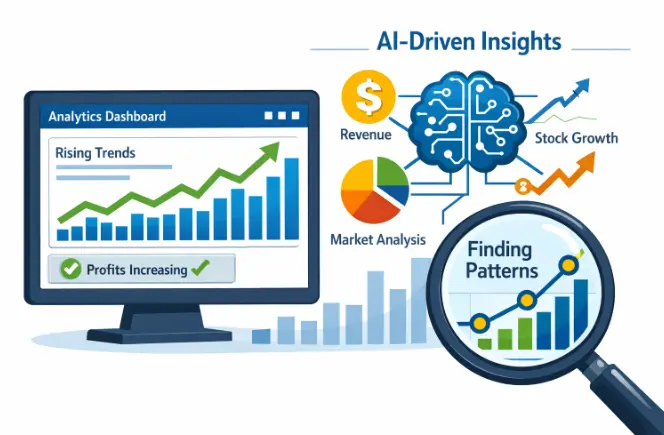
Artificial Intelligence is ushering in a new era for the financial industry, fundamentally reshaping portfolio management through automation, insight-driven strategies, and predictive analytics. Today, advanced platforms like Ridgeline.AI demonstrate how integrating AI with investment management can boost efficiency, streamline research, and enhance overall outcomes for both institutional and retail investors.
By capturing complex market signals and analyzing vast datasets, AI is supporting asset managers in making faster and more data-driven decisions. It enables investors and managers to minimize biases, better manage risks, and optimize returns. The shift toward AI-powered investment tools is not just a matter of convenience; it is quickly becoming a competitive necessity in finance.
Across the finance sector, AI-driven automation is reducing manual workloads associated with research and trading, while real-time monitoring and adaptive learning algorithms allow portfolios to dynamically adjust to changing market conditions. This ever-evolving technology pushes firms to stay ahead of the curve by leveraging powerful insights that were once out of reach to even the most skilled human analysts.
As these developments continue to unfold, the landscape of portfolio management grows increasingly sophisticated and accessible, offering advanced tools previously reserved for elite asset managers to the broader investment community.
AI Integration in Portfolio Management
The adoption of AI technology within portfolio management is rapidly accelerating. Financial institutions and fintech startups alike are harnessing machine learning algorithms to sift through massive amounts of data, recognize emerging patterns, and implement investment strategies with greater accuracy. AI-driven tools provide capabilities far beyond human reach, with the ability to detect market trends and make split-second decisions that reflect evolving conditions.
Through natural language processing and predictive modeling, AI is able to parse market news, financial reports, and social sentiment at unprecedented speeds. This allows portfolio managers to incorporate a broader array of data sources for a more holistic view of risk and opportunity. Integration with AI does not just bolster accuracy; it also lowers operational costs and enables greater scalability for firms managing large numbers of portfolios or client accounts.
Enhancing Decision-Making with AI
AI significantly amplifies the quality of decision-making in investment management. Machine learning models can identify subtle correlations within vast datasets, drawing connections between economic factors, financial statements, and behavioral trends that may be missed by traditional analytics. With access to real-time data and forecasting capabilities, portfolio managers are empowered to anticipate market movements and refine their investment strategies accordingly.
For instance, AI can help managers quickly spot market anomalies, identify arbitrage opportunities, and dynamically reallocate assets in milliseconds, which reduces exposure to potential losses and boosts returns. Continuous learning features allow these algorithms to evolve alongside the market, improving both the timeliness and relevance of investment choices. Some of the most innovative investment firms are now leveraging AI as a central pillar of their portfolio strategy, leading to superior risk-adjusted returns and enhanced client satisfaction.
Risk Assessment and Mitigation
Effective risk management has always been a cornerstone of successful portfolio management. AI-driven tools now allow managers to evaluate risk in real time by examining market volatility, economic indicators, and asset correlations. These systems can run countless scenario analyses to estimate the impact of different events, helping managers to construct resilient portfolios that are better protected against sudden downturns or black swan events.
AI’s predictive capabilities enable more granular risk assessments by uncovering hidden exposures and simulating crisis conditions. They also provide alerts for abnormal patterns in trading activity or market behaviors, enabling timely interventions that can prevent significant losses. By deploying adaptive risk models, modern portfolio managers can proactively adjust investment allocation and hedging strategies as conditions change.
Real-World Applications
Some of the world’s most prominent companies have integrated AI into their investment platforms to deliver a superior experience and stronger results. For example, Ridgeline’s AI-powered platform enables users to research and manage custom investable indexes with the help of algorithmic insights. This model empowers investors to construct diversified portfolios tailored to individual needs and market expectations.
Another notable example is Microsoft’s revamped Foundry platform, which facilitates the development and oversight of AI agents in enterprise investment settings. Through features like unified data access and smart visualization tools, Foundry enhances collaboration and portfolio transparency. As these AI applications become more refined, they are progressively democratizing access to tools that help investors manage capital with confidence and agility.
Challenges and Considerations
Despite the many benefits, several challenges are associated with integrating AI into portfolio management. Data integrity remains a central issue, as the effectiveness of AI models relies on the breadth and accuracy of the underlying datasets. Incomplete or biased data can produce unreliable predictions, potentially harming performance or investor trust. Additionally, the complexity of AI systems raises important questions about the transparency and interpretability of automated decisions, which makes regulatory compliance a constant consideration.
Asset managers must also establish safeguards against algorithmic biases and ensure adherence to ethical guidelines in their use of AI. Continuous monitoring, robust testing frameworks, and clear governance structures are critical for managing these concerns and building stakeholder confidence in AI-driven investment solutions.
Future Outlook
The trajectory for AI in portfolio management points toward a future characterized by even deeper integration and sophistication. Developments in generative AI, self-learning investment models, and hyper-personalized solutions will further empower managers and investors with unprecedented analytical tools and automation capabilities. As the technology matures, AI will enable more nuanced approaches to managing risk and capturing opportunity, potentially ushering in a new golden era of innovation in finance.
Ultimately, next-generation AI is not simply enhancing existing practices; it is transforming the foundational principles of portfolio management, driving higher efficiency, smarter strategies, and broader accessibility to sophisticated investing.
Also Read-
- Starlink Internet Bahrain for Businesses: Opportunities and Advantages
- Unselect vs Deselect: Which Term Should You Use in Tech? 🖱️💡
- 5 Common Mistakes Law Firms Make When Adopting Legal Technology Software