Table of Contents
- Install GFCI Outlets in Moisture-Prone Areas
- Avoid Overloading Outlets
- Replace Damaged Cords and Outlets
- Use Extension Cords Sparingly
- Keep Electrical Devices Away from Water
- Unplug Unused Appliances
- Use the Correct Light Bulbs
- Install Smoke Alarms and Carbon Monoxide Detectors
Electrical hazards in the home are more common than many people realize. Each year, thousands of house fires, accidental shocks, and injuries are caused by overlooked dangers in household electrical systems. Taking proactive steps to prioritize safety can make a significant difference for your family. If you’re unsure about the safety of your electrical setup, consider scheduling electrical safety inspections in Kansas City to identify and address potential problems before they become emergencies.
Regular safety checks and mindful practices can help you avoid fire, electrical shocks, and unnecessary repair bills. Homeowners can protect their property, reduce liability, and ensure peace of mind by implementing proper preventive measures. Understanding where to look for risks and how to respond is essential, as nobody wants to face the aftermath of a preventable electrical accident.
Knowledge is your first line of defense. Even small habits—like unplugging appliances you aren’t using or checking your cords for fraying—add up to a safer, more efficient home. The following guide walks you through smart, practical tips for maintaining a safe household electrical system and making sure your devices last longer.
Install GFCI Outlets in Moisture-Prone Areas
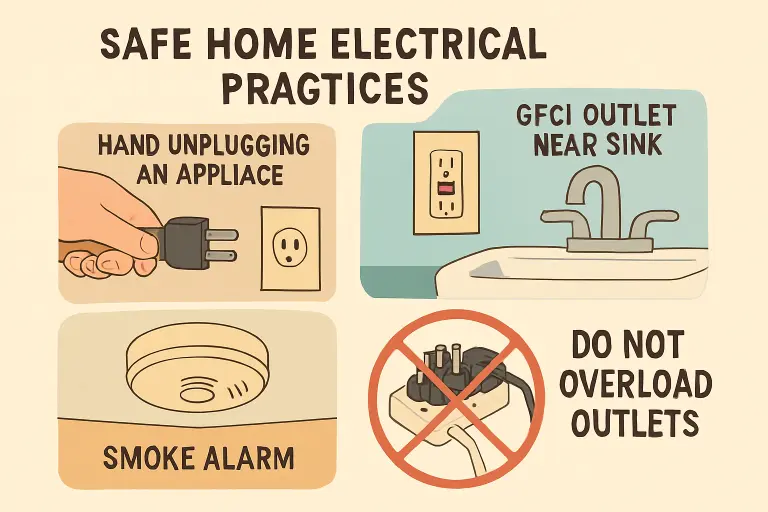
This simple upgrade can drastically reduce the risk of electrocution in your home. Ground Fault Circuit Interrupter (GFCI) outlets are designed to shut off electric power when a ground fault is detected. Places prone to water—like kitchens, bathrooms, laundry rooms, garages, and outdoor areas—should always have GFCI outlets installed. Testing GFCIs monthly ensures they’re working as intended. Push the “test” button and ensure the power cuts off, then reset.
Avoid Overloading Outlets
Many electrical fires start because of overloaded outlets, especially when high-wattage appliances like microwaves or space heaters are plugged in alongside other devices. Always follow the manufacturer’s instructions for each device, and use only one heat-producing appliance per outlet. If you find you need more plugs, have a licensed professional install additional outlets. Overloaded outlets often feel warm or look scorched—these are clear warning signs to act quickly.
Replace Damaged Cords and Outlets
Frayed, cracked, or melted cords are among the most obvious electrical hazards, yet they’re often overlooked until a serious incident occurs. Damaged cords can ignite quickly, especially when hidden behind furniture or beneath rugs. Always inspect visible cords and outlets for signs of damage, including discoloration or sparking when plugging in devices. Never attempt to repair cords with tape or patches—replacement is the safest solution.
Use Extension Cords Sparingly
Extension cords are designed for temporary use. Overreliance on them can cause cords to degrade and overheat, increasing the risk of fire, especially if they’re covered or coiled. Avoid running them under carpets or doors, as pressure and movement can wear them down. To address the frequent need for more outlets, it’s best to invest in permanent wiring solutions installed by a professional, rather than a quick fix with extension cords.
Keep Electrical Devices Away from Water
Water conducts electricity, so keeping devices at a safe distance from sinks, bathtubs, and other water sources is crucial. Be vigilant when using items like hairdryers, radios, or kitchen appliances near water. Always dry your hands before handling plugs and switches, and never touch a plugged-in device if you’re wet. A moment’s care can prevent life-altering injuries.
Unplug Unused Appliances
Even when turned off, many appliances draw “phantom” electricity, increasing both safety risks and monthly energy bills. Unplugging devices when not in use helps prevent accidental overheating or electrical surges that can spark a fire. Not only will this safeguard your appliances, but it also saves money and energy over time.
Use the Correct Light Bulbs
Every light fixture is rated for a specific wattage, and using bulbs that exceed those recommendations can cause excessive heat buildup and even start fires. Always check labels on fixtures and use bulbs within the specified range. For extra safety and efficiency, consider switching to LED bulbs, which are cooler and use less electricity than traditional incandescent bulbs. You can learn more about proper lighting safety and energy-efficient options from the U.S. Department of Energy. Regularly inspecting fixtures for loose wiring, damaged sockets, or flickering lights can help catch potential hazards early before they become serious problems. If you notice persistent issues or are unsure about an installation, it’s best to consult a licensed electrician to ensure your home lighting remains safe and up to code.
Install Smoke Alarms and Carbon Monoxide Detectors
Smoke alarms and carbon monoxide detectors provide life-saving warnings in the event of a fire or gas leak. Install a smoke alarm in every bedroom, hallway, and on every floor of your home. Carbon monoxide detectors are significant near bedrooms and in homes with fuel-burning appliances. Test all alarms at least once a month by pressing the test button, and replace batteries every six months to ensure they’re always operational.
Prioritizing electrical safety in your home doesn’t have to be complicated or overwhelming. By adopting these practices and keeping your electrical system up to code, you protect your loved ones and your investment. Regular inspections and a careful eye on potential hazards can save lives—and give any homeowner much-needed peace of mind.
Also Read-How to Handle a Quick Home Sale Without Stress
