In electronics, a circuit rarely fails because of a missing component. More often, failure begins with a misunderstanding—especially around power.
The DC voltage symbol is one of the most basic elements in a schematic, yet it plays a decisive role in how a design survives real-world manufacturing. When combined with a clear understanding of SMT meaning, it becomes the bridge between circuit intent and reliable PCB assembly.
This article explains why DC voltage symbols are not just schematic icons, but manufacturing instructions in disguise.
DC Voltage Symbol: More Than a Power Icon
At a glance, the DC voltage symbol simply indicates a direct current power source.
In practice, it defines several critical design assumptions:
- Polarity reference
- Voltage domain boundaries
- Power hierarchy (input, regulated, secondary rails)
- Ground relationships
Common representations include:
- Battery-style long/short line symbols
- Circle symbols with + / − indicators
- Named power nets such as +3.3V, +5V, VIN, VOUT, GND
Each of these carries implicit meaning that must remain consistent throughout the design and manufacturing flow.
Where DC Voltage Symbols Influence SMT Assembly
To understand how symbols affect production, we need to revisit SMT meaning.
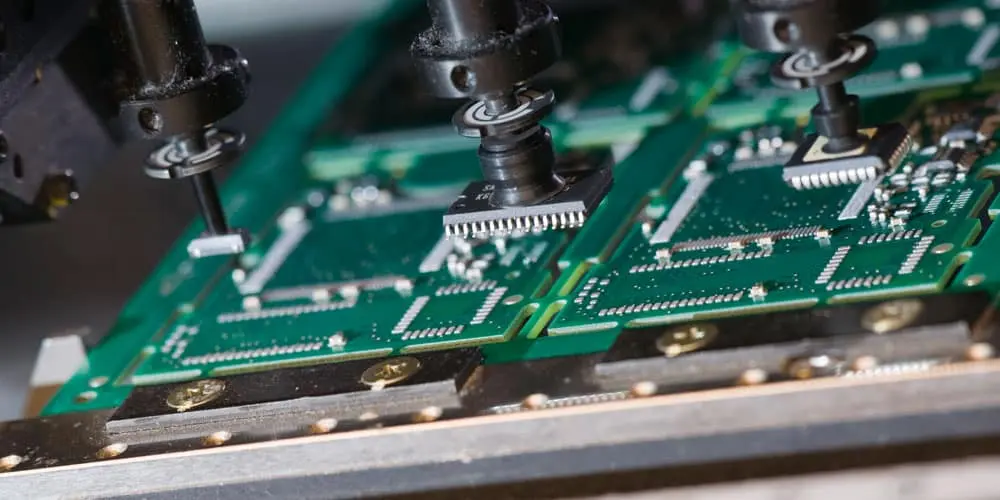
SMT (Surface Mount Technology) refers to assembling electronic components directly onto the surface of a PCB using automated processes such as solder paste printing, pick-and-place, and reflow soldering.
From an SMT perspective, the DC voltage symbol determines:
- Which components are polarity-sensitive
- How regulators and protection devices are oriented
- How test points and probing references are defined
- Whether automated optical inspection rules are valid
In other words, the symbol silently dictates how machines and operators interpret your design.
Power Domains and Symbol Consistency
Modern PCBs often contain multiple DC voltage domains:
- Input DC (e.g., 12V, 24V)
- Logic rails (5V, 3.3V, 1.8V)
- Analog or isolated supplies
If DC voltage symbols are:
- Poorly named
- Inconsistently reused
- Visually similar but electrically different
then errors tend to appear during SMT assembly or electrical testing, not during schematic review.
SMT machines will place parts correctly—but the board may still fail electrically because the intent was unclear.
Typical SMT Failures Linked to DC Voltage Symbol Issues
Many manufacturing defects trace back to schematic-level ambiguity:
- Voltage regulator installed correctly but connected to the wrong rail
- Reverse polarity damage on first power-up
- Test pads referenced to the wrong ground
- Overvoltage stress on SMT capacitors
These issues often pass visual inspection and only appear during functional testing—or worse, in the field.
SMT Meaning in Power Integrity
Understanding SMT meaning also means understanding physical limitations:
- SMT capacitors have voltage derating requirements
- Regulator packages have orientation-dependent thermal behavior
- Grounding relies on copper planes, not schematic symbols
If DC voltage symbols do not reflect actual current paths and grounding strategy, SMT assembly can meet all process specs and still produce unstable boards.
Good power symbols lead to good power layout—and good layout survives reflow, testing, and long-term operation.
Best Practices for DC Voltage Symbols in SMT-Oriented Designs
To align schematic intent with SMT production:
- Use clear, explicit DC voltage symbols
- Avoid reusing symbols for different voltage levels
- Label power nets consistently across schematics and PCB files
- Ensure polarity is obvious for all power-related components
- Match schematic symbols with silkscreen and assembly data
These practices reduce interpretation gaps between design engineers and manufacturing teams.
From Design Intent to Manufacturable Reality
In modern electronics, the schematic is no longer an abstract document.
It is the first manufacturing instruction.
The DC voltage symbol defines how power should behave.
SMT meaning defines how that behavior is physically realized.
When both are aligned, boards power up cleanly, pass testing, and scale smoothly into volume production.
Conclusion
- The DC voltage symbol communicates power intent at the schematic level
- SMT meaning explains how that intent becomes a physical PCB
- Misalignment between symbols and assembly reality causes hidden failures
- Clear power symbols improve SMT yield, testing efficiency, and reliability
In high-density, automated electronics manufacturing, power clarity is not optional—it is foundational.
Also Read-Making Eye Exams Smoother With Better Tech
