The Importance of Data-Driven Decision-Making
In a rapidly shifting global marketplace, organizations that leverage data’s power stand miles ahead in their ability to adapt and thrive. Through detailed analysis of customer trends, operational performance, and market behavior, companies can create far more precise strategies that directly impact bottom-line performance. By drawing from vast internal and external datasets, modern businesses can spot emerging opportunities and mitigate risks in real time. As companies seek to outpace their competitors, turning to data-centric approaches has become the new non-negotiable standard for revenue growth. Leveraging a top revenue management software solution empowers organizations to translate raw information into actionable insights, laying the foundation for scalable, long-term revenue gains.
Organizations leveraging advanced analytics and business intelligence platforms can enhance decision-making and report a 55% increase in revenue. Emphasizing data-driven approaches enables standardized insights, allowing executives to make informed choices. This data accessibility empowers various departments to personalize outreach, finance to improve forecasting, supply chains to quickly adapt, and customer success teams to proactively retain clients. Companies utilizing data-driven strategies outperform competitors in market share and profitability.
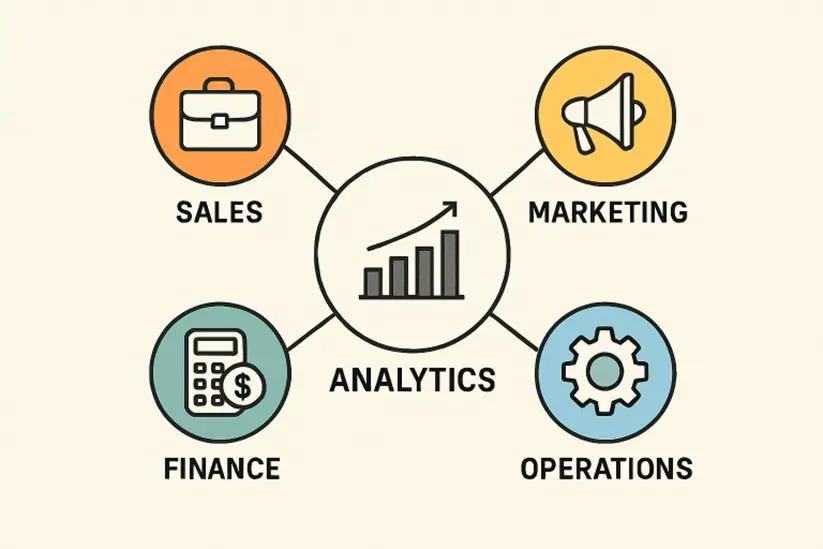
Integrating Data Analytics Across Business Functions
Successfully embedding analytics into every business function transforms the way organizations operate. For example, data collected from customer interactions, buying habits, and feedback can be analyzed to predict emerging needs and preferences. This enables companies to develop products and services that precisely fit customer expectations, driving higher satisfaction and stronger loyalty. Marketing departments can use rich datasets to fine-tune messaging and campaign targeting, ensuring that their resources are allocated to the most promising opportunities.
Integration also promotes operational efficiency across the organization. Data-informed logistics ensure that inventory is kept at optimal levels, reducing carrying costs and minimizing stockouts. By connecting analytics platforms with enterprise resource planning (ERP) or customer relationship management (CRM) software, all teams gain visibility into business performance, making it much easier to coordinate efforts and align goals.
In industries with thin margins or rapidly changing demand patterns, such as retail or high tech, this approach gives decision-makers a first-mover advantage when responding to customer needs or market shifts. Simply collecting more data is not enough; organizations need to ensure that analytics are seamlessly mixed into everyday workflows, from executive planning down to frontline staff actions.
Overcoming Challenges in Data Integration
Despite the clear benefits, companies often encounter real-world barriers when adopting a fully integrated data analytics function. Data silos, where departments store information in isolation, can create fragmentation and inconsistencies. Poor data quality or a lack of governance further compounds this problem, leading to misleading outputs and unreliable insights.
To overcome these obstacles, organizations must prioritize unified data management, supported by modern cloud-based analytics tools. Centralizing data sources and setting consistent standards for data collection helps break down silos and bring clarity to reporting. Ensuring quality through rigorous validation and cleansing processes dramatically improves the reliability of analytics results.
The human factor is also critical. Businesses should invest in ongoing training to foster a data-literate culture, empowering team members at every level to use insights confidently in day-to-day operations. Leadership buy-in and support are essential for sustaining momentum and ensuring that resources are allocated to the most impactful analytics projects.
Real-World Applications of Data-Driven Strategies
High-tech manufacturing is a leading example of how analytics can reinvent revenue strategies. By harnessing vast streams of real-time data, manufacturers can optimize their supply chains, predict maintenance needs, and identify new revenue streams long before market trends become obvious to competitors. This proactive stance allows organizations to sidestep disruptions and operate with maximum efficiency.
In the retail realm, companies use customer data to personalize offers, manage dynamic pricing, and forecast seasonal inventory needs, ensuring the right products are available at the right time. Financial institutions, meanwhile, apply analytics to detect fraud, lower risk, and improve compliance, ultimately protecting their bottom line. These varied applications demonstrate that data-driven decision-making is adaptable across sectors, delivering measurable improvements in revenue performance.
Steps to Implement Data-Driven Decision-Making
- Define Clear Objectives: Start by establishing precise, measurable goals to guide your analytics initiatives. Distinct objectives ensure that data projects align with broader business priorities.
- Invest in the Right Tools: Select modern analytics platforms that offer scalability, strong security, and integration capabilities with your existing systems.
- Foster a Data-Driven Culture: Build organizational support from the top down by providing training and resources to ensure every employee understands the value of data-driven decision-making.
Measuring the Impact of Data-Driven Strategies
Monitoring and measuring the effects of data-centric initiatives is vital for continuous improvement. Establish key performance indicators (KPIs) such as revenue growth, customer retention, acquisition cost, and operational efficiency. Review these metrics regularly to pinpoint areas of progress and opportunities for fine-tuning your strategies. Linking outcomes to clear business value demonstrates ROI and justifies further investment in data analytics capabilities.
Teams should also solicit feedback from users and stakeholders about the quality and usability of data tools, further refining future projects. In the long run, this cycle of measurement and improvement builds a powerful feedback loop for sustained growth.
Future Trends in Data-Driven Revenue Strategies
Looking ahead, the landscape of data-driven revenue management continues to advance. Developments in artificial intelligence and machine learning are enabling the automation and refinement of analytics at scale, providing predictive insights that were previously possible only in theory. These evolving technologies enable leaders to make proactive decisions faster and with greater confidence.
Additionally, growing emphasis on data privacy and security will drive the adoption of ethical data practices, ensuring transparency and trust among customers. As organizations continue to embrace next-generation analytics, staying ahead of industry trends will be key to maintaining a durable competitive advantage.
In summary, embedding data-driven decision-making at the heart of your organization is the clearest path to smarter, more resilient revenue strategies. With robust analytics platforms, cohesive integration, and a culture of learning, any business can unlock new growth, enhanced customer experiences, and long-term success.
Also Read
- Navigating the VK Ecosystem: Tips for Growing a Russian-Speaking Audience.
- Bridging Finance & Short-Term Property Loans — When and Why Businesses Use Them
- What RTP Do Betsoft Slots Usually Have?
