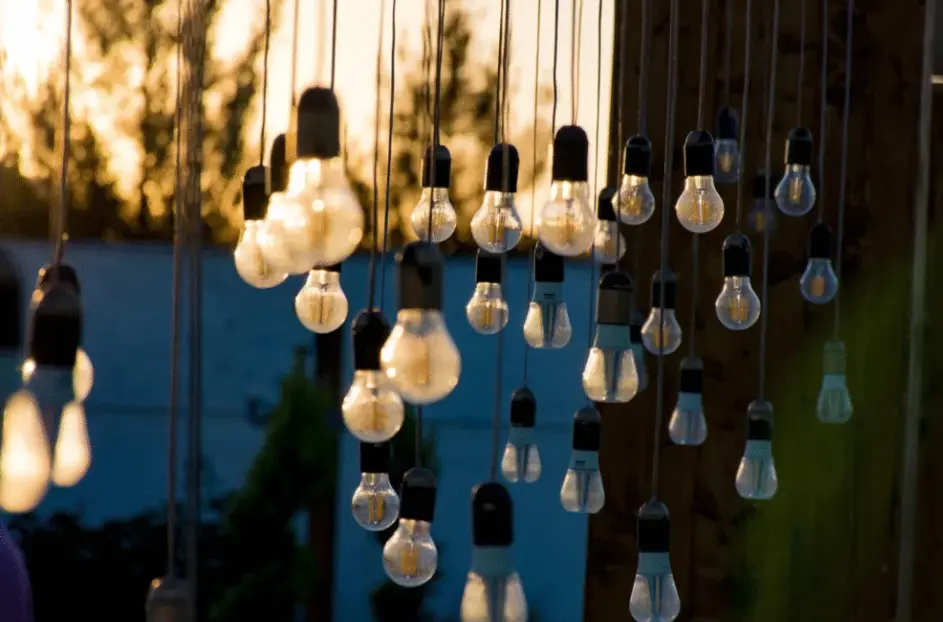
Adaptive technological improvements have facilitated a turning point for the global commercial lighting sector. Manufacturing shifts to more advanced LED technologies provide improvements not just in efficiency and performance but also support the world in transitioning to a smart, energy self-sufficient system. As organizations and governments pursue carbon neutrality and sustainable structured frameworks, LED manufacturing companies have become instrumental in driving progress toward Ukraine’s recovery and sustainable construction.
Understanding the importance of advanced LED technologies to build a sustainable future through smart energy innovations is critical for B2B companies, from construction and infrastructure companies, to municipalities and energy solution providers. Their design, engineering, and system integration skills contribute to the sustainable and Intelligent lighting systems that power and modernize cities/industries/public facilities.
The Evolution of LED Lighting and Its Role in Energy Efficiency
The evolution of the energy landscape and the integration of modern technological systems resulted in one of the most impactful advancements – LED lighting. Compared to modern lighting systems, LEDs do not produce as much electricity. The systems use less and also produce less heat for an extended service period. This is one of the critical advantages for businesses focused on system changes incorporating cost sustainability and optimization.
The advantages are even more pronounced for industrial and urban infrastructure development projects. Because of their capacity to provide the brightest lighting at the lowest wattages, LED systems are particularly well suited for big installations, such as highways, ports, and large factories and warehouses. In addition, the latest advances in optical control and driver technologies allow for application-specific customization of lighting distributions to optimize situational awareness and minimize waste.
A professional LED light manufacturer integrates the triad of materials science, electrical engineering, and digital control technologies to construct these systems. In terms of research and development, LED manufacturers increase their operation’s luminous efficacy, colour rendering, and thermal dissipation to provide reliable and long-term service even in the most demanding environments.
Under the current market conditions focused on sustainability, more manufacturers are diversifying their offerings to include systems powered by renewables. For example, a solar street lights supplier and LED technology developer will form a partnership to provide integrated lighting systems that combine smart sensors, energy-efficient LED modules and solar panels — fully autonomous lighting for urban and industrial applications.
Innovations and Smart Technology Integration
Unlike historical innovations in the lighting industry, which simply improved lighting and energy efficiency, today’s innovations focus on the interconnectivity and smart capabilities of lighting systems. Manufacturers of LED lighting devices are able to seamlessly integrate IoT, AI, and automation technologies to implement advanced energy management systems and operational control functions.
Some of these technology advancements include the following:
- Smart lighting control systems that enable people to increase or decrease the lighting system output and automation based on occupancy, time of day, or other defined environmental conditions.
- Cloud-based systems that allow users to monitor and control lighting systems and other devices within their organizational structure at any time without the need for a physical connection.
- Predictive maintenance systems that use system performance data to analyze and monitor the system for performance degradation, allowing maintenance to be scheduled before system downtime.
- Safety illumination that is able to determine and adjust the level of light to be within the optimum level for safety and comfort.
- Hybrid solar smart LED lighting systems that provide stand-alone renewable energy powered smart lighting and control systems.
For B2B clients, the enhanced operational reliability, reduced operational costs, and improved system scalability are obvious benefits. The use of thousands of interconnected lamps in smart metro or industrial systems gives the users a unique level of control and operational efficiency.
Such an ecosystem-as-a-product approach hinges on amazing innovation ecosystems that allow manufacturers to go further than designing clever new lighting technologies to reimagine entire urban infrastructure utilities.
Sustainable Manufacturing: Carbon Footprint
In manufacturing processes, major LED light manufacturers are redefining the industry’s approach to climate change, the new paradigm with emphasis in sustainability shifts focus further than the end of life performance of LED lighting products.
Some common sustainable manufacturing initiatives are:
- Eco-friendly materials: Use of recyclable aluminum, lead-free solder, non-toxic coatings, etc.
- Energy-efficient production lines: Automated systems, and renewable-powered factories.
- Water and waste recycling: Closed-loop systems.
- Modular product design: Simplifies repair and recycling, e-waste reduction and extending product life cycles.
Alignment with ISO 14001 and RoHS standards proves adherence to global sustainability benchmarks, and enhances environmental reputation of the manufacturing with resultant benefits to B2B clients in quest of corporate ESG (Environmental, Social, and Governance) objectives.
It is further proof of the pivotal role of LED technology in sustainable infrastructure, the thermal and arc lamps of yore are replaced in a fully circular production ecosystem, with emissions closed from raw material sourcing to end of life recycling.
Economic and Strategic Value for B2B Enterprises
For B2B companies, choosing to invest in sophisticated LED lighting systems is not simply an operational choice; it is a strategic one. Collaboration with an advanced LED light manufacturer offers a variety of operational, technological, and marketing benefits, strengthening competitiveness for the long run.
1. Economic benefits
LED systems use up to 70 % lower energy than traditional lighting systems. This results in lower maintenance and significant savings on electricity bills throughout the lifetime of the LED systems.
2. Lesser operational maintenance
Longer operational lifespans and robust construction mitigate downtime, while reducing replacement costs, and loss of revenue—vital for industrial and municipal installations.
3. Flexible modular designs
Manufacturers offer modular designs that allow for the expansion and upgrading of systems. This eliminates the need for major reinvestment.
4. Integrated IoT hub
LED devices, integrated with IoT systems, allow centralized control and energy optimization of entire facilities or entire cities on a municipal grid.
5. ESG alignment
Partnership with LED manufacturers in the light industry gives companies the opportunity to meet compliance obligations of regulatory frameworks and improve their environmental sustainability.
For infrastructure contractors and energy builders, partnering with progressive manufacturers provides potential sustainable turnkey offerings—covering design, engineering, implementation, and maintenance—enabling the seamless delivery of impactful large-scale projects in any region of the globe.
The Potential of Intelligent Energy Efficient Lighting Systems
Sustainability, digitization, and renewable energy intertwine to formulate a new industry paradigm. LED light manufacturers of the future will offer bundled solutions with renewable energy, automated data analytics, and energy management.
Trends include:
- AI Adaptive Lighting: Energy management solutions that learn and adjust to activity patterns to conserve power and adapt to real-time conditions.
- Renewable Hybrid Systems: Complete energy autonomy by integrating a LED lighting with solar, wind, or kinetic energy sources.
- 5G Lighting Poles: Integrated multifunctional infrastructure that provides connectivity, edge processing, and a variety of sensors and cameras.
- Circular Economy. Lighting products that are deliberately designed to be recyclable, repairable, and recoverable.
- Digital Twin. The system is virtually designed to forecast maintenance, monitor energy use in real-time, and interact with the system.
The global green transition relies on these attributes of LED technology. The systems offer B2B players operational resilience, lower costs, and adaptation to a new era of smart and sustainable systems.
Conclusion
Today’s LED light manufacturer has become far more than a place that simply makes lights. It has turned into a figure that is pivotal to innovation, sustainability, and worldwide transformation of how we use energy. It is providing a world of intelligent, efficient, and environmentally conscious systems through advanced engineering, integrated smart technologies, and eco-friendly manufacturing.
For B2B organizations, the relationship goes far beyond reliable lighting and helps to shift the conversation toward positive future outcomes. As the cities, industries, and infrastructures of the world develop, the LED lighting of the future will continue to provide a high degree of illumination and energy engineered solutions for a world that is more intelligent and sustainable.
Also Read-Mother Tongue vs Native Language 🌍 – Key Differences Explained with Real-Life Examples

Leave a Reply