Blog

  • Best Online Schools: What Makes for a Great Virtual Learning Experience?

    Best Online Schools: What Makes for a Great Virtual Learning Experience?

    Something shifts in a parent when a traditional school stops working for their child. Maybe it’s the third morning of stomach aches before class. Maybe it’s watching a bright kid lose interest in learning altogether.

    The search for alternatives starts quietly. A few Google searches late at night. Conversations with other parents. Questions about whether online learning actually works or if it’s just expensive babysitting with a webcam.

    Here’s the thing about the best online schools. They don’t all work the same way. Some parents discover this the hard way after enrolling their child in a programme that promised flexibility but delivered isolation. Pre-recorded videos and worksheets aren’t teaching. They’re just digital textbooks with fancier packaging.

    Real online education looks different. Students log into actual classes with actual teachers who know their names. Not hundreds of students watching the same video. Eight or ten kids in a virtual classroom where questions get answered immediately, where teachers notice when someone’s struggling.

    Why Small Classes Change Things

    Class size seems like a boring detail until you’ve watched your child disappear in a room of 30 students. Teachers can’t give individual attention when they’re managing that many personalities and learning styles. Something gets missed. Usually, it’s the quiet kid who needs help but won’t raise their hand.

    Online schools can keep classes small because physical space doesn’t limit them. A teacher leading eight students through a lesson can pause when someone’s confused. They can challenge the quick learners while supporting the ones who need extra time. Personal attention stops being a luxury.

    Parents notice the difference within weeks. Kids start asking questions again. They volunteer answers. That shutdown look starts fading. It’s not magic. It’s just what happens when children feel seen.

    The Flexibility Problem

    Flexibility sounds perfect in theory. Learn anytime, anywhere, at your own pace. Freedom from rigid schedules.

    Then reality hits. Some kids thrive with that independence. Most don’t, to be honest. They need structure, deadlines, and routine. Without it, flexible learning becomes no learning. Assignments pile up. Motivation disappears. Parents end up playing truant officer in their own homes, which nobody signed up for.

    Quality online programmes understand this tension. They build structure through scheduled classes and clear expectations. Students know when to show up and what’s expected. But the structure adapts to life.

    A family can travel without their child falling behind. An athlete trains in the morning and attends class in the afternoon. A student struggling with anxiety works from bed on bad days without judgment. The British curriculum offers this balance naturally, providing clear learning objectives and recognised qualifications.

    When Schools Forget What Matters

    Test scores matter. Of course they do. Universities look at grades. Employers care about qualifications.

    But something breaks when academics become everything. A child can ace every exam and still feel worthless. They can memorise facts while losing their curiosity. They can achieve perfect grades while developing anxiety that follows them for years. That’s not success, is it?

    Parents choosing online schools often do so because traditional education damages their child’s mental health. The bullying made school unbearable. The anxiety that turned mornings into battles. The slow erosion of confidence from feeling stupid or different.

    Schools that treat well-being as equally important as academics create different outcomes. Teachers check in on how students feel, not just whether homework got completed. Programmes develop independence and character alongside subject knowledge. Students learn they have value beyond their test scores, which changes everything.

    This approach requires qualified teachers who understand child development, not just subject matter. Teaching through a screen takes different skills from managing a physical classroom. The best online educators train specifically for virtual environments.

    Building Real Connections

    The loneliness question haunts every parent considering online school. Can children really make friends through computers? Will they miss out on social development?

    Fair concerns, actually. Humans need community. Children especially need to feel they belong somewhere. Bad online schools ignore this reality. Students complete work alone and never interact with peers.

    Strong programmes build community deliberately. Group projects force collaboration. Discussion boards encourage conversation. Enrichment programmes bring students together around shared interests. Live classes create daily touchpoints with the same classmates.

    Something interesting happens in these spaces. The kid who felt like an outsider at traditional school finds peers who share their passions across different countries. The anxious student who couldn’t speak in crowded classrooms discovers their voice in smaller groups.

    Some children develop stronger social skills online than they ever did in person. They learn to communicate clearly in writing. They practise active listening. Geography stops limiting friendships when technology connects them properly.

    Teacher Quality Matters Most

    Here’s what keeps parents awake at night. Will my child actually learn anything? Can someone teaching through a screen replace a real classroom teacher?

    Wrong question, perhaps. The screen doesn’t matter. Teacher quality matters. A mediocre teacher delivers mediocre education whether standing in a classroom or sitting at a computer. An excellent teacher educates effectively in any format. That’s just how it works.

    Qualifications separate professionals from amateurs. Years of training and experience teach educators how to explain concepts in multiple ways until understanding clicks. They know how to spot confusion before it becomes a failure.

    Teacher-led instruction through live classes combines the best of both worlds. Students get expert guidance without the chaos of overcrowded buildings. They receive immediate feedback without waiting days for graded work. They can ask questions the moment confusion strikes instead of staying lost.

    Parents should demand transparency. What qualifications do teachers hold? How long have they taught? What training did they receive for virtual instruction? Vague answers signal problems.

    Spotting Quality Programmes

    Shopping for online schools feels overwhelming. Slick websites make promises. Sales representatives push enrollment. Everyone claims to be the best.

    Cut through the noise with specific questions. Does the school offer trial classes or taster sessions? Legitimate programmes let families experience teaching before committing. They match students carefully to appropriate programmes rather than accepting everyone who applies.

    Check accreditation carefully. International qualifications from recognised exam boards matter for university applications and future careers. Ask about support beyond academics. Do students access guidance counselors? University preparation programmes? Enrichment opportunities that develop skills beyond test-taking?

    Red flags include high-pressure sales tactics, reluctance to answer direct questions, or promises that sound unrealistic. Quality schools operate transparently and acknowledge they’re not right for every family. That honesty matters.

    When Everything Falls Into Place

    Online education doesn’t suit everyone. Some children need physical structure. Some families can’t provide adequate home environments for learning. Some students thrive on in-person social interaction in ways virtual communities can’t replicate. That’s fine.

    But for many families, it solves problems traditional schools created or couldn’t address. The bullied child finds safety. The athlete balances passion with academics. The anxious student rediscovers learning without fear.

    Parents know their children better than anyone. That gut feeling that something’s wrong deserves attention. Education should build children up, not break them down. It should open possibilities.

    Great online schools partner with families to create experiences where children actually thrive. Not just survive. Not just pass exams. They grow into capable people ready for futures they get to choose. That’s the real measure of success.

    Also Read-🌟 Anual or Annual: Which Is Correct? The Ultimate Guide for Writers and Learners

  • Pure Mist Topicals LLC: Understanding CBD Topical Formulations for Pain Relief

    Pure Mist Topicals LLC: Understanding CBD Topical Formulations for Pain Relief

    Pain has a way of stealing the moments that matter most. That morning yoga session becomes impossible. Playing with your kids feels like a chore. Even sitting at your desk turns into an endurance test.

    You’ve probably tried everything. Ibuprofen that tears up your stomach. Prescription medications that leave you foggy. Ice packs that provide 20 minutes of relief before the ache returns. The cycle gets exhausting.

    Pure Mist Topicals LLC offers a different path. CBD topicals work directly where you need them, without the side effects that come with oral medications. But not all topical formulations work the same way. Understanding what makes them effective can help you make better choices for your body.

    How CBD Topicals Actually Work

    Your skin is not just a barrier. It’s an active organ with its own endocannabinoid system. When you apply CBD topically, it interacts with cannabinoid receptors in your skin, muscles, and nearby tissues.

    The cannabinoids never enter your bloodstream. They stay localized, which means you get targeted relief without affecting the rest of your body. This matters for people who worry about drug tests or feeling altered in any way.

    Pure Mist Topicals LLC formulations are designed for maximum absorption. The molecules need to penetrate deep enough to reach the areas causing discomfort. That’s where formulation science becomes critical.

    Breaking Down the Ingredients

    A quality CBD topical is more than just cannabidiol mixed with lotion. The carrier ingredients determine how well the CBD penetrates your skin layers.

    Look for products with natural oils like coconut oil, shea butter, or jojoba oil. These match your skin’s natural composition, which helps carry CBD deeper into tissues. Synthetic bases often sit on the surface and wash off before doing much good.

    Menthol and camphor create cooling sensations that distract from pain signals. Some people find this helpful for immediate relief while the CBD gets to work. Others prefer formulations without these additives because they want to feel the CBD effects alone.

    Essential oils like lavender or eucalyptus can add therapeutic benefits beyond just scent. Lavender has calming properties that complement CBD’s effects on tension. Eucalyptus supports circulation, which helps reduce inflammation in affected areas.

    Broad-Spectrum vs. Full-Spectrum Topicals

    The type of CBD extract matters more than most people realize. Full-spectrum products contain trace amounts of THC, usually under the legal limit. Broad-spectrum products have THC completely removed while keeping other beneficial cannabinoids.

    Pure Mist Topicals LLC focuses on broad-spectrum formulations for a reason. You get the entourage effect where multiple cannabinoids work together, but without any THC concerns. This approach makes sense for people who need to stay completely THC-free.

    Some brands use CBD isolate, which is pure cannabidiol with nothing else. It’s cheaper to produce but may not work as effectively. The other plant compounds seem to enhance how CBD interacts with your body’s receptors.

    Application Techniques That Make a Difference

    Rubbing CBD cream on sore muscles sounds simple enough. But the technique used affects results more than you might expect.

    Start with clean, dry skin. Oils and sweat create barriers that block absorption. Take 30 seconds to wash the area first if you’ve been sweating or used lotion earlier in the day.

    Apply a generous amount directly to the affected area. Don’t be stingy. You need enough product to penetrate multiple skin layers and reach the tissues causing problems.

    Massage it in for at least two minutes. The friction generates heat that opens pores and improves penetration. Light rubbing leaves most of the product sitting on your skin’s surface, where it can’t do much good.

    Give it time to absorb before putting on clothes. Fifteen minutes makes a real difference. Otherwise, your shirt absorbs half the product instead of your skin.

    What to Expect From CBD Topicals

    Pain relief doesn’t happen instantly like it might with oral medications. CBD topicals typically take 15 to 45 minutes to start working. The trade-off is longer-lasting relief, often several hours from a single application.

    Some people feel a mild tingling or warmth as the product absorbs. This is normal and usually fades within minutes. If you experience burning or irritation, stop using the product and wash it off.

    Results vary based on several factors. The severity of your discomfort matters. So does your skin type, and how well you applied the product. Chronic conditions may require consistent use over several days before you notice significant changes.

    Third-Party Lab Testing

    Here’s something that should concern anyone buying CBD products. The industry has minimal regulation right now. Companies can claim almost anything on their labels without proving it.

    Third-party lab testing solves this problem. Independent laboratories test products for CBD content, THC levels, and contaminants like pesticides or heavy metals. Pure Mist Topicals LLC uses these tests to verify every batch meets quality standards.

    Look for a Certificate of Analysis when shopping. It should be recent, match the product batch number, and come from an accredited lab. If a company won’t provide this documentation, that tells you something important about their quality control.

    Real-World Applications

    Athletes use CBD topicals for post-workout recovery. The anti-inflammatory properties help reduce muscle soreness and joint stiffness. Applying it immediately after exercise seems to work better than waiting until the next day.

    People with arthritis find relief from hand and knee pain. The localized approach means you can treat specific joints without affecting your whole system. Morning stiffness often improves with regular use.

    Office workers dealing with neck and shoulder tension from poor posture benefit too. Applying CBD cream during lunch breaks can make the afternoon more bearable. It beats popping pills that make you drowsy during work hours.

    Making the Right Choice

    Finding an effective CBD topical takes some experimentation. Your body chemistry, the type of discomfort you’re experiencing, and product quality all play roles in results.

    Start with a reputable brand that provides lab testing and clear ingredient lists. Pure Mist Topicals LLC meets these criteria with formulations designed for real-world effectiveness rather than marketing hype.

    Pay attention to CBD concentration. Products with at least 250mg per container tend to work better for moderate discomfort. Severe or chronic conditions may require higher concentrations.

    Trust your experience over promises. If a product works for you, that matters more than any claims on the label; if it doesn’t, try a different formulation rather than giving up on CBD topicals entirely.

    Final Thoughts

    Pain relief shouldn’t require choosing between effectiveness and safety. CBD topicals offer a middle ground that works for many people who’ve run out of better options.

    The science behind these products continues to develop. What we know today suggests they interact with your body’s natural pain management systems in ways that support healing rather than just masking symptoms.

    Understanding formulations, ingredients, and proper application helps you get better results. Quality products from companies like Pure Mist Topicals LLC make the process easier by doing the hard work of formulation science for you.

    Your comfort matters. Finding relief shouldn’t feel like an impossible task.

    Also Read-Why Savvy Travellers Rely on Travel Experts, Not Just Apps

  • Why Savvy Travellers Rely on Travel Experts, Not Just Apps

    Why Savvy Travellers Rely on Travel Experts, Not Just Apps

    Booking a holiday used to mean walking into a travel agency and chatting with someone who actually knew their stuff. These days, countless apps promise to handle everything with a few taps. Yet seasoned travellers increasingly turn back to professionals who understand the nuances that algorithms simply cannot grasp.

    Travel agents don’t just find flights and hotels. They craft experiences tailored to your budget, preferences, and timing. When searching for the best domestic tour packages, you’re not merely comparing prices on a screen. You’re accessing insider knowledge about seasonal variations, hidden gems, and practical logistics that make or break a trip.

    The Limits of Digital Tools

    Algorithms Miss Context: Apps excel at pulling data, but they struggle with context. A cheap flight might involve three layovers or arrive at an inconvenient hour. An algorithm sees numbers; a travel expert sees your actual needs and whether that “bargain” truly serves you.

    Complexity Overwhelms Technology: Multi-city itineraries, family trips with varying age groups, or journeys during festival seasons demand human judgement. Technology offers options, yet determining which option actually works requires experience that no app possesses. Travel professionals understand these layers instinctively.

    Peak Pricing Traps Await: Apps display current prices without explaining why they fluctuate or when they’ll drop. Experts know booking windows, understand demand patterns, and help you book domestic flight tickets online at genuinely smart times rather than impulse moments when fares spike unexpectedly.

    Strategic Planning Beyond Basic Bookings

    Route Optimisation Matters: Planning a trip across multiple destinations requires more than connecting dots on a map. Which city should you visit first? How many days does each location genuinely need? Travel experts structure itineraries that flow naturally, saving you time and unnecessary backtracking.

    Seasonal Considerations Change Everything: Monsoons, festivals, school holidays, and local events dramatically affect both pricing and experience quality. Perhaps you fancy visiting a coastal destination, but travelling during monsoon season could mean cancelled activities and disappointing weather. Professionals factor these elements automatically.

    Hidden Costs Add Up: Budget carriers charge for baggage, meals, seat selection, and even check-in services. What appears cheap initially becomes expensive once you’ve added essentials. Travel experts calculate total costs upfront, eliminating surprises and helping you make genuinely informed decisions.

    The Value of Human Expertise

    Personalised Recommendations: Your friend loved Goa, but would you? Professionals ask questions that reveal what you actually enjoy rather than pushing popular destinations. They consider your pace, interests, dietary needs, and travel style before suggesting anything.

    Crisis Management Support: Flights get cancelled, hotels overbook, and unexpected situations arise. Apps provide generic customer service numbers. Travel agencies advocate for you directly, rearranging plans and solving problems whilst you focus on enjoying your holiday despite hiccups.

    Industry Connections Matter: Established agencies maintain relationships with airlines, hotels, and local operators. These connections translate into room upgrades, flexible cancellation policies, and assistance that regular customers simply cannot access independently through online platforms.

    Package Holidays Simplify Complex Logistics

    Coordinated Experiences: Tour packages bundle flights, accommodation, transfers, and activities into cohesive experiences. Everything connects logically without gaps or overlaps. You’re not juggling multiple bookings from different providers, hoping timings align correctly.

    Group Dynamics Considered: Travelling with family or friends means accommodating different preferences and budgets. Professionals design packages that offer variety whilst keeping everyone together, balancing adventure with relaxation and catering to different age groups naturally.

    Local Knowledge Included: Packaged tours often include guides who know areas intimately. They share stories that guidebooks miss, recommend authentic restaurants, and navigate local customs smoothly. This cultural insight enriches travel beyond what independent research typically provides.

    Peace of Mind Through Professional Backing

    Financial Protection: Agency bookings typically include protections that DIY arrangements lack. If operators fail or circumstances force cancellations, you’re not fighting alone for refunds. Professional backing means someone handles complications on your behalf.

    Documentation Assistance: Visa requirements, travel insurance, health certificates, and other paperwork vary by destination. Experts ensure you’ve got everything sorted before departure, preventing stressful discoveries at airports or border crossings.

    Reliable Support Networks: Problems at 3 AM in unfamiliar cities feel overwhelming. Knowing you can contact someone who’ll actually help rather than navigating automated systems brings genuine comfort. This safety net proves invaluable when things go sideways.

    Smart Booking Strategies

    Travel professionals employ specific tactics that casual bookers often overlook:

    • Flexible date searching reveals cheaper alternatives just days away from your preferred dates, potentially saving significant amounts without major inconvenience.
    • Multi-city routing options sometimes cost less than simple returns whilst adding interesting stopover destinations to your itinerary.
    • Fare class understanding helps distinguish between restrictive tickets and flexible options worth paying slightly more for given your circumstances.
    • Seasonal pattern recognition identifies optimal booking windows specific to routes and destinations rather than generic advice.

    The Smarter Approach to Modern Travel

    Technology Complements Expertise: Savvy travellers use apps for research and inspiration. They check reviews, compare general price ranges, and gather ideas. Then they consult professionals who transform that research into concrete plans that actually work.

    Time Versus Money Trade-offs: Spending hours comparing options across multiple platforms has a cost. Your time matters. Professionals handle this research efficiently, often finding better deals through industry access whilst you focus on preparing for your actual journey.

    Confidence in Decisions: Second-guessing choices diminishes travel excitement. Did you book the right hotel? Should you have waited for prices to drop? Professional guidance eliminates this anxiety, letting you anticipate your trip with genuine enthusiasm.

    Conclusion

    Apps and websites certainly make travel information accessible, yet accessibility doesn’t automatically translate into optimal decisions. The gap between having options and choosing wisely remains significant. Travel experts bridge this gap through experience, industry knowledge, and personalised service that technology cannot replicate. They transform the overwhelming process of planning into manageable, enjoyable experiences whilst protecting your interests throughout. Consider partnering with professionals for your next journey and discover how much smoother, safer, and more satisfying travel becomes when expertise guides the way.

    Also Read-Traveler or Traveller ✈️: Which Spelling is Right?

  • How Automation Simplifies Presentation Design for Non-Designers

    How Automation Simplifies Presentation Design for Non-Designers

    Let’s face it — not everyone is born with an eye for design. You might have the most brilliant idea, the sharpest strategy, or the most compelling story to share, but when it comes to creating a presentation that looks as good as it sounds, things can get overwhelming fast.

    Maybe you’ve been there — staring at a blank PowerPoint slide for an hour, adjusting text boxes that never seem to align, or obsessing over which shade of blue says “professional but still creative.” It’s enough to make anyone wish there were a button that just said, “Make it look great.”

    Well, the good news is — now there kind of is.

    Automation and artificial intelligence (AI) are reshaping the world of design, and one of the most exciting areas they’re transforming is presentation creation. For non-designers, this means less frustration, less time wasted, and more focus on what really matters: your message.

    Let’s explore how automation is making presentation design effortless, even for those who’ve never opened a design tool before.

    The Problem: Great Ideas, Weak Slides

    We’ve all seen it — a presentation that’s full of valuable information but visually falls flat. Maybe the slides are too text-heavy, the colors clash, or the layout looks like it was pulled from 2003.

    The truth is, creating an engaging presentation is a balancing act. It’s not just about dropping data onto slides; it’s about building a story that connects visually and emotionally with your audience.

    But if design isn’t your strong suit, that can feel like a big ask. You might find yourself:

    • Spending hours trying to align shapes and images.
    • Copying and pasting content across dozens of slides.
    • Worrying that your deck looks “unprofessional.”

    This is where automation steps in — not as a replacement for creativity, but as a support system that handles the technical parts of design, so you can stay focused on content and storytelling.

    The Rise of Automated Presentation Design

    Automation isn’t new, but its recent integration with AI has taken it to an entirely new level. Instead of following rigid templates, AI-driven tools now understand your content and adapt the design accordingly.

    Let’s say you’re creating a presentation about your company’s sustainability strategy. You input your key points and upload a few visuals. Instantly, an AI tool can:

    • Identify the topic and tone (in this case, eco-friendly and professional).
    • Recommend a color palette that reflects that mood — think greens, whites, and earth tones.
    • Generate consistent slide layouts that highlight your data without overwhelming it.
    • Even choose fonts that improve readability and fit your message’s personality.

    What used to take hours of manual work now happens in minutes.

    Tools like the Adobe Express AI presentation maker are perfect examples of this shift. With a few clicks, you can input your topic or upload a document, and the AI instantly transforms it into a well-structured, beautifully designed presentation. You don’t need to worry about proportions, font pairings, or slide hierarchy — it’s all intelligently handled behind the scenes.

    And the best part? You can still tweak and personalize everything afterward. Automation doesn’t take creativity away; it gives it a faster, smarter starting point.

    Why Automation Works for Non-Designers

    So, how exactly does automation make things easier for people who aren’t design-savvy? Let’s break down a few ways it transforms the process.

    1. It Removes the Guesswork

    Most non-designers spend a lot of time guessing what looks good. Automation eliminates that. Instead of wondering whether your chart fits on the page or if your image is high enough resolution, the AI does it for you. It understands balance, contrast, and composition — the principles professional designers use — and applies them instantly.

    2. It Creates Instant Consistency

    Consistency is what makes a presentation feel professional. Matching fonts, maintaining spacing, and keeping colors aligned might sound minor, but they make a huge difference. Automated tools ensure every slide follows the same design logic, so your deck feels unified and polished — without you having to obsess over every pixel.

    3. It Saves Hours of Time

    Let’s be honest — not everyone has time to spend an entire weekend perfecting a 10-slide presentation. Automation can turn that 10-hour process into a 10-minute one. You add your content, review the AI’s suggestions, make a few small adjustments, and you’re ready to go.

    4. It Gives You Confidence

    A well-designed presentation doesn’t just impress your audience; it makes you feel more confident presenting it. Knowing your slides look professional can change the way you communicate — you speak with more energy, more focus, and more credibility. Automation helps you walk into the room (or log into the call) knowing you’ve got design on your side.

    Real-World Examples of Automation in Action

    Automation isn’t just theory — it’s already changing how people work and present ideas every day.

    Example 1: The Startup Founder
    Imagine a startup founder who needs to pitch investors but doesn’t have a designer on their team. Using an AI-powered presentation tool, they can input their business plan summary, and within minutes, get a pitch deck complete with a sleek layout, icons, and color themes. What might have taken a week to design manually now takes an hour.

    Example 2: The Educator
    A teacher preparing for parent night wants to make their presentation more engaging. They type in their key points — student performance data, classroom goals, and upcoming events — and automation builds a clear, visual story that’s easy to follow. No more clunky text blocks or confusing layouts.

    Example 3: The Marketer
    A small business marketer wants to present campaign results to stakeholders. Instead of spending time formatting charts and tables, they upload their analytics data, and the AI automatically generates infographics and visual highlights. The result? A presentation that’s not only informative but visually appealing.

    Across all these cases, the story is the same — automation helps people communicate better, faster, and with more impact.

    When Technology Meets Creativity

    One of the biggest misconceptions about automation is that it makes everything look the same. In reality, automation has evolved to enhance creativity, not replace it.

    Think of it as a helpful partner — it sets up the framework, and you add your personal touch. You can adjust colors to match your brand, swap out images for something more personal, or rewrite text to fit your tone of voice.

    Automation handles the structure, giving you space to focus on the substance. It’s the difference between starting with a blank sheet of paper and starting with a well-organized outline. The latter gives you momentum and direction.

    The Emotional Impact of Well-Designed Slides

    Design isn’t just about looking pretty; it’s about creating an emotional connection.

    A clean, visually balanced slide helps your audience stay focused. Well-placed visuals make complex ideas easier to digest. Colors evoke certain emotions — blue conveys trust, red signals urgency, green feels natural and calm.

    When automation understands these design principles and applies them intelligently, your message doesn’t just reach people — it resonates.

    And for non-designers, that’s a game-changer. You don’t have to study color psychology or visual hierarchy to make something compelling. Automation builds those insights directly into your design process.

    The Future of Automated Design

    We’re only scratching the surface of what automation can do. In the near future, AI will be able to:

    • Adjust your slides in real time as you add content.
    • Recommend visual styles based on your audience type.
    • Generate voiceovers, animations, and even interactive features automatically.

    Imagine finishing your outline, clicking one button, and getting a fully designed, ready-to-present deck in minutes. That’s not a distant dream anymore — it’s happening now.

    And as these tools become more intuitive, more people — from students to small business owners — will be able to communicate big ideas without needing a design background.

    Final Thoughts

    At its heart, automation isn’t about removing creativity; it’s about removing friction. It helps people turn ideas into visual stories without the barriers of technical skill or endless formatting.

    For non-designers, this means freedom — freedom from the stress of design decisions and the confidence to focus on message, clarity, and impact.

    AI and automation are leveling the playing field, allowing anyone to create presentations that not only look professional but also feel authentic and engaging. Because in the end, great design isn’t about having perfect slides — it’s about communicating your story clearly and confidently.

    And that’s something automation is making easier for everyone.

    Also Read-🏋️‍♂️ Training or Trainning: Which One Is Correct?

  • 📋 Roll Call or Role Call: What’s the Difference?

    📋 Roll Call or Role Call: What’s the Difference?

    Language is full of tricky pairs that look and sound almost identical but carry different meanings. One of the most confusing examples is “roll call” vs. “role call.”

    You’ve probably seen both versions floating around online, in books, or even in formal writing. But here’s the truth: only one of them is correct.

    This article clears up the confusion once and for all. You’ll learn the history behind the phrase, the correct spelling and usage, why people get it wrong, and how to remember the difference with simple tricks.

    By the end, you’ll never hesitate again when writing “roll call.”


    Understanding the Basics

    The mix-up between roll call and role call happens because the two terms sound exactly the same. They are homophones—words that sound alike but differ in spelling and meaning.

    • Roll call ✅: The correct phrase, meaning the act of reading names aloud from a list to check attendance.
    • Role call ❌: A common mistake, based on confusion with the word role (a part in a play, film, or job).

    Think of it like this: one word points to a list of names (roll), the other points to an acting part (role). That small spelling difference completely changes the meaning.


    The True Meaning of “Roll Call”

    Definition

    Roll call is the practice of calling out names from a list to confirm presence or absence. It is most often used in schools, the military, workplaces, legislatures, and formal meetings.

    Example:

    • “The teacher conducted roll call before starting the lesson.”
    • “The sergeant performed roll call at sunrise.”

    Where It’s Used

    • Schools: Teachers check attendance daily.
    • Military: Commanders verify soldiers’ presence at formation.
    • Government: Legislators vote through roll call votes.
    • Corporate: Teams confirm participants in meetings or training sessions.

    Etymology

    The word “roll” here refers to a list of names written on a rolled-up piece of parchment or paper. In the past, names were literally recorded on a scroll, and someone would “call the roll” by reading from it. Over time, that became “roll call.”


    The Origins and History of “Roll Call”

    The expression dates back hundreds of years. The earliest records trace to parliamentary and military traditions in Europe.

    • Medieval times: Clerks kept rolls (lists) of soldiers and landowners. Attendance was checked by reading these names aloud.
    • 16th–17th century: The practice spread into schools and official institutions.
    • Modern era: “Roll call” became common in legislatures like the U.S. Congress, where roll call votes are still used.

    A roll call vote means every legislator’s name is read, and their “yes” or “no” is recorded individually. This method ensures accountability and accuracy.


    The Misunderstood Term: “Role Call”

    Why People Write “Role Call”

    The mistake is natural because the word “role” is familiar in modern usage: an acting role, a job role, or a role in society. Since roll and role sound identical, many people assume the phrase must be role call.

    Is “Role Call” Ever Correct?

    No. Major dictionaries, including Merriam-Webster and Oxford, recognize “roll call” as the correct spelling. “Role call” has no official standing. It’s considered a spelling error, even if widely seen online.

    Examples of Misuse

    • “The director held a role call before rehearsal.” (Incorrect)
    • “Employees signed in during the role call.” (Incorrect)

    These examples sound right to the ear but look wrong on paper. That’s why the confusion spreads so easily.


    Roll Call vs. Role Call: A Side-by-Side Comparison

    Here’s a quick reference table:

    FeatureRoll Call ✅Role Call ❌
    CorrectnessAcceptedIncorrect
    MeaningAttendance check; reading a list of namesMisused spelling of “roll call”
    OriginFrom “roll” = list/scrollMistaken connection to “role” (acting/job)
    Example (correct)“The clerk conducted roll call in the Senate.”N/A
    Example (wrong)N/A“The clerk conducted role call in the Senate.”

    Why the Confusion Persists

    Even though the difference is simple, the confusion doesn’t go away. There are several reasons:

    • Sound-alike words: Since “roll” and “role” are homophones, readers often can’t tell which is correct.
    • Modern influence of “role”: We see “role” everywhere—job roles, acting roles, leadership roles—so people default to it.
    • Internet repetition: Once someone publishes role call, others copy it, assuming it’s correct.
    • Autocorrect issues: Word processors sometimes fail to catch this specific mistake.

    Everyday Usage and Real-World Examples

    Schools: Teachers take roll call each morning to track attendance.
    Military: Commanders conduct roll call at drills and in combat zones to ensure accountability.
    Government: Senators and representatives participate in roll call votes where their individual votes are publicly recorded.
    Workplaces: Roll call can happen during safety drills, training sessions, or emergency evacuations.
    Pop culture: Movies and shows sometimes feature “roll call” scenes, especially in classrooms or military films.


    Tips to Always Get It Right

    If you struggle to remember, these quick tricks help:

    • Roll = List. Picture a roll of paper with names on it. You call the roll to read them aloud.
    • Role = Acting Part. Think of stage roles or job roles. They don’t involve reading names.
    • Visual trick: Imagine a teacher holding a scroll. They’re not assigning acting roles; they’re doing a roll call.

    Related Terms and Expressions

    Understanding related words strengthens memory.

    • Call the roll: An older form of “roll call,” still used in official settings.
    • Attendance: The general act of checking presence.
    • Roster: A list of people in a group or team.
    • Headcount: Informal way of checking how many people are present.
    • Payroll: Another example of “roll” meaning a list—this one of employees to be paid.
    • Honor roll: A list of students recognized for academic excellence.

    Notice the pattern: whenever “roll” refers to a list, it connects directly to “roll call.”


    Common Questions (FAQs)

    Is “role call” ever correct?

    No. It’s always a mistake. The only correct form is “roll call.”

    How do I politely correct someone who misuses these terms?

    You can say: “Just a quick note—‘roll call’ is the standard spelling, since it comes from a list or roll of names.”

    What are synonyms for “roll call”?

    Attendance check, roster check, headcount, attendance list.

    Does “call the roll” mean the same thing as “roll call”?

    Yes. “Call the roll” is an older phrase, but the meaning is identical.

    Why do so many people spell it wrong?

    Because “role” is common in modern vocabulary, while the “roll” in this context is less obvious.

    Where is “roll call” still used today outside of schools?

    • Congress and parliaments (roll call votes)
    • Military formations
    • Corporate meetings and HR practices
    • Emergency evacuation drills

    Conclusion

    So, what’s the bottom line in the roll call vs. role call debate? The answer is crystal clear: “roll call” is the only correct spelling.

    Remember:

    • Roll = list
    • Role = acting/job part

    Anytime you’re referring to attendance, accountability, or the reading of names, go with roll call. The other version, role call, is just a widespread mistake.

    Once you lock this simple memory trick in, you’ll never make the error again—and you’ll be able to spot it instantly when others do.


    Meta Description for SEO

  • 🌟 Anual or Annual: Which Is Correct? The Ultimate Guide for Writers and Learners

    🌟 Anual or Annual: Which Is Correct? The Ultimate Guide for Writers and Learners

    Spelling may look like a small detail, but it can transform how people perceive your professionalism. Among the most frequent spelling slip-ups is the confusion between “anual” and “annual.”

    This guide is designed to settle the debate once and for all. You’ll learn the correct spelling, discover its fascinating origin, explore its usage in different fields, and master tricks to remember it.

    Whether you’re a student, a blogger, or a professional, this in-depth article will help you never confuse “anual” and “annual” again.


    Introduction: Why This Confusion Matters

    You’ve probably typed “anual” before and wondered if it looked right. You’re not alone. Millions of English learners and even native speakers slip up on this simple word.

    The difference, however, is crucial.

    “Annual” is the only correct spelling.

    Misspelling it as “anual” can:

    • Lower the quality of your professional communication.
    • Harm your credibility in formal documents.
    • Create confusion in academic and business contexts.
    • Negatively affect your online presence and SEO.

    Pro Tip:
    The spelling you use reflects your attention to detail. A small typo can leave a big impression.


    The Correct Spelling: “Annual” ✅

    Let’s make it clear upfront:

    • “Annual” means “occurring once every year.”
    • “Anual” is always incorrect in English.
    • All authoritative dictionaries list “annual” as the standard spelling.

    Examples:

    • ✅ The company releases its annual report in March.
    • ✅ The school organizes an annual science fair every spring.
    • ❌ The company issues an anual report each March. (Wrong!)

    Using the correct spelling matters in:

    • Academic writing
    • Resumes and CVs
    • Legal documents
    • Digital marketing and SEO content

    Origins and Etymology of “Annual”

    Words often carry stories, and “annual” is no exception.

    • Derived from the Latin word “annus”, meaning “year.”
    • Entered English through Old French (annuel), retaining the double N.
    • The double N reflects the Latin root and signals its connection to “year.”
    • “Anual” never existed as a legitimate variant — it emerged as a typo or learner’s error.

    Historical Insight:
    Early English texts from the 14th century consistently used “annual”, proving the misspelled version was never standard.


    How to Spell and Pronounce “Annual”

    Spelling Tips

    • Always remember: A year needs two N’s.
    • Think of it as: AN + N + UAL
    • Write it slowly a few times to build muscle memory.

    Pronunciation Guide

    • IPA: /ˈæn.ju.əl/
    • Stressed on the first syllable: AN-yu-al
    • Pronounce it as: “Ann” + “yoo-uhl”

    Common Mistake to Avoid:
    Do not drop the second N when typing fast.


    Usage of “Annual” in Everyday and Professional Contexts

    The word “annual” pops up in various fields. Understanding its correct use strengthens your communication skills.

    Business & Finance

    • Annual report: A document reviewing a company’s yearly performance.
    • Annual revenue: Total income earned in a year.
    • Annual review: Yearly employee performance assessment.

    Example:

    The board approved the annual budget during the general meeting.


    Education & Academia

    • Annual exams: Tests held once a year.
    • Annual conferences: Academic gatherings.
    • Annual rankings: Yearly evaluation of schools or universities.

    Example:

    The college hosts an annual cultural festival that brings together students from across the country.


    Science & Nature

    • Annual rainfall: The total rain received in a year.
    • Annual migration: Seasonal movement of animals like birds or whales.
    • Annual growth: Increase in population or vegetation within a year.

    Example:

    The national park tracks the annual migration of wildebeests as part of its conservation efforts.


    Events & Celebrations

    • Annual festivals: Such as Diwali, Christmas parades, or music festivals.
    • Annual awards: Recognitions given yearly.
    • Annual cultural days: Celebrations in communities or organizations.

    Example:

    The city’s annual food festival attracts thousands of tourists every year.


    Common Related Terms and Their Correct Usage

    Avoid confusion by understanding the differences between similar words.

    TermMeaningExampleCommon Mistake
    AnnualOccurring once every yearThe annual audit starts in March.Writing “anual”
    AnnuallyDescribes an action happening each yearEmployees receive raises annually.Writing “anualy”
    AnnualizedAdjusted to reflect a yearly amountThe interest rate is annualized at 5%.Confusing with “annual”
    BiannualHappens twice a yearThe team holds biannual retreats.Mixing with “biennial”
    BiennialHappens every two yearsThe art show is a biennial event.Using it instead of biannual
    Per AnnumLatin term meaning “per year”The bond offers 6% return per annum.Substituting with “annual”

    Common Mistakes to Avoid

    1. Dropping the Second N

    Incorrect: The anual meeting will start at 9 a.m.
    Correct: The annual meeting will start at 9 a.m.

    2. Confusing Biannual and Biennial

    • Biannual: Twice a year
    • Biennial: Once every two years

    3. Overcapitalization

    Capitalize “annual” only when part of a proper noun:

    • ✅ The Annual Science Expo
    • ❌ The Annual meeting (not a proper noun)

    Real-World Examples

    Correct Usage

    • The NGO publishes an annual report showcasing its projects.
    • Tourists flock to the city for the annual flower parade.
    • Our school conducts annual examinations in December.

    Incorrect Usage

    • ❌ We expect to increase profits in our anual review.
    • ❌ The country hosts a biennial sports festival twice a year.

    Memory Tricks and Learning Aids

    • Mnemonic: “A year needs two N’s to be annual.”
    • Visual Cue: Imagine two N’s like two milestones in a year.
    • Practice Drill: Write 10 sentences using “annual” every day.
    • Language Apps: Use spelling apps to reinforce correct usage.

    Global and Cross-Cultural Considerations

    The spelling “annual” remains consistent in English worldwide:

    • US English: annual
    • UK English: annual
    • Canadian English: annual

    In other languages:

    • Spanish: anual (one N)
    • French: annuel
    • German: jährlich

    ESL Tip:
    English learners often mistakenly apply their native spelling (like Spanish anual). Always remember English uses the double N.


    Writing in the Digital Age

    A single typo can cost businesses in reputation and revenue. For example, posting “anual report” on your company website looks unprofessional.

    Impact on SEO

    • Spelling errors hurt search rankings.
    • Keywords like “annual budget” or “annual report” must be spelled correctly to attract organic traffic.
    • Typos may divert potential readers or customers.

    Digital Writing Best Practices

    • Use browser-based spell-check tools.
    • Proofread blogs, social media posts, and email subject lines.
    • Standardize spelling across your organization’s content.

    Case Study: Corporate Embarrassment

    In 2021, a mid-sized finance company released its “Anual Revenue Report.”
    The typo went viral on social media, drawing ridicule and lowering investor confidence. The company had to reissue all documents, costing both money and trust.

    Key Lesson:
    Attention to detail in spelling is non-negotiable for professional credibility.


    Quick Reference Table

    WordCorrect?MeaningExample
    Annual✅ YesOccurs once every yearThe annual gala raises charity funds.
    Anual❌ NoIncorrect spellingDo not use
    Annually✅ YesHappens each year (adverb)Bonuses are paid annually.
    Biannual✅ YesHappens twice per yearThe team meets for biannual training.
    Biennial✅ YesHappens every two yearsThe biennial summit addresses global issues.

    Professional Communication & Style Guides

    Leading style authorities agree:

    • AP Stylebook: “Use annual for events happening each year. Avoid the incorrect form anual.”
    • Chicago Manual of Style: Consistent spelling is critical for clarity.
    • Oxford Guide: Lists only “annual” as the proper English spelling.

    Quote:
    “Correct spelling is a cornerstone of effective communication. Annual should always be preferred over its common misspelling.” – Language Matters Journal


    Top FAQs

    What does “annual” mean?

    It means something that happens once every year.


    Is “anual” ever correct?

    No. “Anual” is always a spelling mistake in English.


    What’s the difference between annual and annually?

    • Annual is an adjective (e.g., annual report).
    • Annually is an adverb (e.g., paid annually).

    How do you remember the correct spelling of annual?

    Use the mnemonic: “A year needs two N’s to be annual.”


    What’s the difference between biannual and biennial?

    • Biannual: Happens twice a year.
    • Biennial: Happens once every two years.

    Does the spelling change in UK or US English?

    No. Both use “annual.”


    Conclusion: Master the Correct Usage

    Mastering the spelling of “annual” is simple yet powerful. It boosts your confidence, refines your communication, and avoids embarrassing mistakes.

    Remember:

    • “Annual” = Correct
    • “Anual” = Incorrect

    With the history, tips, examples, and FAQs in this guide, you’ll always write “annual” correctly and confidently.

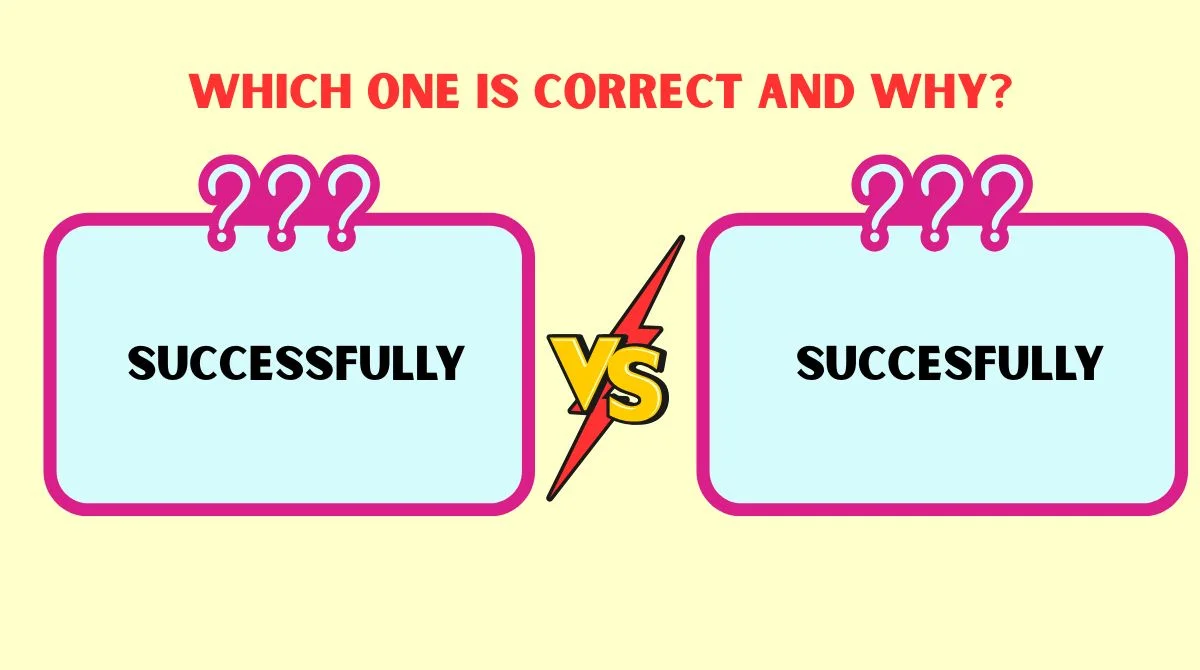
  • ✅ Successfully or Succesfully: Which One Is Correct and Why? ✍️

    ✅ Successfully or Succesfully: Which One Is Correct and Why? ✍️

    Have you ever paused while typing an email and wondered whether it’s “successfully” or “succesfully”?
    You’re not alone. This small spelling detail often trips up even experienced writers.

    In this guide, you’ll learn the correct spelling, why the other form is wrong, how the word evolved, and how to remember it forever.
    Let’s dive in and clear the confusion once and for all.


    The Quick Answer: Always Spell It as “Successfully”

    The correct spelling is “successfully.”
    The version with a single “s” — “succesfully” — is simply incorrect in every professional and academic context.

    Why does it matter? Because spelling is more than formality. It reflects attention to detail, credibility, and professionalism.

    Language expert Dr. Anne-Marie Carter puts it well:
    “Spelling errors may seem minor, but they can silently shape how people judge your competence.”


    The Origin Story of “Successfully”

    Understanding the history of the word makes it easier to remember its spelling.

    • The root “success” comes from the Latin word successus, meaning “an outcome” or “a good result.”
    • It entered English through Old French as succès and Middle English as success.
    • The suffix “-ful” means “full of”, and adding “-ly” turns it into an adverb.

    So the modern form breaks down neatly into success + ful + ly.


    Anatomy of the Word

    Here’s a simple breakdown that shows why the double “s” remains:

    PartMeaningExample in Context
    SuccessAchievement or favorable outcome“Her success inspired others.”
    -fulFull of or characterized by“He is hopeful about the project.”
    -lyManner of action (adverb)“She spoke kindly to the child.”

    👉 When combined, the structure is:
    Success + ful + ly → Successfully

    That second “s” after “succe-” is part of the original root “success.”
    Dropping it breaks the link to the root word.


    Why the Misspelling Happens

    It’s not just you — “succesfully” appears in thousands of online posts, resumes, and emails.
    Here’s why people often get it wrong:

    • Typing speed: Fingers skip one “s” while typing fast.
    • Visual confusion: The double “s” looks redundant.
    • Sound mismatch: When spoken, the double “s” blends into one /s/ sound.
    • Autocorrect: Sometimes software doesn’t catch the missing letter.

    Case Study:
    In 2019, a major job board found that “succesfully” was among the top 50 misspelled words on resumes.
    Recruiters noted that such errors often influenced first impressions.


    Correct Usage in Context

    Here are clear examples of “successfully” in different settings:

    ContextExample Sentence
    Academic“She successfully defended her doctoral thesis.”
    Business“The company successfully launched its new app.”
    Everyday Life“He successfully fixed the leaky faucet.”
    Technology“The file was successfully uploaded to the server.”
    Sports“The athlete successfully broke the national record.”

    ❌ Incorrect: “The team succesfully completed the project.”
    ✅ Correct: “The team successfully completed the project.”


    Professional & Real-World Stakes

    Spelling mistakes can affect how others perceive your work.
    Here’s why getting it right matters:

    • Resumes & Job Applications: Misspellings may imply lack of attention to detail.
    • Business Communications: Errors can hurt credibility and brand image.
    • Academic Writing: Professors often deduct marks for incorrect spelling.
    • Legal & Medical Fields: Precision in language avoids misunderstandings.

    A survey by the Society for Human Resource Management found that 58% of hiring managers discard resumes with frequent spelling errors.


    Memory Hacks & Learning Aids

    Struggling to remember the extra “s”?
    Here are some proven tips:

    • Mnemonic: “Success needs two ‘s’ to succeed.”
    • Visual Trick: Imagine a ladder 🪜—you need two steps (ss) to reach success.
    • Family Connection: Remember that “success” itself has two “s’s,” and its related forms keep them.
    • Proofread Backwards: Reading your text from the end to the start helps spot spelling errors.
    • Practice Sentences: Write five sentences daily using “successfully.”

    Mini Practice Box:
    Fill in the blank with the correct spelling.

    1. She ______ completed the marathon.
    2. The software installed ______ on the first try.
    3. They ______ negotiated the merger.

    (Answers: successfully, successfully, successfully)


    Common Related Mistakes

    Spelling errors often occur in the same family of words.
    Here’s a quick table of common pitfalls:

    ❌ Incorrect✅ CorrectReason
    succesfulsuccessfulNeeds double “s” in root
    succesfullysuccessfullyFollows the correct root form
    sucesssuccessMissing one “c”
    succesionsuccessionSame root word mistake

    Quick Reference Cheat Sheet

    Keep this handy cheat sheet for fast recall:

    • ✅ Always use “successfully” with two s’s after the “u.”
    • 🔑 Link it to its root: success → successful → successfully.
    • 🚫 Never drop the extra “s.”
    • 📚 Use proofreading tools but double-check manually.

    Final Takeaways & Practice Challenge

    Key insight: The only correct spelling is “successfully.”
    It retains the structure and meaning of its root word, “success.”

    Practice Challenge:
    Write three original sentences using “successfully” in different contexts: personal, professional, and academic.
    Then check your sentences against this guide.


    FAQs About Successfully or Succesfully

    What is the correct spelling: Successfully or Succesfully?

    Always use “successfully.” The other version is a misspelling and not accepted in standard English.

    Why does “successfully” have two S’s?

    It keeps the spelling of its root word “success.” Dropping one “s” changes the structure and is incorrect.

    Is “succesfully” ever acceptable?

    No. “Succesfully” is never correct in English writing, whether formal or informal.

    How can I remember the correct spelling?

    Use the mnemonic: “Success needs two ‘s’ to succeed.”
    Practice writing the word regularly.

    Does spelling really affect job applications?

    Yes. Many recruiters consider consistent spelling a sign of attention to detail and professionalism.

    What tools can help me spell it right?

    Spell-check software, grammar tools like Grammarly, and manual proofreading are all effective.

  • 🤔 Loosing or Losing: Which One Is Correct? A Complete Guide for Writers and Learners
    🤔 Loosing or Losing: Which One Is Correct? A Complete Guide for Writers and Learners
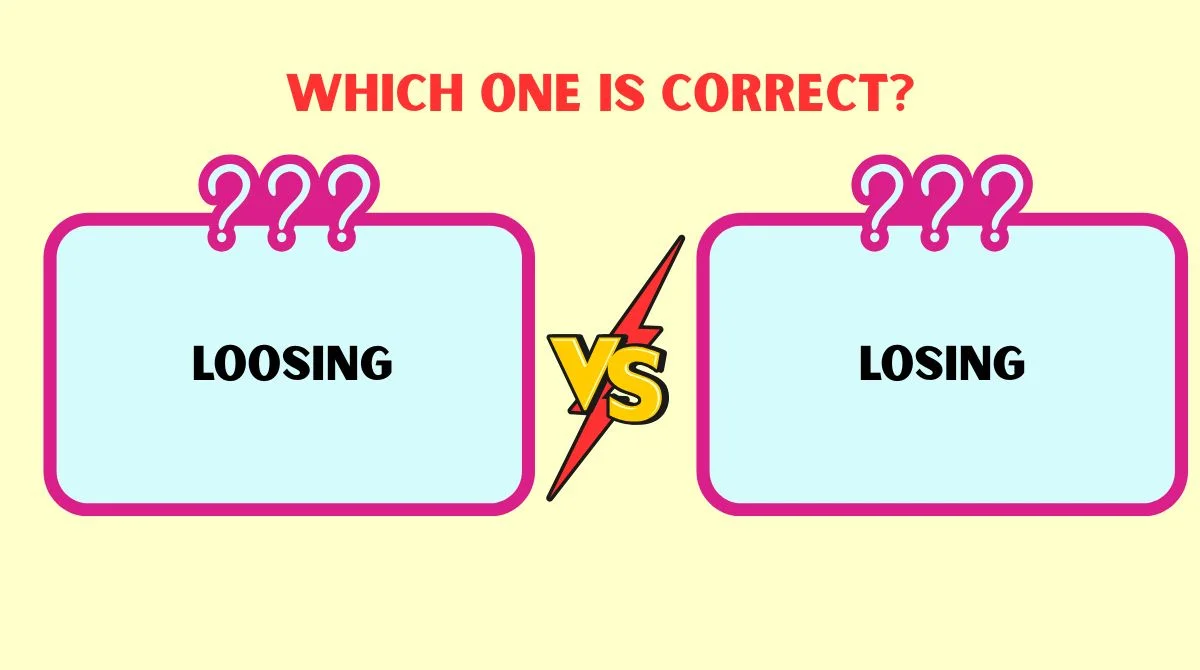
    Have you ever paused mid-sentence wondering whether to type “loosing” or “losing”?
    You’re not alone. Even seasoned writers stumble over this pair.

    In this guide, we’ll dig deep into the difference, why people confuse them, and how you can remember which word to use. By the end, you’ll never second-guess yourself again.


    Understanding the Confusion

    English is full of look-alike words that trip up even native speakers.
    “Loosing” and “losing” sound nearly identical, yet they mean completely different things.

    • The confusion stems mainly from spelling patterns and phonetics.
    • Many learners assume that if loose becomes looser, then lose should become looser too—but it doesn’t.
    • The difference between these two words also reflects the difference between lose and loose, their root forms.

    The Root Words: Lose vs Loose

    Understanding the parent words is the key.

    WordPart of SpeechMeaningExample
    LoseVerbTo misplace, to fail to win, to be deprived of something“I don’t want to lose my wallet.”
    LooseAdjective / VerbNot tight; to free, release“Tie the rope, it’s too loose.” or “They loose the horses.”

    Historical Note

    • Lose comes from Old English losian, meaning to perish or be destroyed.
    • Loose comes from Old Norse lauss, meaning free or unbound.

    The historical split explains why they look similar but act differently in modern English.


    Breaking Down the Words

    Losing

    • Definition: Present participle of lose.
    • Usage: Means to misplace, to fail to win, or to suffer defeat or loss.
    • Common Contexts:
      • Sports: “Our team is losing the match.”
      • Misplacing things: “I keep losing my glasses.”
      • Abstract losses: “She’s losing her patience.”

    💡 Key Fact: In 99% of everyday situations, the correct word is losing.


    Loosing

    • Definition: Present participle of loose, meaning to release, to set free, to untie.
    • Usage: Far less common in daily conversation.
    • Typical Contexts:
      • Historical or formal writing: “The king ordered the guards to start loosing the prisoners.”
      • Religious texts: “And whatsoever thou shalt bind on earth shall be bound in heaven: and whatsoever thou shalt loose on earth shall be loosed in heaven.”
      • Poetic or old-fashioned language: “The archer was loosing his arrow.”

    🔑 Key Fact: Loosing is rarely used today except in specific historical, literary, or religious contexts.


    Common Sources of Confusion

    Phonetic Similarity

    • Both words sound nearly the same in casual speech.
    • English often drops unstressed vowel sounds, making lose-ing and loose-ing sound identical.

    Spelling Pattern Trap

    • Many learners think that since loose has two o’s, its participle should be loosing, but then mistakenly use it in place of losing.

    Influence of Technology

    • Autocorrect sometimes replaces losing with loosing (or vice versa), especially when typing quickly.

    Real-World Mistakes

    • Sports headlines: “The team is loosing again!” (incorrect)
    • Social media posts: “I’m tired of loosing weight and gaining it back.” (incorrect)
    • Corrected: “The team is losing again!” / “I’m tired of losing weight…”

    Side-by-Side Comparison

    Here’s a quick chart you can bookmark for future reference:

    AspectLosingLoosing
    Root WordLoseLoose
    MeaningMisplacing, failing to win, experiencing defeatReleasing, freeing, untying
    Part of SpeechVerb (present participle)Verb (present participle)
    Usage FrequencyExtremely common in modern EnglishRare, mostly in literary or historical texts
    Typical ContextsGames, sports, emotions, possessionsUntying ropes, freeing captives, archery

    Everyday Usage Examples

    Correct Use of Losing

    • “The company is losing revenue due to poor marketing.”
    • “He’s afraid of losing his job.”
    • “I’m always losing my house keys.”
    • “Our team is losing the final game by two points.”

    Correct Use of Loosing

    • “The general was loosing his troops to charge the enemy.”
    • “They were loosing the dogs to track the scent.”
    • “The blacksmith was loosing the chain from the gate.”

    📌 Tip: If you mean not winning or misplacing, use losing.
    If you mean setting free or untying, use loosing.


    Case Study: A Costly Spelling Error

    In 2018, a small business ran a social media campaign promoting a “Stop Loosing Money” course.
    The ad went viral—not for the right reason. Thousands mocked the mistake, questioning the company’s credibility.

    Within hours, the business had to pull the campaign and re-release it using the correct spelling, “Stop Losing Money.”

    ✏️ Lesson: A single spelling mistake can hurt trust, brand image, and even sales.


    Tips for Remembering the Difference

    Here are some practical ways to keep them straight:

    1. Mnemonic for Losing:
      • “You can lose something. So you are losing it.”
    2. Mnemonic for Loosing:
      • “Think of loose as not tight. So you’re loosing what was tied.”
    3. Visual Cue:
      • Imagine the double “o” in loose as two open circles—like links of a chain being released.
    4. Practice Sentences:
      • Write five sentences each with losing and loosing.
      • Read them aloud to hear how similar they sound but mean different things.
    5. Context is King:
      • If the sentence involves defeat, misplacing, or deprivation → use losing.
      • If it’s about freeing, untying, or letting go → use loosing.

    Top 6 FAQs

    Is “loosing” a real word?

    Yes. It’s the present participle of loose, meaning to free, untie, or release. It’s far less common than losing.

    Why do people often write “loosing” instead of “losing”?

    Because both words sound almost identical in speech, and many people wrongly assume they share the same spelling pattern.

    Can I use “loosing” in everyday writing?

    Generally no. Unless you’re writing about freeing something or using poetic or historical language, stick with losing.

    What’s the best trick to remember the difference?

    Associate losing with loss (both have a single “o”). Associate loosing with loose ropes (think of releasing something).

    Is “loosing weight” incorrect?

    Yes. The correct phrase is “losing weight.” You’re not freeing your weight; you’re shedding it.

    Which is more common in modern English?

    Losing is far more common. Loosing is rarely used outside of literature, history, or religion.


    Key Takeaways

    • Losing = the opposite of winning, or misplacing something.
    • Loosing = releasing or setting free.
    • In everyday writing, you’ll almost always use losing.
    • Spelling mistakes like mixing up these two words can damage credibility.
    • Use mnemonics and context clues to remember the right choice.

    Conclusion

    The confusion between loosing and losing is widespread but easily fixed.
    By understanding their origins, meanings, and usage patterns, you can confidently choose the correct word.

    Next time you write about defeat, misplaced keys, or shedding weight, you’ll know it’s losing.
    And if you’re describing untying ropes or freeing something, you’ll reach for loosing.

    ✍️ Correct spelling not only improves your writing but also preserves your credibility—whether in a blog post, a headline, or a social media caption.

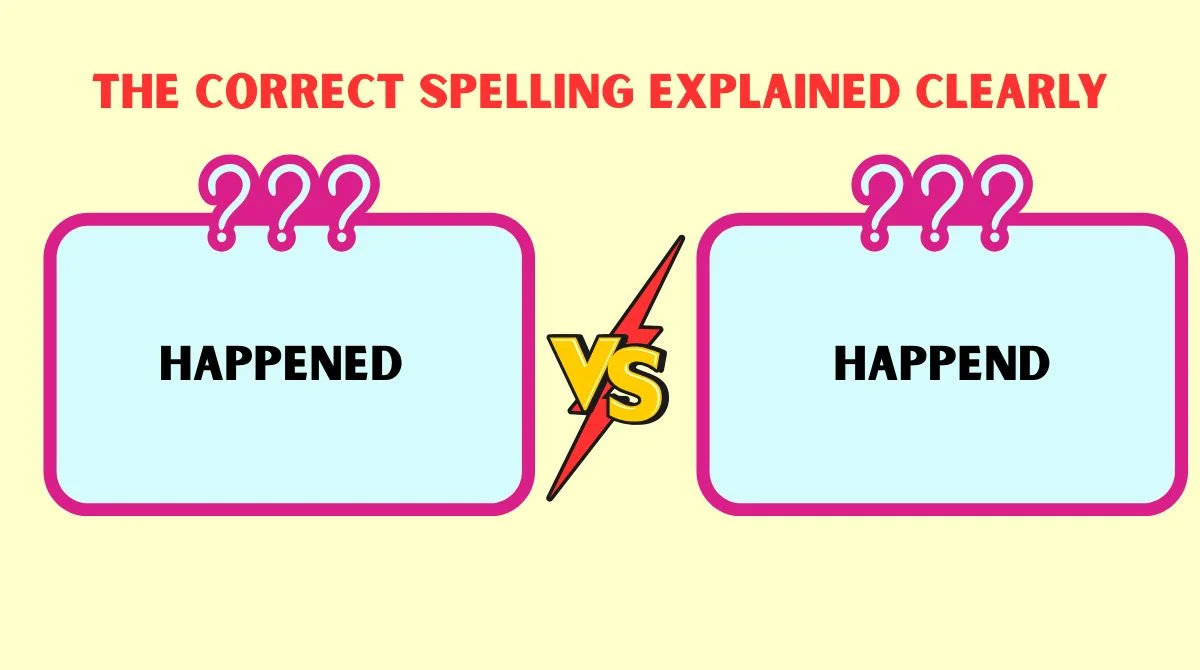
  • ✅ Happened or Happend? 📝 The Correct Spelling Explained Clearly

    ✅ Happened or Happend? 📝 The Correct Spelling Explained Clearly

    English can be tricky, especially when two words look similar but only one is correct. Many writers often wonder whether to write “Happened” or “Happend.”
    The short answer is simple: “Happened” is correct. The word “Happend” is just a common misspelling.

    This guide dives deep into everything you need to know — from spelling and grammar rules to common mistakes, examples, and practical tips.


    Introduction: Clearing Up the Confusion

    You’ve probably seen this in text messages, social media posts, or even emails:

    “I don’t know what happend yesterday.”

    That single missing “e” changes the word from correct to incorrect.
    Spell-check tools often underline “happend” in red, which hints at the error.

    So why do so many people make this mistake?

    • English pronunciation often “swallows” the second e, so it sounds like “hap-pnd.”
    • Many learners assume the past tense of “happen” drops the final e, as in other verbs.
    • Typing quickly on phones can lead to typos.

    Understanding why the mistake occurs is the first step toward avoiding it.


    Understanding the Basics

    Definition of “Happened”

    “Happened” is the past tense of the verb happen.
    It describes an event that occurred or took place.

    Example:

    “The concert happened last night.”


    Why “Happend” Appears

    The misspelling “happend” usually appears due to:

    • Typing too fast and skipping the e.
    • Hearing the word pronounced in casual speech without emphasizing the second syllable.
    • Lack of familiarity with English spelling rules.

    Remember: “Happend” is never correct in standard English.


    Correct Form: “Happened”

    Spelling and Pronunciation

    • Correct spelling: H-A-P-P-E-N-E-D
    • Pronunciation: /ˈhæp.ənd/
    • Syllables: hap-pened

    Although it’s pronounced in two soft syllables, the e in the middle must be written.


    Meaning and Function

    • Describes something that took place in the past.
    • Functions as the past tense of the verb happen.

    Examples:

    • “A strange thing happened at the park.”
    • “What happened to your phone?”

    Grammatical Context

    “Happened” works in sentences as:

    • The main verb: “The festival happened in July.”
    • In questions: “What happened next?”
    • In reported speech: “He said it happened last week.”

    The word is regular, not irregular — it follows the standard rule of adding –ed to form the past tense.


    Why “Happend” Is Incorrect

    Common Reason for the Misspelling

    • Writers drop the second e because in fast speech it’s barely heard.
    • Some think it follows patterns like “planned” or “dropped”, which double the final consonant.

    No Rule Justifies Dropping the “e”

    English verbs that end in –en (like happen) do not drop the “e” when forming the past tense.
    You simply add –ed: happen → happened.

    Compare:

    • Make → made (irregular change)
    • Stop → stopped (doubled consonant before –ed)
    • Happen → happened (no double consonant, keep the e)

    Spell-Checker Example

    Modern writing tools like Grammarly, MS Word, or Google Docs will always mark “happend” as a spelling error and suggest “happened.”


    Spelling Rules That Apply

    Standard Past-Tense Formation

    Most regular English verbs form their past tense by adding –ed:

    • Play → played
    • Walk → walked
    • Happen → happened

    Double-Consonant Confusion

    Writers often confuse happen → happened with verbs like:

    • Stop → stopped
    • Plan → planned

    The rule:
    If the final syllable is stressed and ends in a single vowel + consonant, double the consonant before adding –ed.
    Since in happen, the stress is on the first syllable (HAP-pen), no doubling is needed.


    Silent “e” vs. Retained “e”

    Some verbs drop the silent e before adding endings:

    • Love → loved
    • Move → moved

    But verbs like happen keep the e because it’s part of the main syllable.


    Side-by-Side Comparison

    Here’s a quick table to clear any remaining doubts:

    AspectHappened ✅Happend ❌
    Part of speechPast tense of happenNot a real word
    SpellingIncludes final eMissing the e
    Pronunciation/ˈhæp.ənd/Mispronounced or unclear
    Grammar useCorrect and standardError or typo
    AcceptanceRecognized worldwideNever correct in English

    Everyday Usage Examples

    Correct Usage in Sentences

    • “An unexpected incident happened during the ceremony.”
    • “What happened to the files on my computer?”
    • “Something amazing happened at the meeting.”

    Incorrect Usage

    • ❌ “An unexpected incident happend during the ceremony.”
    • ❌ “What happend to your bag?”

    Contextual Scenarios

    • Informal Writing: Often mistyped in text messages or social media.
    • Formal Writing: Must always use the correct spelling to maintain professionalism.
    • Academic/Business: Using the correct form builds credibility.

    Tips to Avoid the Mistake

    • Mnemonic: Happen + ed = Happened (don’t drop the “e”).
    • Pronunciation Trick: Say it slowly: hap-pen-ed.
    • Reading Aloud: Helps you hear the middle vowel.
    • Spell-Check Tools: Enable them on your devices.
    • Practice: Write 10 sentences using “happened” correctly.
    • Visual Flashcards: Highlight the e to remember it stays in the word.

    Top 6 FAQs

    Is “happend” ever correct?

    No. It’s always an incorrect spelling.


    What part of speech is “happened”?

    It’s the past tense form of the verb happen.


    Why do people write “happend” online?

    Usually due to typing too fast, autocorrect errors, or confusion about the rule.


    Is “happen” a regular or irregular verb?

    It’s a regular verb — it forms the past tense by simply adding –ed.


    How do I pronounce “happened” correctly?

    Say it in two syllables: hap-pened (/ˈhæp.ənd/).


    Can “happened” be used in questions?

    Yes. Example: “What happened yesterday?”


    Final Takeaway

    Whenever you describe something that occurred in the past, the correct spelling is “happened.”
    The version “happend” is always a mistake — no exceptions.

    Use the tips above to remember the rule. With practice, you’ll never miss that crucial e again.

  • ✍️ Preform vs Perform: Understanding the Key Difference That Boosts Your Writing & Communication

    ✍️ Preform vs Perform: Understanding the Key Difference That Boosts Your Writing & Communication

    Knowing when to use “preform” and when to use “perform” isn’t just a grammar detail. It shapes the clarity of your sentences in professional, technical, and everyday contexts.

    Many writers, students, and even seasoned professionals confuse these two words because they look almost identical. Yet they point to very different actions.

    This comprehensive guide breaks down everything you need: meanings, origins, usage in different industries, examples, memory tricks, and common mistakes. By the end, you’ll never second-guess which one to use.


    Perform vs Preform: Quick Overview

    At a glance:

    FeaturePerformPreform
    Part of SpeechVerbVerb or Noun
    Core MeaningTo carry out, execute, or actTo shape or form something beforehand
    Common ContextsArts, medicine, jobs, dutiesManufacturing, engineering, crafting
    ExamplesPerform a play, perform a surgeryPreform a mold, preformed glass fiber
    Prefix MeaningPer- = completely, thoroughlyPre- = before

    Key takeaway: You perform a task or action. You preform a material or object before final use.


    What Does “Perform” Mean?

    Definition and Part of Speech

    Perform is primarily a verb that means to carry out an action, duty, or activity.
    Related forms include:

    • Performs (present tense)
    • Performed (past tense)
    • Performing (present participle)
    • Performance (noun)

    The prefix per- means through, thoroughly, or completely. So to perform is literally to carry something through to completion.


    Core Usage in Real-Life Contexts

    Perform is everywhere in daily life. Here are the main areas:

    Entertainment and Arts

    • Actors perform a role on stage.
    • Singers perform live at concerts.
    • Dancers perform routines for competitions.

    “A great actor doesn’t just read lines — they perform a character’s soul.”

    Workplace and Professional Contexts

    • Employees perform assigned tasks.
    • Teams perform under pressure to meet deadlines.
    • Leaders perform evaluations to improve results.

    Medical and Technical Fields

    • Surgeons perform operations.
    • Labs perform diagnostic tests.
    • Technicians perform safety checks.

    Legal and Business Context

    • A company may perform contractual obligations.
    • Auditors perform inspections.

    Synonyms and Related Terms

    While synonyms often depend on context, common ones include:

    • Execute
    • Carry out
    • Accomplish
    • Conduct
    • Complete

    Note: Not all synonyms are interchangeable. For example, perform surgery cannot be replaced with conduct surgery in every context.


    Common Phrases with “Perform”

    • Perform a task
    • Perform well/poorly
    • Perform miracles (idiomatic, means to achieve amazing results)
    • Perform an experiment
    • Perform a ceremony

    Each phrase highlights action and execution.


    What Does “Preform” Mean?

    Definition and Part of Speech

    Preform can be a verb or a noun.

    • As a verb, it means to shape or mold a substance before final use or processing.
    • As a noun, it refers to the partially shaped item created in this early step.

    The prefix pre- means before. So preform literally means to form beforehand.


    Core Usage in Specific Contexts

    Manufacturing and Engineering

    • Glass or plastic is often preformed into rods or pellets before being processed further.
    • Fiber optic cables use preformed glass rods as their core material.
    • Car parts like seals or gaskets may be preformed for precise fitting.

    Scientific and Technical Fields

    • Preformed enzymes or preformed molds are commonly used in labs.
    • Medical devices sometimes come as preformed components to simplify assembly.

    Crafting and Industrial Design

    • Jewelry makers use preformed metal blanks to save shaping time.
    • In aerospace, carbon-fiber composites are often preformed before curing.

    Synonyms and Related Terms

    • Mold
    • Shape
    • Preset
    • Configure in advance

    Common Phrases with “Preform”

    • Preformed component
    • Preform a mold
    • Preformed cable

    These terms often appear in technical manuals, manufacturing guides, and engineering projects.


    Side-by-Side Comparison: Perform vs Preform

    Here’s a clear contrast:

    AspectPerformPreform
    MeaningTo do, execute, or actTo shape something before final use
    Primary FieldActions, duties, processesManufacturing, engineering, science
    Grammatical RoleVerbVerb or Noun
    Example Sentence“The doctor performed surgery.”“The factory preformed the glass rods.”
    Origin PrefixPer- = through, thoroughlyPre- = before

    Tip: If the sentence talks about doing an activity, use perform.
    If it’s about shaping something in advance, use preform.


    Common Mistakes and How to Avoid Them

    Confusing “Preform” with “Perform”

    People often mix these words because of their similar spelling.

    Incorrect:

    “The scientist preformed the experiment.”

    Correct:

    “The scientist performed the experiment.”


    Overusing “Preform” to Sound Technical

    Some writers use preform unnecessarily to appear formal or advanced.

    Incorrect:

    “We need to preform the analysis first.”

    Correct:

    “We need to perform the analysis first.”


    Spelling and Grammar Insights

    Performing vs Preforming

    • Performing: carrying out an action.
      • She is performing on stage tonight.
    • Preforming: shaping beforehand.
      • The workshop is preforming the metal parts before shipping.

    Performed vs Preformed (Past Tense)

    • Performed: action completed.
      • The engineer performed a safety check.
    • Preformed: pre-shaped something.
      • The factory preformed the plastic sheets.

    Memory Aids: Mnemonics and Quick Tips

    • Prefix Clue:
      • Pre- = before → preform → shape beforehand
      • Per- = through → perform → carry action through to completion
    • Quick Sentence: “You perform a dance, but you preform a mold.”
    • Visual Trick: Imagine ‘pre-’ as the starting line and ‘per-’ as the finishing line.

    Practical Applications Across Industries

    Education and Writing

    Teachers emphasize perform in grammar lessons to guide students toward correct sentence construction.

    Manufacturing

    Factories save costs and time by preforming materials like rubber seals or optical fibers before final production.

    Medicine and Science

    Medical devices often rely on preformed parts, while doctors must perform operations.

    Business and Communication

    Knowing when to use the right term makes emails, reports, and technical documentation precise and professional.


    Everyday Usage Examples

    For “Perform”

    • The pianist performed beautifully at the concert.
    • The lab performed tests to confirm the diagnosis.
    • The athlete performed beyond expectations during the championship.

    For “Preform”

    • The company preformed glass rods for fiber-optic production.
    • The manufacturer supplied preformed components for quick assembly.
    • The jeweler bought preformed gold blanks to speed up production.

    Comparative Example

    • Perform: The surgeon performed the transplant successfully.
    • Preform: The lab preformed the surgical stent before the operation.

    Historical and Linguistic Notes

    • Perform comes from the Old French parfournir, meaning to carry out or accomplish.
    • Preform combines the prefix pre- (before) with form, meaning to shape in advance.
    • The similar spelling arose because both words share the Latin root formare (to form).

    Top FAQs About Preform vs Perform

    What’s the main difference between perform and preform?

    Perform means to carry out or execute an action. Preform means to shape or mold something before its final use.

    Is preform ever used in everyday conversation?

    Rarely. It mostly appears in technical, industrial, or scientific contexts.

    Can I say “preform a task”?

    No. Tasks are done or executed — you perform a task, not preform it.

    Why is “performed” often confused with “preformed” in reports?

    Because they look alike. Always check the context: action vs. shaping.

    How can I remember which one to use?

    Think of pre- as “before shaping” and per- as “through action.”

    Are both words correct in British and American English?

    Yes. Both are standard in all varieties of English, but preform remains a technical term.


    Conclusion

    The difference between preform and perform boils down to action vs. preparation.

    • Use perform when someone carries out a task, duty, or event.
    • Use preform when referring to shaping a material before it’s finally used.

    By mastering this distinction, you communicate with precision and avoid one of the most common spelling traps in English.