Category: Technology

  • How Digital Platforms Are Reducing Complexity in Regulatory Compliance

    How Digital Platforms Are Reducing Complexity in Regulatory Compliance

    Navigating regulatory compliance has always been a challenging task for businesses and organizations. With constantly evolving rules, intricate reporting requirements, and the risk of hefty penalties, staying compliant can feel overwhelming. Traditionally, managing compliance involved extensive manual processes, multiple spreadsheets, and a heavy reliance on human oversight. This complexity often slowed decision-making and increased the risk of error.

    In recent years, digital platforms have emerged as a powerful tool to streamline these processes, offering automated workflows, real-time monitoring, and centralized documentation. For instance, entities governed by NERC must adhere to strict reliability and reporting standards, and digital solutions can simplify tracking these requirements. By consolidating data, generating alerts, and providing clear audit trails, these platforms reduce the administrative burden and help organizations focus on core operations rather than constantly navigating regulatory intricacies.

    The Challenge of Regulatory Compliance

    The regulatory landscape becomes more complex every year. Financial services firms must navigate Dodd-Frank, SOX, and international standards. Technology companies handle GDPR and CCPA. Healthcare and energy industries face specific mandates. Compliance costs are increasing too.

    The complexity of the rules is only part of the issue. Many compliance teams manage dozens of requirements across different jurisdictions, and regulations can change rapidly. A lack of centralization creates silos, increases human error, and delays responses to new rules and regulations.

    Centralizing Compliance Data

    Digital platforms confront these issues by consolidating compliance documents, regulatory updates, operational policies, and audit trails within a single, secure environment. Centralization helps ensure all stakeholders, from the C-suite to department leads, have access to the most up-to-date regulations at their fingertips. This accessibility shapes a culture of accountability, where everyone can see the full compliance picture.

    When compliance knowledge is spread out across email chains, paper files, or disconnected drives, businesses face bottlenecks and inconsistencies. Digital platforms resolve these pain points by standardizing documentation and tracking regulatory changes in a centralized location, reducing oversights and improving audit readiness.

    Automating Compliance Processes

    Manual compliance tasks are both tedious and error-prone. By automating repetitive tasks, such as assigning policy reviews, tracking due dates, and flagging expired documents, digital platforms help organizations save hours of staff time. Automation also lowers the risk of costly mistakes.

    In addition, compliance automation is scalable. As business grows, or as the regulatory environment shifts, these platforms can handle the expanded workload without the need to continually hire or train new compliance staff. Digital workflows, approvals, and notifications not only maintain oversight but also empower teams to focus on risk areas that need human judgment.

    Real-Time Monitoring and Alerts

    The days of quarterly compliance checks are fading fast. Digital compliance solutions now feature real-time monitoring and instant alerts, allowing organizations to adapt procedures as soon as regulations are updated. These platforms monitor regulatory changes and alert users to relevant updates, ensuring compliance actions remain timely.

    This proactive approach is essential for industries that face frequent regulatory changes. Companies gain a significant advantage by staying continuously updated and prepared rather than playing catch-up after changes have already taken effect. Automated notifications help compliance officers and leadership stay on the same page, facilitating quicker action and better risk management.

    Integration with Existing Systems

    The most effective digital compliance solutions do not operate in isolation. Instead, they integrate seamlessly with enterprise applications such as ERP, CRM, and document management systems. This allows compliance expectations to be built directly into the workflow. Instead of treating compliance as a parallel process, it becomes embedded in daily business activities.

    Integration significantly reduces duplication of effort. Data entered in one system can be automatically checked against compliance criteria in another, creating a unified compliance ecosystem. This approach boosts efficiency, eliminates inconsistencies, and makes it easier for companies to maintain an auditable trail of compliance activities over time.

    Cost Savings and Efficiency Gains

    One of the greatest benefits of digital compliance is its impact on the bottom line. Automated monitoring and reporting reduce the resources required for manual review and lower the ongoing compliance costs. According to industry benchmarks, tools that support SOX compliance can cut program costs in half, while automated quality assurance measures reduce process expenses by over a third.

    These savings are not just a one-time windfall. They free up capital for innovation, business development, or investment in other risk-mitigation efforts, helping organizations remain competitive while still fulfilling rigorous regulatory obligations.

    Conclusion

    Modern regulatory compliance requires more than knowledge of the rules. It demands sophisticated, responsive, and accessible tools to manage them. Digital compliance platforms provide this capability by centralizing intelligence, automating tasks, and continually monitoring regulatory shifts in real time. Integrated with current business operations, these platforms not only cut costs and reduce risk but also foster a proactive compliance culture that benefits organizations now and into the future.

    Also Read

  • What Broke When We Tried to Scale Real Estate Photo Editing

    What Broke When We Tried to Scale Real Estate Photo Editing

    At first, nothing felt broken.

    Orders were coming in steadily. The clients were happy. Editors were delivering solid work. From the outside, our real estate photo editing workflow looked healthy. But once volume increased, small cracks started turning into real problems.

    This isn’t a success story. It’s a breakdown of what failed when we tried to scale, and why manual systems collapsed under pressure.

    Scaling Exposed Problems We Didn’t See Early On

    When volume is low, manual workflows feel manageable. Editors have time to adjust images carefully. Small inconsistencies don’t matter much.

    Once we crossed a higher weekly image count, things changed fast:

    • Turnaround times slipped
    • Quality varied from batch to batch
    • Revision requests increased
    • Editors felt constant pressure

    The issue wasn’t talent. It was how real estate photo editing was structured.

    The First Thing That Broke: Consistency

    Manual HDR editing relies heavily on human judgment. That works fine at a small scale. But when multiple editors handle similar listings, styles drift.

    We saw the same problems repeatedly:

    • Interior brightness varied between shoots
    • White balance shifted from warm to cool
    • Windows looked clear in one listing and dull in the next

    Clients noticed. Not because the photos were bad, but because they weren’t predictable. In real estate photo editing, inconsistency creates friction faster than slow delivery.

    Revision Loops Became the Hidden Bottleneck

    We originally measured speed by how fast images were edited. That turned out to be the wrong metric.

    The real slowdown came from revisions:

    • “Can this match the last shoot?”
    • “This looks slightly darker than usual.”
    • “Can you adjust the windows?”

    Each request was small, but together they created delays that manual workflows couldn’t absorb. Scaling real estate photo editing isn’t just about editing faster, it’s about getting approvals faster.

    Editors Were Making Too Many Repetitive Decisions

    HDR editing looks creative, but most of it is repetitive decision-making:

    • How bright should the interior be?
    • How neutral should the walls look?
    • How much detail should show through the windows?

    As volume increased, editors made these decisions hundreds of times a day. Fatigue set in. Decisions drifted.

    This is where manual real estate photo editing started breaking down. Humans aren’t built to repeat the same technical choices endlessly without variation.

    Sorting and HDR Editing Got Mixed Together

    Another mistake we made early on was blending two different tasks.

    Sorting images, choosing which photos to deliver, is a judgment-based process. HDR editing, merging exposures and correcting images, is technical.

    When the same person handled both, errors increased. Sorting slowed editing. Editing delayed sorting. Separating these roles made it clear that real estate photo editing workflows work best when selection and processing are treated as different steps.

    Core Editing Wasn’t the Problem, Process Was

    When we reviewed rejected or revised images, the issues almost always came back to the same fundamentals:

    • Incorrect or inconsistent sky placement
    • Window masking that looked different across images
    • White balance shifting between rooms
    • Cameras visible in mirrors
    • Slightly crooked verticals

    These are core editing steps, not creative extras. They define professional real estate photo editing. The problem wasn’t knowing how to do them, it was doing them the same way every time, at scale.

    Add-Ons Didn’t Save Broken Workflows

    There’s a lot of focus on advanced add-ons, but they weren’t what fixed our scaling problems.

    Virtual twilight, grass greening, and virtual staging worked well after the core image was right. They never compensated for inconsistent base edits. Bulk furniture removal and heavy staging were never the main value drivers.

    Scaling failed because the foundation wasn’t stable, not because we lacked extras.

    Cost Wasn’t the Breaking Point

    People assume scaling fails because of cost. That wasn’t true for us.

    Yes, pricing can go as low as 40 cents per image, but the bigger issue was unpredictability. Delays, revisions, and inconsistency cost more than editing itself. In real estate photo editing, hidden costs show up as client frustration, not invoices.

    The Shift That Stabilized Everything

    Eventually, we accepted a hard truth: manual HDR editing doesn’t scale cleanly.

    The solution wasn’t replacing people, it was redefining roles. Humans kept control of sorting and judgment. HDR processing moved to automation, where repetition and consistency mattered more than interpretation.

    That’s where AutoHDR entered naturally, not as a pitch, but as a consequence of what failed. AutoHDR focused first on core image editing: sky placement, window masking, white balance, camera removal, and straightening. Add-ons remained optional.

    Final Thoughts

    Scaling didn’t fail because we aimed too high. It failed because manual systems were never designed for volume.

    Real estate photo editing breaks under scale when processes depend on endless human decision-making. Once repetition is removed from the workflow, everything else, speed, quality, approvals, starts working again.

    This wasn’t an easy lesson. But it was a necessary one.

    Also Read

  • From Dashboards to Decisions: The Real Scope of Data Analytics Consulting

    From Dashboards to Decisions: The Real Scope of Data Analytics Consulting

    If you’ve ever sat in a leadership meeting where someone pulls up a dashboard and the room still ends up arguing based on gut feel, you already know the problem.

    It’s not that the organization lacks data. It’s that the data isn’t helping people decide.

    And in 2026, this has become almost routine. Enterprises have more dashboards than they have clear decision owners. More reports than they have agreement on what the numbers even mean. And more “insights” than they have follow-through.

    That’s why I think the conversation around Data Analytics Consulting needs a reset.

    Because too many people still treat it like a BI upgrade. Or a reporting project. Or a “let’s clean up the dashboards” initiative.

    That’s not what it is. Not if you actually want business impact.

    Dashboard fatigue is real. It’s not a buzzword.

    Let’s call it what it is: dashboard fatigue is when your reporting environment becomes background noise.

    Not because dashboards are bad. But because dashboards have been forced to carry an entire analytics program on their back.

    Here’s what dashboard fatigue looks like in real enterprises:

    • A marketing team has five dashboards for pipeline, all with different numbers
    • A finance team still downloads data into Excel because “it’s faster”
    • A supply chain leader has weekly meetings where dashboards are shown, then ignored
    • Everyone is busy maintaining reports, but nobody can point to the decisions they improved

    And the most telling sign?

    When someone says:
    “We have the data. We just don’t know what to do with it.”

    That sentence shows up in every industry. Retail. Manufacturing. Banking. SaaS. Healthcare. Even logistics. Different contexts, same problem.

    The actual reasons dashboards stop working

    People often blame the tool. They shouldn’t.

    Most of the time, dashboard fatigue comes from four boring but serious issues:

    1. No agreement on definitions
      Two teams can argue for an hour because one thinks “active customer” means logged in this month, and the other thinks it means purchased in the last 90 days.
    2. Reporting exists without purpose
      A dashboard gets built because someone asked for it once. Then it stays forever, even after the business moves on.
    3. There’s no owner for decisions
      Everyone is responsible, so nobody is responsible.
    4. Nobody planned adoption
      Teams were trained on “how to navigate filters,” not on “how to use analytics to make choices.”

    This is the point where Data Analytics Consulting either becomes useful, or becomes expensive wallpaper.

    Consulting beyond BI and reporting (what the job really is)

    I’ve seen plenty of BI projects that were delivered perfectly. Clean dashboards. Great performance. Nice design. Everything “done.” And then six months later, usage drops. Or the dashboards become a graveyard of outdated metrics. Or teams revert back to Excel and gut feel.

    That’s not because BI failed. It’s because BI was treated as the finish line.

    The real scope of Data Analytics Consulting is not dashboards. It’s decisions.

    The consulting work begins when someone asks questions like:

    • Which decisions matter most for outcomes?
    • Who owns those decisions today?
    • What does “good” look like for those decisions?
    • What data do we trust enough to act on?
    • What action should happen when the signal changes?

    Most analytics programs never properly answer these.

    They just keep shipping dashboards.

    BI delivery vs real consulting (a simple difference)

    This is the cleanest way I’ve found to explain it to CXOs.

    What you getWhen it’s BI-onlyWhen it’s real Data Analytics Consulting
    FocusDashboardsDecisions
    OutputReports and chartsDecision workflows and action triggers
    SuccessBuilt and deployedAdopted and used
    OwnershipIT or analyticsBusiness + analytics together
    Long-term resultReporting sprawlDecision improvement

    If your consulting partner is talking mostly about tools, visuals, and architecture, you’re probably buying BI delivery.

    If they’re talking about decision ownership, adoption, governance, and measurable outcomes, you’re closer to what Data Analytics Consulting is supposed to be.

    Translating insights into decisions (where most programs quietly fail)

    Here’s a hard truth. Most analytics teams are good at producing insights.

    They can tell you what happened.
    They can even tell you why it happened.

    But they struggle to help people decide what to do next. And this is where the whole thing breaks. Because insight is not the same as a decision.

    A decision has pressure attached to it. Risk. Trade-offs. Constraints. Accountability. And usually a deadline. A dashboard rarely carries that context.

    That’s why analytics decision enablement matters so much.

    It’s the difference between “here’s what we learned” and “here’s what we should do.”

    What decision enablement looks like?

    In real consulting work, you don’t start by asking what dashboards the business wants.

    You start by listing the decisions that drive outcomes.

    Then you map them. Not in a fancy way. In a practical way.

    Here’s a simplified version:

    DecisionTriggerInputsOwnerOptionsAction pathOutcome metric
    Approve discountWin rate dropsMargin, competitor pricing, inventorySales leaderHold / adjust / bundleUpdate pricing + commsMargin, conversion
    Escalate fraudRisk threshold crossedBehavior, device, historyRisk opsBlock / review / allowRoute to workflowChargebacks
    Reorder stockForecast changesDemand, lead timeSupply chainReorder / delayPO processFill rate

    This doesn’t look glamorous. But it’s where the real work is.

    It forces clarity.

    And once you have clarity, analytics value realization stops being a slogan and becomes measurable.

    Most analytics programs don’t have a roadmap. They have a tool stack.

    This is one of the most common situations I walk into.

    The organization says, “We have an analytics strategy.”

    Then you look at it and realize it’s mostly a list of platforms:

    • data warehouse
    • BI tool
    • ETL
    • governance platform
    • maybe an ML tool

    That’s not a strategy.

    That’s a shopping list.

    A real analytics transformation roadmap is decision-led. It should answer questions like:

    • Which decisions will we improve first?
    • Which teams will be impacted?
    • What data needs to be trustworthy for those decisions?
    • What governance prevents metric chaos?
    • What adoption plan makes this stick?

    And there’s one question that’s even more important than people think:

    • What are we going to stop doing?

    Because if you don’t stop producing low-value reporting, your analytics team will drown in maintenance.

    What does a solid analytics transformation roadmap looks like in practice?

    The best roadmaps I’ve seen are not “big bang.” They’re staged.

    Not because people lack ambition, but because the business can only absorb change in manageable chunks.

    A strong analytics transformation roadmap usually has three phases.

    Phase 1: Fix trust first (0–90 days)

    • agree on definitions for key metrics
    • clean up the most painful data quality issues
    • reduce duplicates in reporting
    • identify the top decisions

    Phase 2: Build decision support (3–9 months)

    • embed analytics into real workflows
    • create triggers and alerts where it makes sense
    • build forecasting and segmentation where it’s needed
    • run adoption workshops focused on decisions, not tools

    Phase 3: Make value repeatable (9–18 months)

    • expand decision coverage across functions
    • improve governance and ownership
    • formalize outcome tracking
    • build a steady cadence of review and improvement

    This is where Data Analytics Consulting starts to look less like a project and more like a business capability.

    Which is exactly what it needs to be.

    Adoption and change management: the part that decides success

    If you want the honest version, it’s this:

    Analytics fails because people don’t change how they work.

    Not because the data warehouse didn’t load.
    Not because the dashboard refresh is slow.
    Not because the visuals aren’t pretty.

    It fails because teams keep making decisions the same way they always have.

    So, adoption cannot be treated like an afterthought.

    And adoption is not the same thing as training.

    Training is “how to use the dashboard.”
    Adoption is “how to use analytics to make decisions and stick with it.”

    This is where analytics decision enablement becomes a leadership issue, not a technical issue.

    What does adoption require (and why it’s uncomfortable)?

    A real adoption plan usually includes:

    • role-based decision playbooks
    • clear metric ownership
    • leadership reinforcement
    • decision meeting structure
    • outcome tracking, not just reporting

    It also includes a few conversations nobody likes having:

    • Who really owns this decision?
    • What happens when analytics contradicts experience?
    • Who gets blamed when a decision goes wrong?
    • What incentives are driving behavior?

    If consulting avoids these, it will stay shallow.

    And analytics value realization will remain theoretical.

    What CXOs should expect from Data Analytics Consulting in 2026?

    CXOs are not asking for more dashboards anymore.

    They’re asking for fewer surprises.

    They want:

    • faster decision cycles
    • better forecasting
    • fewer operational mistakes
    • fewer meetings that go nowhere
    • better risk control

    So, what should they expect from Data Analytics Consulting?

    1) A decision-first scope

    The first output should not be a dashboard mockup.

    It should be a list of high-impact decisions, ranked by value and feasibility.

    If a consulting team doesn’t start there, you’re about to pay for reporting.

    2) Clarity on ownership

    CXOs should expect the engagement to define:

    • who owns metrics
    • who owns data pipelines
    • who owns decisions
    • who owns adoption

    Without ownership, analytics becomes “someone else’s problem.”

    3) Measurable outcomes tied to business value

    A consulting partner should be able to connect work to outcomes like:

    • margin improvement
    • conversion improvement
    • churn reduction
    • cycle time reduction
    • forecast accuracy improvement
    • fraud reduction

    This is what analytics value realization looks like when it’s real.

    4) A roadmap that includes cleanup

    A serious analytics transformation roadmap includes removing things.

    Retiring unused dashboards is not a small task. It’s usually one of the best ROI moves you can make.

    5) Respect for operational reality

    The best analytics work fits the business.

    It doesn’t try to replace how teams operate overnight. It improves how decisions are made inside the workflows people already use.

    A quick example: retention analytics done properly

    Retention is a great example because it’s common and it’s measurable.

    A dashboard-only approach gives you:

    • churn rate
    • churn by segment
    • survey reasons

    A full Data Analytics Consulting approach gives you:

    • churn signals tied to action thresholds
    • a retention playbook with clear triggers
    • integration into CRM workflows
    • tracking of outreach outcomes
    • governance for churn definitions
    • a cadence for review

    That is analytics decision enablement.

    And that’s where analytics value realization shows up as saved revenue, not as chart views.

    The shift enterprises need: dashboards are outputs, decisions are the product

    This is the mental model that changes everything:

    Dashboards are outputs.
    Decisions are the product.

    A product has:

    • users
    • purpose
    • feedback
    • ownership
    • continuous improvement
    • success metrics

    Once you treat decisions as the product, Data Analytics Consulting stops being “reporting help.”

    It becomes a business capability.

    Final thought

    If analytics isn’t changing decisions, it isn’t working.

    In 2026, the question isn’t:
    “Do we have dashboards?”

    It’s:

    • Do we trust the numbers enough to act?
    • Do we know who owns the decisions?
    • Do teams follow through?
    • Do outcomes improve?

    That’s the real scope of Data Analytics Consulting.

    And if your current analytics program feels stuck, don’t ask for more dashboards.

    Ask for a decision inventory.
    Ask for adoption design.
    Ask for an analytics transformation roadmap that prioritizes outcomes.
    Ask for analytics decision enablement that fits the business.
    And measure analytics value realization like you would measure any other investment.

    Because dashboards don’t change companies.
    Decisions do.

    Also Read

  • Managing Sensitive Information Across Cloud Applications

    Managing Sensitive Information Across Cloud Applications

    Cloud applications have revolutionized the way business is conducted, allowing for unparalleled collaboration and flexibility. While this has made many aspects of business easier, it has also had a major side effect: data sprawl. This has meant that critical data has often ended up in places where it should not be. This has created a fractured environment that is difficult to monitor and protect. Why is this problematic for organizations? Well, they’ve invested a great deal in their cloud infrastructure. It is a matter of survival, not choice.

    The Challenge of Compliance and Security

    Possibly the biggest challenge that organizations face, at least in the short term, is that of compliance. When data is held on a single server, it is relatively easy to monitor that data. However, with data being duplicated across multiple SaaS applications, this becomes a logistical nightmare. 

    Financial data, personal identifiable data, intellectual property – these can all easily fall through the cracks, leaving organizations open to data breach and substantial financial penalty. The complexity of multi-cloud environments also makes this a difficult problem, as security teams struggle to monitor data across disparate platforms with different security protocols.

    Automating Discovery with Data Loss Prevention

    To counter this, organizations need to look beyond basic methods of data tracking. This is why data discovery and classification tools are a critical first step for organizations seeking to address their security needs. This will allow organizations to scan their entire cloud infrastructure, identifying where sensitive data is being held, from structured data within a database to unstructured data within a chat application. 

    From here, security teams can more easily classify data, using this data to create a more effective security response. This is why data loss prevention SaaS applications can be so valuable. They not only allow for sensitive data to be more easily located, but also allow for action to be taken to prevent this data from being shared, acting as a safety net that runs continuously in the background.

    Strengthening Defenses with Encryption and Access Controls

    Discovery and classification, while important, only represent a small portion of the overall security solution. To create a strong defense, organizations must also utilize strong encryption methods, as well as access control mechanisms. This includes non-negotiable encryption for data at rest and data in transit, which ensures that even if a breach does occur, the data that is stolen will be useless to the attacker. 

    A zero-trust policy for access control also greatly reduces the potential for security issues. This ensures that every user, regardless of their physical location, must be verified before being given access to data, greatly reducing the potential for attacks. Permission levels also allow organizations to control which data each employee has access to, greatly reducing the potential for insider attacks.

    Building Resilience in the Cloud

    Making the transition to a cloud-based operation has a number of great benefits, which can be a major boon for a business looking to grow and become more innovative. However, this also means that a strong security solution is needed to protect against data sprawl, which can be a major problem for organizations that utilize a cloud-based system. 

    By acknowledging the potential for data sprawl, organizations can utilize strong security tools, which will allow for a strong security posture that will protect the organization’s most valuable assets. This includes a strong security solution that can be adapted to meet the changing needs of the organization, even as the organization continues to grow in the cloud! 

  • Telegram vs WhatsApp: Why WhatsApp Web Login Still Dominates & Why Telegram Downloads Are Skyrocketing

    Telegram vs WhatsApp: Why WhatsApp Web Login Still Dominates & Why Telegram Downloads Are Skyrocketing

    By 2026, messaging apps are much more than texting software. They have transformed into platforms. Business, marketing, community building, and digital privacy have all become avenues of incredible importance. Telegram and WhatsApp are two names that are still dominating global conversations. Millions of users search telegram下载 and use whatsapp网页版登入 for quick desktop access.

    Fast growth is evident for both platforms. However, based on user demand, trends are changing for both apps. For large groups and content creators, Telegram is winning users. Trust still remains with WhatsApp for personal messaging and business communications.

    This is the reason Telegram is trending in 2026 and WhatsApp is remaining strong.

    What is driving the increase in Telegram downloads in 2026?

    For new and modern messaging app users, the increase in Telegram downloads search data is clearly showing that messaging apps are more than a simple way to communicate with each other. They are more like a fusion of social networking, digital file sharing, and community platforms.

    Public channels, larger group chats, and customization options make Telegram stand out. They allow for community building and content delivery across multiple users, so, of course, most users love it. Tech-savvy users love Telegram for its control and flexibility over competitors.

    Telegram channels are also used for news and entertainment content. This trend has also caught the eye of many social media influencers, and they promote their Telegram channels now.

    WhatsApp Web Login Still Dominates Daily Messaging Habits

    WhatsApp may be the most used messaging app and Telegram is trending, their popularity and uses shine in different areas. Most users trust it and find it safe.

    The popularity of whatsapp网页版登入 has also increased because users want quick access to messages while working on laptops or PCs. WhatsApp Web is now one of the easiest ways to stay connected without checking the phone repeatedly.

    WhatsApp is also widely used for family chats, workplace communication, and daily personal conversations. Most users already have WhatsApp installed, so they don’t need to convince others to join.

    That convenience is still WhatsApp’s biggest strength

    Telegram Trends Expansion  

    One aspect allowing Telegram to expand is their channel system. Channels offer one person or brand the ability to send messages to an unlimited number of followers. This feature makes Telegram good for:

    – News updates

    – Crypto communities

    – Educational content

    – Promotion of products

    – Influencer fan groups

    This is the reason for an increasing number of searches for telegram下载. Many users join Telegram in order to follow a channel or download free content provided by creators.  

    Telegram trends show the continuous improvement of tools for developing communities. Every year the improvement of Telegram’s tools makes the platform feel more like a social media platform rather than solely a chat app.  

    WhatsApp Trends: Business Growth and Verified Messaging  

    WhatsApp is turning their focus to services for businesses. This makes WhatsApp Business a used app by small stores and online sellers. This is a major reason why WhatsApp keeps remaining stable in the market.  

    Numerous brands use WhatsApp for:  

    – order confirmations

    – delivery updates

    – customer support chat

    – marketing broadcast

    WhatsApp’s new tools for businesses have increased trust. Users feel they are safe using WhatsApp instead of an unknown app to communicate with a business.  

    Also, whatsapp网页版登入 makes it easier for office workers to respond to customers.  

    Telegram vs WhatsApp in 2026  

    Safety and privacy is a major factor for users in deciding which app to use.

    Most users feel safe using WhatsApp because they also have default end to end encryption for personal conversations. It is one of the most popular messaging apps because users believe their information is secure.

    Telegram also focuses on users’ privacy. However, the greatest part about Telegram is its versatility. Users can take advantage of private/special chats, messages that self-destruct, and customizable privacy settings. This is one of the main reasons privacy advocates flock to Telegram.

    This is the reason why telegram下载 continues to become popular.

    Advantage of Messaging Apps

    This is one of the best advantages of telegram. Users can send large files, videos, and documents for free. There is also no limit on the number of users that can send large files.

    WhatsApp also offers large file sharing for a limited time, however, people want to send and receive content quickly.

    This is why people are searching Telegram and why telegram下载 is an emerging trend.

    WhatsApp网页版登入 vs Telegram Desktop: Who Is Better for PC Users?

    Telegram also has many good features for PC users, however, WhatsApp Web has an advantage.

    With whatsapp网页版登入, users can open WhatsApp instantly in a browser without downloading software. This makes WhatsApp Web extremely convenient for students, office workers, and professionals.

    Despite the available desktop version of Telegram, WhatsApp Web appears simpler and faster to most users. Hence, it is no surprise whatsapp网页版登入 is one of the most popular searches. 

    Marketing and Promotions: Telegram Is Leading the Trend

    Digital marketing in Telegram is expected to hit an all-time high in 2026. Several online businesses have resorted to promoting through Telegram channels offering 

    • special promotions 
    • launch of new products 
    • affiliate marketing 
    • exclusive offers 

    One of the reasons for popularity of Telegram is that it facilitates broadcasts to large audiences with fewer restrictions. Compared to WhatsApp, many marketers consider Telegram to be the better option for targeting large audiences.

    This explains the close association of the keyword telegram下载 to marketing.

    Which App Is Better in 2026?

    The needs of users of the two platforms are different and so the two are awesome.

    The best for WhatsApp

    • Reliable business communication 
    • Personal messaging 
    • Family chats
    • Community group chats

    The best for Telegram

    • File sharingModern marketing
    • Creative and Influencer marketing
    • Public channels
    • Large communities

    Final thoughts

    With the channel system, large communities, and strong file-sharing capabilities, the popularity of Telegram is expected to reach an all-time high in 2026. This popularity is driving the popularity of the keyword telegram下载.

    WhatsApp’s global messaging dominance continues because of its ease of use, its reliable end-to-end encryption, and the ease of access via the WhatsApp Web login feature for messaging on the computer. 

    Ultimately, the user’s needs will dictate which service works best for them. Regardless, it is certain that in 2026, WhatsApp and Telegram will still be the most important services impacting the evolution of messaging.

    Also Read

  • Innovations in Medical Device Manufacturing: Enhancing Patient Care

    Innovations in Medical Device Manufacturing: Enhancing Patient Care

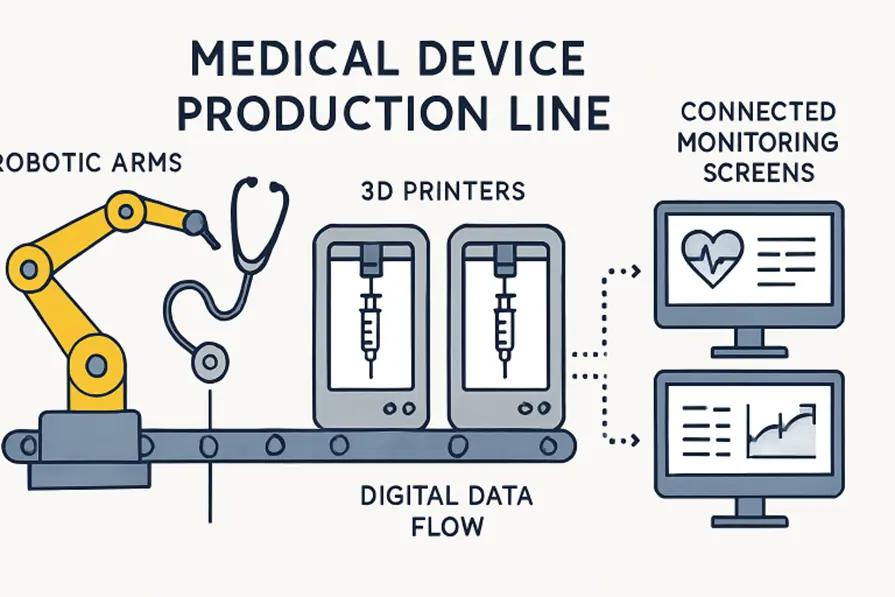
    The rapid evolution of medical device manufacturing is fundamentally reshaping patient care by integrating cutting-edge technologies and more innovative production methods. These innovations enable precision, efficiency, and customization once unimaginable, addressing the increasing demands of modern healthcare while adhering to stringent regulatory requirements. The industry’s embrace of advanced solutions not only enhances device functionality but also prioritizes patient safety and comfort.

    With the healthcare sector facing ever-growing pressures to deliver more effective treatments, manufacturers are leveraging new approaches to stay ahead. Technologies such as artificial intelligence, Internet of Things (IoT), and next-generation sterilization are helping to streamline production workflows, minimize errors, and ensure traceability. Improved materials and digital manufacturing tools are driving significant advances in the quality and integration of medical devices in daily practice.

    Advancements in 3D Printing and Additive Manufacturing

    The adoption of 3D printing in the creation of medical devices has revolutionized how tailored solutions reach patients. Additive manufacturing enables the fabrication of intricate structures and patient-specific products, including implants and prosthetics, which traditionally posed significant design challenges. Materials such as titanium alloys and bioresorbable polymers have emerged as popular choices, offering improved performance and patient compatibility.

    As 3D printing technologies mature, the global healthcare market for these solutions is expected to surpass $6 billion by 2027, underscoring the technology’s growing influence on manufacturers and clinicians. These techniques foster faster prototyping, streamlined production runs, and more cost-effective development of highly complex devices, as outlined by BBC News.

    Artificial Intelligence in Quality Control

    Incorporating artificial intelligence into manufacturing has significantly raised quality assurance standards across the industry. AI-driven vision systems now outperform human inspectors, swiftly identifying microscopic defects and inconsistencies that may otherwise go unnoticed during manual inspections. This level of accuracy can reduce scrap rates by up to 30 percent and ensure compliance with international standards such as ISO 13485, which governs the safety and effectiveness of medical devices.

    Notably, AI frameworks such as those developed by Akridata exemplify real-time defect detection by classifying imperfections on the manufacturing line. These advances have achieved high scalability and reliability, ensuring that only top-tier products reach the market without causing production delays or unnecessary waste.

    IoT-Enabled Smart Factories

    IoT technology transforms traditional manufacturing plants into fully connected, data-rich smart factories. By deploying networked sensors and machines, manufacturers can collect production metrics in real time, resulting in a 50 percent reduction in downtime and a 40 percent reduction in maintenance costs. Such systems enable predictive maintenance, rapid troubleshooting, and seamless optimization for critical products, from diagnostic equipment to surgical instruments.

    The shift to connected environments enables automated workflows and centralized monitoring, allowing manufacturers to adapt quickly to changes in demand or regulatory conditions. IoT’s predictive analytics further help minimize disruptions and deliver products faster, helping healthcare providers ensure continuous care.

    Emerging Materials and Sterilization Techniques

    Innovative materials are at the forefront of safer and more effective medical tools. Bioresorbable polymers, for instance, are designed to be absorbed or degraded by the body, reducing patient risk and enhancing recovery outcomes. These advancements have led to a 20 percent reduction in device rejection rates and broader adoption of wearable and implantable medical products.

    Meanwhile, new sterilization approaches such as low-temperature plasma not only maintain the structural integrity of sensitive materials but also reduce sterilization times by up to 40 percent. This enables manufacturers to confidently deliver sterile, ready-to-use devices on demand, meeting increasingly stringent health and safety standards. For more information on low-temperature sterilization technologies, refer to the CDC’s guidelines.

    Digital Twin Technology

    Digital twin technology has introduced a virtual paradigm to manufacturing, where engineers create detailed digital replicas of medical devices and their production processes. These digital simulations enable comprehensive testing, performance analysis, and process optimization without disrupting the actual manufacturing line. Early identification of potential flaws ensures reduced costs associated with workflow interruptions, rework, or recalls.

    Especially in the context of life-sustaining devices, such as cardiac implants or artificial joints, digital twins enable manufacturers to perfect their products before physical deployment. This predictive capability is crucial for ensuring reliability and regulatory compliance in medical technology.

    Personalized Medicine and Customization

    The trend toward personalization in healthcare has spurred a new era of patient-specific devices. By harnessing advanced manufacturing and digital design, companies can fabricate treatments tailored to individual needs, from anatomical implants to connected health monitors. This level of customization boosts treatment efficacy by up to 30 percent and supports a growing movement toward personalized medicine.

    Such advancements empower clinicians to deliver targeted interventions, thereby enhancing patient satisfaction and clinical outcomes. Moreover, integrating feedback from patients and healthcare providers drives continual refinement of device designs and functionalities.

    Blockchain for Supply Chain Transparency

    Blockchain technology is providing unprecedented traceability across the medical device supply chain. By maintaining a secure, immutable ledger of each transaction and component, manufacturers and regulators can track the origins, handling, and quality of every device. This level of visibility can reduce counterfeit risks by as much as 90 percent and ensure compliance with increasingly complex global regulations.

    Enhanced transparency and accountability throughout the supply chain not only protect patients but also streamline recalls and interventions when necessary, helping manufacturers safeguard their reputations and market access.

    Conclusion

    Medical device manufacturing is at a crossroads where innovation, precision, and safety converge to transform patient outcomes. The adoption of technologies such as 3D printing, artificial intelligence, IoT, new materials, and blockchain is driving robust change across the sector. By embracing these advancements, manufacturers are better equipped to meet evolving healthcare needs, strengthen supply chain integrity, and deliver safer, more effective solutions. As global healthcare continues to grow, staying at the forefront of technological progress will be vital for supporting patient care and well-being on an even greater scale.

    Also Read

  • Data-Driven Decision-Making: Building Smarter Revenue Strategies

    Data-Driven Decision-Making: Building Smarter Revenue Strategies

    The Importance of Data-Driven Decision-Making

    In a rapidly shifting global marketplace, organizations that leverage data’s power stand miles ahead in their ability to adapt and thrive. Through detailed analysis of customer trends, operational performance, and market behavior, companies can create far more precise strategies that directly impact bottom-line performance. By drawing from vast internal and external datasets, modern businesses can spot emerging opportunities and mitigate risks in real time. As companies seek to outpace their competitors, turning to data-centric approaches has become the new non-negotiable standard for revenue growth. Leveraging a top revenue management software solution empowers organizations to translate raw information into actionable insights, laying the foundation for scalable, long-term revenue gains.

    Organizations leveraging advanced analytics and business intelligence platforms can enhance decision-making and report a 55% increase in revenue. Emphasizing data-driven approaches enables standardized insights, allowing executives to make informed choices. This data accessibility empowers various departments to personalize outreach, finance to improve forecasting, supply chains to quickly adapt, and customer success teams to proactively retain clients. Companies utilizing data-driven strategies outperform competitors in market share and profitability.

    Integrating Data Analytics Across Business Functions

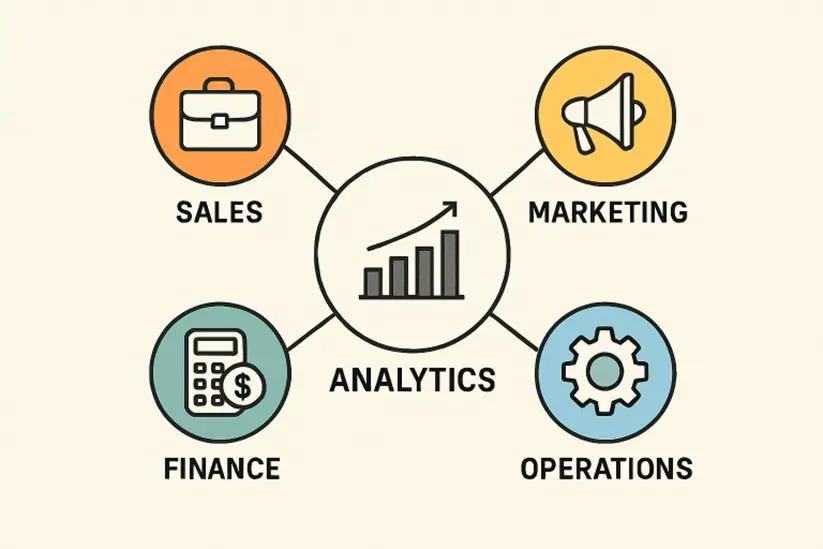
    Successfully embedding analytics into every business function transforms the way organizations operate. For example, data collected from customer interactions, buying habits, and feedback can be analyzed to predict emerging needs and preferences. This enables companies to develop products and services that precisely fit customer expectations, driving higher satisfaction and stronger loyalty. Marketing departments can use rich datasets to fine-tune messaging and campaign targeting, ensuring that their resources are allocated to the most promising opportunities.

    Integration also promotes operational efficiency across the organization. Data-informed logistics ensure that inventory is kept at optimal levels, reducing carrying costs and minimizing stockouts. By connecting analytics platforms with enterprise resource planning (ERP) or customer relationship management (CRM) software, all teams gain visibility into business performance, making it much easier to coordinate efforts and align goals.

    In industries with thin margins or rapidly changing demand patterns, such as retail or high tech, this approach gives decision-makers a first-mover advantage when responding to customer needs or market shifts. Simply collecting more data is not enough; organizations need to ensure that analytics are seamlessly mixed into everyday workflows, from executive planning down to frontline staff actions.

    Overcoming Challenges in Data Integration

    Despite the clear benefits, companies often encounter real-world barriers when adopting a fully integrated data analytics function. Data silos, where departments store information in isolation, can create fragmentation and inconsistencies. Poor data quality or a lack of governance further compounds this problem, leading to misleading outputs and unreliable insights.

    To overcome these obstacles, organizations must prioritize unified data management, supported by modern cloud-based analytics tools. Centralizing data sources and setting consistent standards for data collection helps break down silos and bring clarity to reporting. Ensuring quality through rigorous validation and cleansing processes dramatically improves the reliability of analytics results.

    The human factor is also critical. Businesses should invest in ongoing training to foster a data-literate culture, empowering team members at every level to use insights confidently in day-to-day operations. Leadership buy-in and support are essential for sustaining momentum and ensuring that resources are allocated to the most impactful analytics projects.

    Real-World Applications of Data-Driven Strategies

    High-tech manufacturing is a leading example of how analytics can reinvent revenue strategies. By harnessing vast streams of real-time data, manufacturers can optimize their supply chains, predict maintenance needs, and identify new revenue streams long before market trends become obvious to competitors. This proactive stance allows organizations to sidestep disruptions and operate with maximum efficiency.

    In the retail realm, companies use customer data to personalize offers, manage dynamic pricing, and forecast seasonal inventory needs, ensuring the right products are available at the right time. Financial institutions, meanwhile, apply analytics to detect fraud, lower risk, and improve compliance, ultimately protecting their bottom line. These varied applications demonstrate that data-driven decision-making is adaptable across sectors, delivering measurable improvements in revenue performance.

    Steps to Implement Data-Driven Decision-Making

    1. Define Clear Objectives: Start by establishing precise, measurable goals to guide your analytics initiatives. Distinct objectives ensure that data projects align with broader business priorities.
    2. Invest in the Right Tools: Select modern analytics platforms that offer scalability, strong security, and integration capabilities with your existing systems.
    3. Foster a Data-Driven Culture: Build organizational support from the top down by providing training and resources to ensure every employee understands the value of data-driven decision-making.

    Measuring the Impact of Data-Driven Strategies

    Monitoring and measuring the effects of data-centric initiatives is vital for continuous improvement. Establish key performance indicators (KPIs) such as revenue growth, customer retention, acquisition cost, and operational efficiency. Review these metrics regularly to pinpoint areas of progress and opportunities for fine-tuning your strategies. Linking outcomes to clear business value demonstrates ROI and justifies further investment in data analytics capabilities.

    Teams should also solicit feedback from users and stakeholders about the quality and usability of data tools, further refining future projects. In the long run, this cycle of measurement and improvement builds a powerful feedback loop for sustained growth.

    Future Trends in Data-Driven Revenue Strategies

    Looking ahead, the landscape of data-driven revenue management continues to advance. Developments in artificial intelligence and machine learning are enabling the automation and refinement of analytics at scale, providing predictive insights that were previously possible only in theory. These evolving technologies enable leaders to make proactive decisions faster and with greater confidence.

    Additionally, growing emphasis on data privacy and security will drive the adoption of ethical data practices, ensuring transparency and trust among customers. As organizations continue to embrace next-generation analytics, staying ahead of industry trends will be key to maintaining a durable competitive advantage.

    In summary, embedding data-driven decision-making at the heart of your organization is the clearest path to smarter, more resilient revenue strategies. With robust analytics platforms, cohesive integration, and a culture of learning, any business can unlock new growth, enhanced customer experiences, and long-term success.

    Also Read

  • Comparing the Best Digital Marketing Companies Delhi NCR: Services & Expertise

    Comparing the Best Digital Marketing Companies Delhi NCR: Services & Expertise

    In today’s highly competitive online marketplace, choosing the right digital marketing partner can make the difference between stagnation and growth. For businesses operating in the capital region, identifying the best digital marketing companies Delhi NCR is essential to building brand visibility, driving traffic, and increasing revenue. With a growing number of agencies offering a range of services—from search engine optimization (SEO) to social media management—making an informed decision requires understanding each company’s strengths, services, and expertise.

    This in-depth comparison will help you evaluate the top digital marketing agencies in Delhi NCR, highlighting their core competencies, service offerings, and unique value propositions. Whether you are a startup, a small business, or an enterprise, this guide will assist you in finding the best partner for your online marketing goals.

    What Makes a Great Digital Marketing Company in Delhi NCR?

    Before diving into individual companies, it’s important to understand the criteria that define excellence in digital marketing. The best digital marketing companies Delhi NCR typically demonstrate:

    • Comprehensive service offerings: A full suite of digital services, including SEO, paid advertising, content marketing, social media, email marketing, and analytics.
    • Proven track record: Demonstrable results through case studies, client testimonials, and ROI-driven campaigns.
    • Strategic planning: Customized strategies that align with business goals rather than one-size-fits-all solutions.
    • Creative and technical expertise: Skilled teams capable of both creative storytelling and data-driven decision-making.
    • Transparent reporting and communication: Clear performance tracking and regular updates for clients.

    These factors not only ensure quality but also reflect an agency’s commitment to long-term success for its clients.

    Leading Digital Marketing Agencies in Delhi NCR

    1. Agency A – Full-Service Digital Marketing Expertise

    Overview: Known for its comprehensive digital strategies, Agency A consistently ranks among the best digital marketing companies Delhi NCR due to its strong performance across multiple domains.

    Core Services:

    • SEO and SEM
    • Social media marketing
    • Content creation and marketing
    • Email marketing
    • Analytics and performance reporting

    Why Choose Them: Agency A stands out for its deep expertise in SEO and PPC, delivering measurable improvements in search visibility and lead generation. Their customized plans are ideal for businesses looking to scale quickly with data-driven campaigns.

    Ideal For: Mid-to-large businesses focused on measurable growth and performance.

    2. Agency B – Creative Branding & Social Media Specialists

    Overview: If creative storytelling and social engagement are priorities, Agency B is recognized among the best digital marketing companies Delhi NCR for its prowess in content and community building.

    Core Services:

    • Social media marketing & management
    • Brand strategy and creative campaigns
    • Influencer collaborations
    • Video content production

    Why Choose Them: With a strong emphasis on content and audience engagement, Agency B helps brands establish a unique identity across platforms like Instagram, Facebook, YouTube, and LinkedIn. Their creative campaigns often go viral, increasing reach and customer loyalty.

    Ideal For: Startups and lifestyle brands focused on brand awareness and engagement.

    3. Agency C – Performance & Data-Driven Marketing Experts

    Overview: Agency C distinguishes itself with a strong analytical foundation and is widely considered among the best digital marketing companies Delhi NCR for performance-oriented marketing.

    Core Services:

    • PPC advertising (Google Ads, Bing Ads)
    • Conversion rate optimization (CRO)
    • Marketing automation
    • Analytics and dashboard reporting

    Why Choose Them: If your primary goal is lead generation and conversion optimization, Agency C’s data-first approach ensures every marketing decision is backed by measurable insights. Their focus on ROI sets them apart from competitors.

    Ideal For: Businesses seeking to maximize conversions and reduce customer acquisition costs.

    4. Agency D – Integrated Digital Solutions with Tech Expertise

    Overview: Agency D combines technical marketing skills with creative execution. They are often recommended as the best web design company in Delhi NCR and also provide full-fledged digital marketing services.

    Core Services:

    • Web design and development
    • SEO and technical optimization
    • UX/UI design
    • Digital advertising
    • Content marketing

    Why Choose Them: Their ability to seamlessly integrate web design with digital marketing makes Agency D a versatile choice. A well-optimized website is the foundation for effective online campaigns, and this agency excels at both.

    Ideal For: Businesses seeking a strong digital presence that begins with a high-performing website.

    5. Agency E – Specialized in E-Commerce Growth

    Overview: For e-commerce brands, Agency E is recognized among the best digital marketing companies Delhi NCR due to its specialization in platforms like Shopify, WooCommerce, and Magento.

    Core Services:

    • E-commerce SEO and paid ads
    • Marketplace optimization (Amazon, Flipkart)
    • Product content and catalog management
    • Email automation for online stores

    Why Choose Them: Agency E’s strategies are tailored specifically to e-commerce metrics—average order value (AOV), cart abandonment, and customer lifetime value (CLV). Their expertise drives both traffic and conversions for online shops.

    Ideal For: E-commerce brands aiming for rapid digital expansion.

    How to Choose the Right Partner

    With multiple strong contenders in the market, selecting the right agency requires a structured approach.

    1. Define Your Goals

    Clarify your objectives—brand awareness, steady traffic growth, lead generation, or increased sales. Your goals should match the agency’s core strengths.

    2. Evaluate Case Studies and Testimonials

    Look for evidence of success through detailed case studies and authentic client reviews. Results that align with your industry and goals are especially valuable.

    3. Assess Their Communication Style

    Strong collaboration and transparency are key for a long-term partnership. Consider how responsive and proactive the agency is during initial discussions.

    4. Check Technical and Creative Capabilities

    Evaluate the agency’s portfolio for both technical expertise (SEO, analytics) and creative output (content, design).

    5. Understand Reporting and KPIs

    An agency should define clear KPIs and offer comprehensive reporting to demonstrate progress and refine strategy over time.

    Conclusion

    Choosing from the best digital marketing companies Delhi NCR involves balancing your business goals with agency expertise, creativity, and technical strength. Whether you are focused on performance marketing, creative brand building, or e-commerce growth, Delhi NCR offers a diverse pool of digital partners ready to elevate your online presence.

    For businesses that also require a strong website as a foundation for marketing efforts, partnering with the best web design company in Delhi NCR can provide an integrated solution that drives long-term results. By evaluating goals, case studies, service offerings, and communication style, you can select a digital marketing partner that aligns with your vision and drives measurable growth.

    Also Read

  • The top 3 best power supplies for high-power PCs

    The top 3 best power supplies for high-power PCs

    Since modern high-end PCs run power-hungry tasks and serve as AI and server stations, the PC PSU should meet their needs and give extra power to always support the system’s stable work. To be more specific in this question, here are the core features you must look for in a case you run a high-end PC like a pro. 

    1. 80 PLUS® Titanium and Platinum certification. 
    2. Support for ATX 3.0/3.1 and PCIe 5. 1. 
    3. Capability of reliably serving modern GPUs and CPUs at high peak loads. 
    4. Precise voltage regulation and low ripple. 
    5. High energy efficiency and system stability in gaming and professional tasks.

    Who needs a high-end PC power supply in 2026?

    Primarily, for those who build powerful PC systems, likewise gamers with flagship graphics cards, professionals in video/3D/AI work, and overclocking enthusiasts. Overall, all who want to get maximum stability, efficiency, and PC power supplies security under high peak loads.

    The 3 best power supplies for high-end PCs in 2026

    We collected the top 3 power supplies from different manufacturers that can easily support high-demanding tasks, the latest and most powerful PC components, be a reliable support for your system, and serve for years ahead. Which option to choose is up to you, so just look through all of them and make your personal decision. 

    1. Seasonic PRIME TX-1600 ATX 3.1 – the #1 choice for high-end PCs in 2026

    Seasonic PRIME TX-1600 ATX 3.1 is a flagship PC PSU with ATX 3.1 and PCIe 5.1 standards support for high-end GPUs and CPUs. They’re often used in AI workstations, gaming rigs, and streaming setups, where this PSU handles everything flawlessly.

    Its core features:

    1. 80 PLUS® Titanium certification (very high efficiency up to ~94%),
    2. fully modular design,
    3. native 12V-2×6 cables for new graphics cards,
    4. digital fan control,
    5. highly accurate voltage regulation and low ripple.

    2. NZXT C1500 Platinum – 2nd place in power supply for high-end PCs

    The NZXT C1500 Platinum PSU gives professional builders a balance between effectiveness, stable performance, and functionality. It perfectly delivers sufficient power reserve for modern CPUs and GPUs under even extreme loads. That’s why it fits modern gaming rigs and powerful workstations as well.  

    Its core features:

    1. ~94% efficiency (80 PLUS Platinum certified), 
    2. digital voltage regulation, 
    3. 140mm MagLev fan for quiet and reliable operation, 
    4. Japanese capacitors and a fully modular design,
    5. native 12V-2×6 PCIe 5.1 cables.

    3. Montech Century II Gold – 3rd place in power supply for high-end builds

    A rock-solid power supply with 80 PLUS® Gold and Cybenetics Platinum certification, designed for high loads and compatibility with new GPUs (12V-2×6). An interesting alternative for high-performance gaming and work PCs, where reliability and quiet operation are important without the premium price tag. 

    Its core features:

    1. decent efficiency across the entire load range, 
    2. high-quality Japanese capacitors, 
    3. Smart Zero Fan (silent operation at low loads), 
    4. fully modular design, 
    5. protection set, including OVP/OVP/UVP/OCP, and more.

    How do Seasonic experts advise choosing a PSU for a high-end build?

    To get a real powerhouse for your build with no compromises in productivity, Seasonic experts advise evaluating the following PSU features and tech specifications:

    1. Determine the required power with a margin for peaks and upgrades.
    2. Choose efficiency ≥ 80 PLUS® Platinum and Titanium for stability and energy savings.
    3. Check for protections (OVP, OCP, UVP, SCP, OTP).
    4. Select a series for your task (PRIME for top-end systems, VERTEX for high stability).
    5. Evaluate the +12V line power for the CPU and GPU.

    Conclusion: Which power supply should you choose for a high-end PC in 2026?

    The best option is those, packed with smart solutions and technologies to support modern computer components, which high-powered PCs require today. For powerful modern systems, the best choice is a PSU with 80 PLUS® Platinum or Titanium certification and ATX 3.1/PCIe 5.1 standard support. In 2026, these power supplies will be ideal for top-of-the-line gaming/work configurations since they are energy efficient, stable, and support new power connectors.

    Also Read

  • Navigating the VK Ecosystem: Tips for Growing a Russian-Speaking Audience.

    Navigating the VK Ecosystem: Tips for Growing a Russian-Speaking Audience.

    VK followers growth starts with smart content and tools. Post in Russian to engage users deeply. Share memes, news, and local events often. SocialGreg helps boost your presence safely. 

    Think about what your audience likes most. VK rewards active profiles with more visibility. This leads to natural expansion over time. Real growth comes from mixing organic and paid methods.

    VK Platform Basics for Beginners

    VK works like a social hub for Russians. It features groups, pages, and music sharing. Focus on profile setup first.

    Create a clear bio in Russian language. Add contact details for easy reach. This invites more interactions from users.

    Join relevant groups to start networking. Post comments that add real value. Connections form through shared interests.

    Organic Strategies to Attract Followers

    Post daily content that resonates with locals. Use polls and stories for quick engagement. Track what gets likes and shares.

    • Share user-generated content with credits.
    • Host live sessions on popular topics.
    • Tag influencers in your niche.

    Collaborate with other VK users often. Guest posts build mutual follower bases. This expands your reach without costs.

    Encourage shares from your audience directly. Offer incentives like shoutouts. Loyalty grows through these simple actions.

    Role of Content in VK Growth

    Quality content drives VK followers growth fast. Mix videos, photos, and text posts. Variety keeps users coming back.

    Tailor themes to Russian culture specifics. Cover holidays, sports, and daily life. This strengthens community bonds.

    Analyze post performance in VK analytics. Adjust based on peak engagement times. Better timing boosts follower counts.

    Paid Tools for Faster Expansion

    Paid services accelerate your VK presence. They provide real followers from target regions. Choose options that avoid bans.

    Look for gradual delivery to mimic organics. This protects your account long term. Test small packages before scaling.

    Combine paid boosts with organic efforts. This creates balanced growth patterns. Results show in higher interactions.

    How to Pick Reliable Follower Services

    Research services with positive user feedback. Check for real account sources only. Avoid cheap bots at all costs.

    • See refund policies for protection.
    • Demand no-password access methods.
    • Confirm country targeting features.

    Prices should match service quality levels. Read terms before any purchase. Secure choices lead to steady gains.

    Why SocialGreg Leads for VK Followers

    SocialGreg offers targeted VK followers from Russia. It uses active users for safe boosts. Delivery starts quick but natural.

    Packages fit various budget sizes well. Support answers queries around the clock. Users report lasting engagement rises.

    Compared to rivals, it excels in retention. No risks harm your profile here. This makes it the top pick overall.

    Engagement Tactics After Gaining Followers

    Interact with new followers right away. Reply to comments on your posts. This builds strong relationships fast.

    Run contests to spark more activity. Ask for user stories or photos. Winners get features on your page.

    Send direct messages for feedback. Listen to suggestions from your crowd. Adjustments keep retention rates high.

    • Respond within hours to queries.
    • Feature top contributors weekly.
    • Use stickers in chats often.

    Conclusion

    VK followers growth transforms your reach among Russian speakers. Use organic tactics and smart tools together. 

    You achieve real engagement without much hassle. Watch your audience expand steadily now. This strategy secures long-term connections. Take steps to optimize your profile today.  

    Also Read